Classic Deviled Eggs Recipe: Creamy, Smooth and Party-Ready
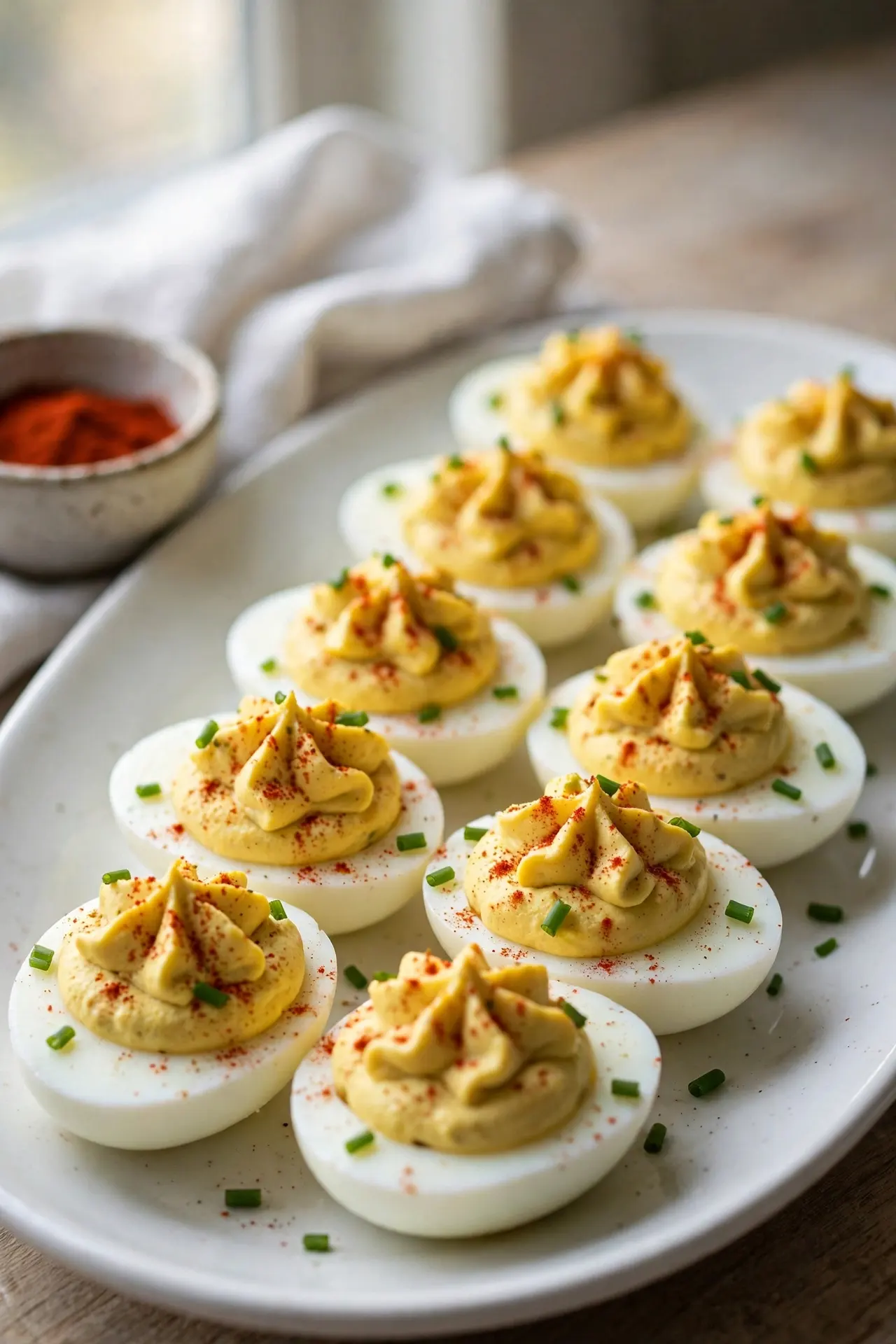
Deviled eggs clear a party table faster than almost anything else you can set out. Put them down and they’re gone before half your guests have arrived.
This recipe produces a filling that’s smooth enough to pipe cleanly and rich enough to hold its shape after chilling. The ratio here leans slightly higher in mayo than most classic versions, which is what prevents the filling from turning grainy or dry. Dijon mustard adds a sharp note without making the result taste mustardy.
If you’ve tried making these before and ended up with torn whites or a lumpy filling, the method below addresses both.
Why You’ll Love This Deviled Eggs Recipe
- The yolk filling stays smooth and pipeable even after a night in the fridge
- No food processor needed: a fork and a zip-lock bag are all the equipment required
- Egg whites come out clean and unbroken when you follow the right boiling method
- Ready in 37 minutes from start to finish, including boiling and cooling
- Doubles or triples easily with no changes to the method
Ingredients You’ll Need
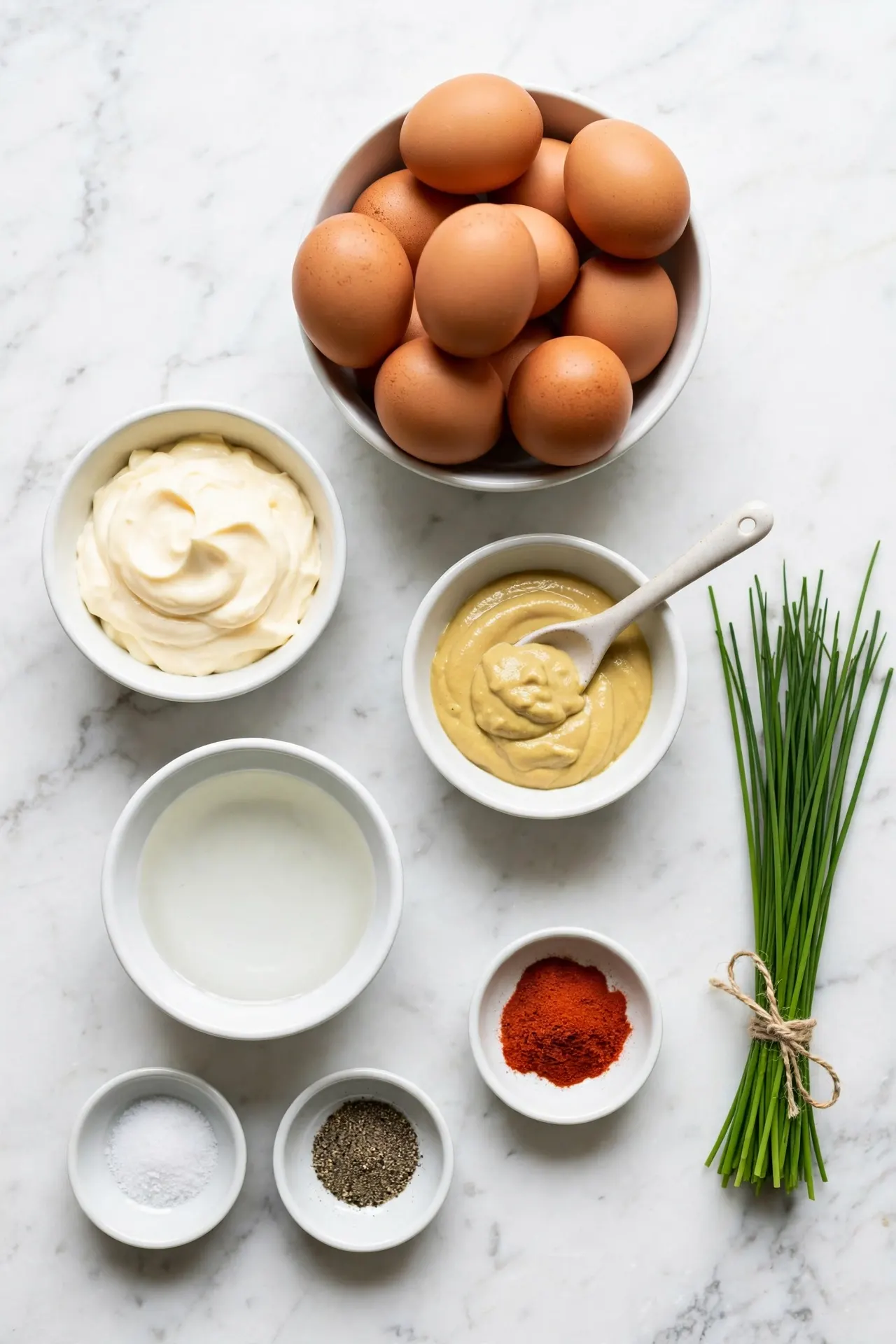
Everything you need for this deviled eggs recipe is a standard pantry and fridge haul.
For the eggs:
12 large eggs (use eggs that are 7 to 10 days old rather than very fresh; older eggs peel much more cleanly)
For the filling:
3 tablespoons full-fat mayonnaise (full-fat gives the smoothest, most stable texture; light mayo produces a runnier, less reliable filling)
1 tablespoon Dijon mustard (adds depth and sharpness; yellow mustard is milder and slightly sweeter if preferred)
1 tablespoon white vinegar (brightens the yolk mixture and balances the fat from the mayo)
1/4 teaspoon fine salt
1/4 teaspoon black pepper, freshly ground
For the garnish:
1/2 teaspoon sweet paprika (smoked paprika also works and adds a warmer, more savory finish)
1 tablespoon fresh chives, finely chopped (optional)
Recipe Timing
| Timing Element | Duration |
|---|---|
| Prep Time | 15 minutes |
| Cook Time | 12 minutes |
| Rest/Cool Time | 10 minutes |
| Total Time | 37 minutes |
Servings: 12 (2 halves per person) | Difficulty: Easy | Cuisine: American | Course: Appetizer
How to Make Deviled Eggs Step by Step
1. Boil the eggs
Place all 12 eggs in a single layer in a medium saucepan. Cover with cold water by at least 1 inch. Bring to a full boil over medium-high heat, then reduce to a steady gentle boil and cook for exactly 12 minutes.
⚠️ Food Safety: Keep eggs refrigerated until right before use. Do not leave hard-boiled eggs at room temperature for more than 2 hours. For full guidance, see the USDA’s egg handling and safety recommendations.
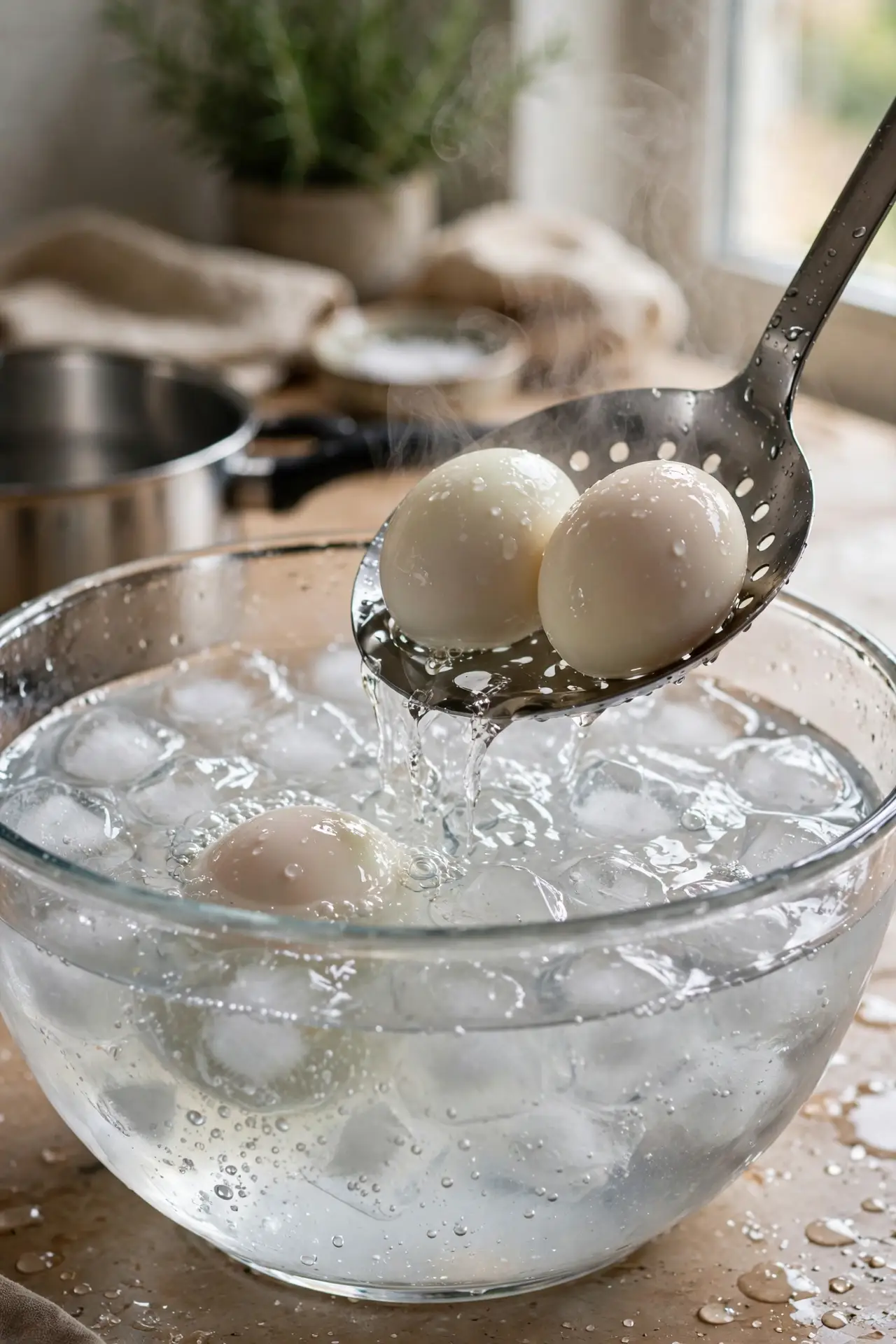
2. Ice bath and peel
Transfer the eggs immediately to a large bowl filled with ice water. Let them sit for 10 minutes. Peel each egg under a thin stream of cold running water, starting from the wider end.
Why this works: The ice bath stops cooking the moment the eggs go in and causes the egg to contract slightly inside the shell. This pulls the membrane away from the white, which is what makes peeling clean and easy. Starting at the wide end gives you access to the air pocket, which creates a natural gap to work from.
3. Halve and remove yolks
Slice each peeled egg in half lengthwise with a sharp, clean knife. Use your thumb to press the yolk out of each half into a medium mixing bowl. Arrange the whites cut-side up on a flat serving plate or a deviled egg tray.
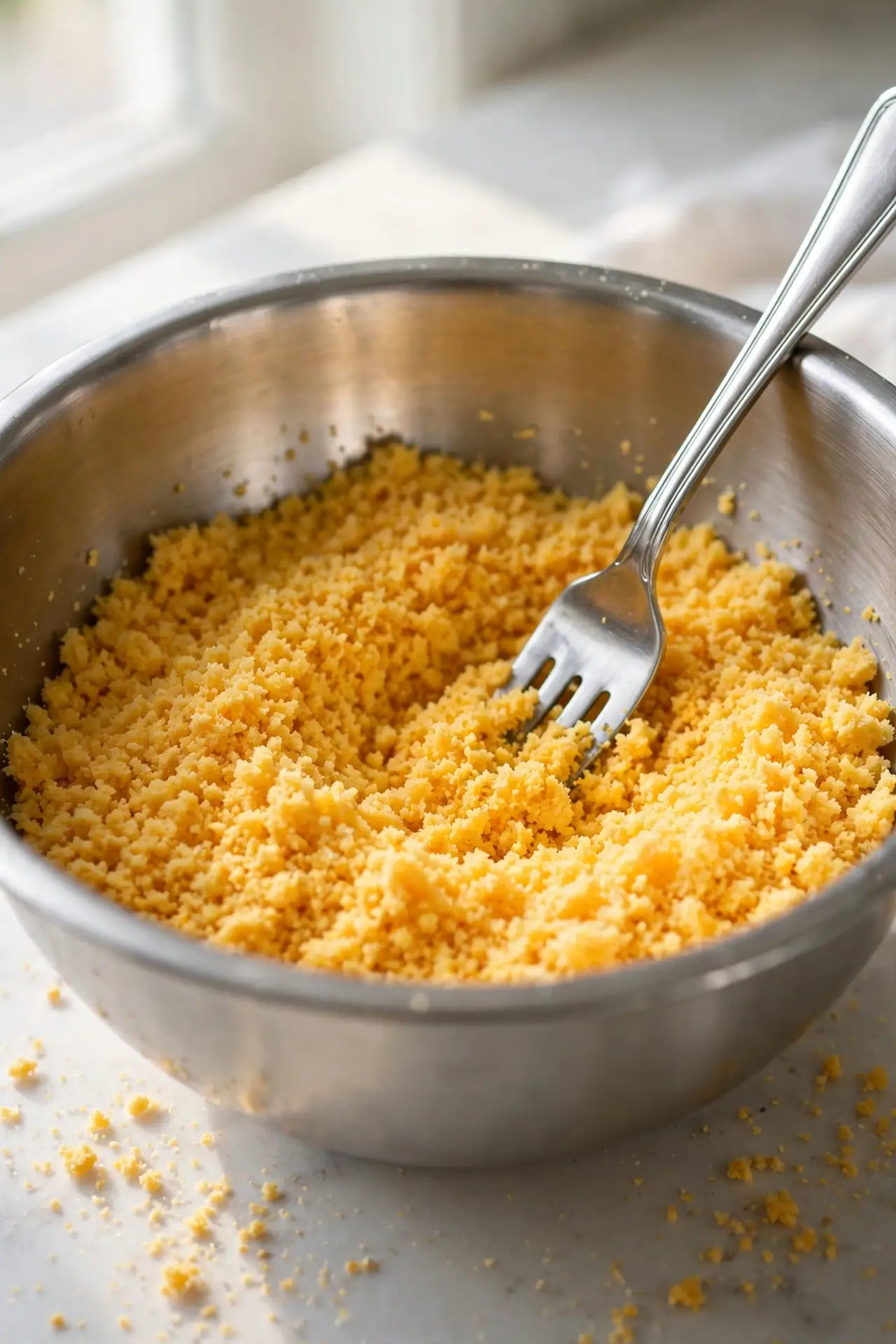
4. Mash the yolks dry
Before adding anything else, mash the yolks with a fork until they form fine, dry crumbs with no visible chunks remaining. This takes 1 to 2 minutes. Don’t rush it.
Why this works: Mashing the yolks completely dry before adding any wet ingredients is the most important technique step in the whole recipe. If you add mayo to poorly mashed yolks, the lumps never fully break down no matter how long you stir, and the filling becomes impossible to pipe cleanly.
5. Mix the filling
Add the mayonnaise, Dijon mustard, white vinegar, salt, and pepper to the mashed yolks. Mix with the fork until the filling is completely smooth with no streaks or lumps. Taste and adjust salt if needed.
Why this works: White vinegar loosens the fat from the mayo and creates a more cohesive, creamier texture than mayo alone. It also brightens the flavor of the yolks, which can taste flat and heavy without something acidic to balance them.
6. Fill the egg whites
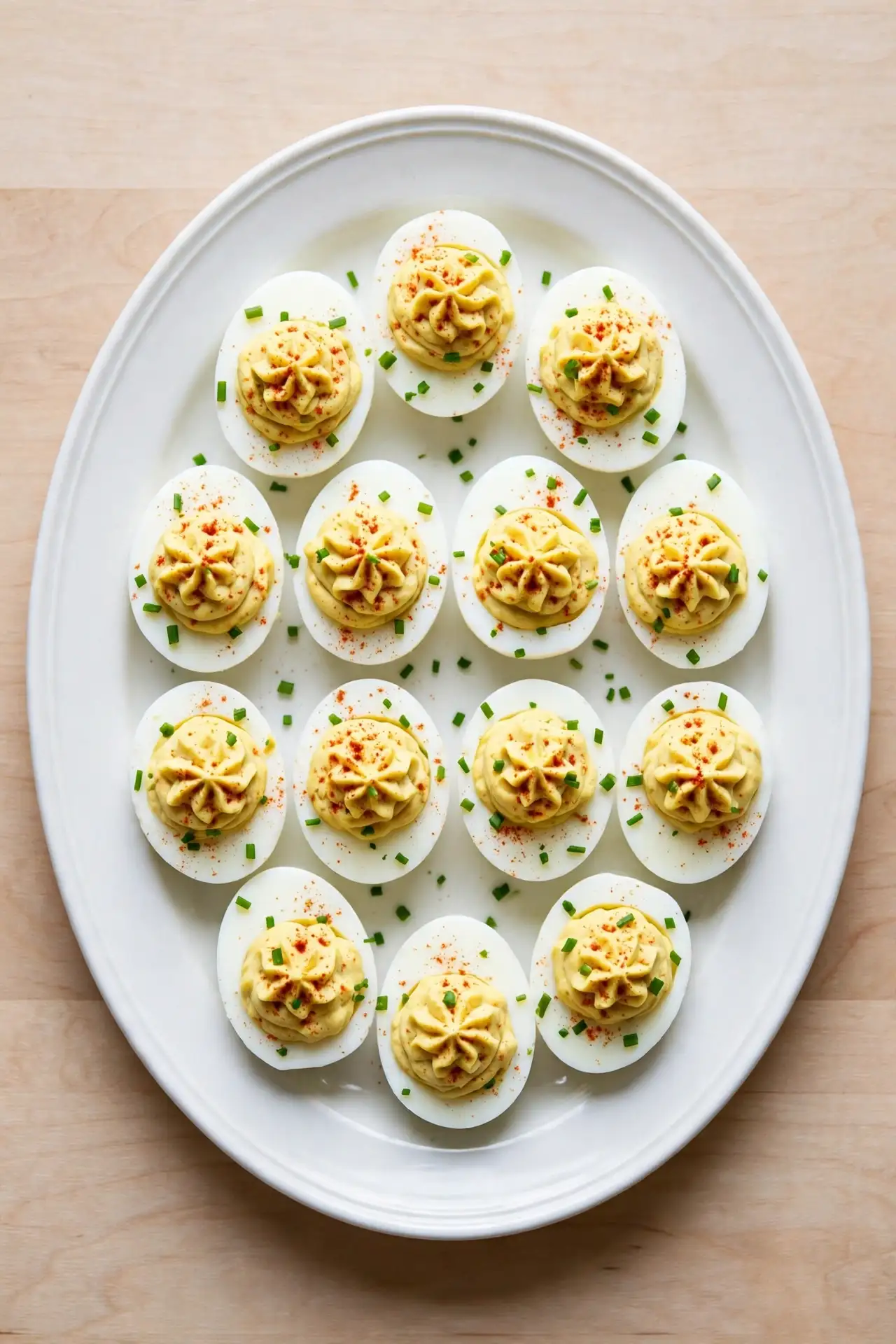
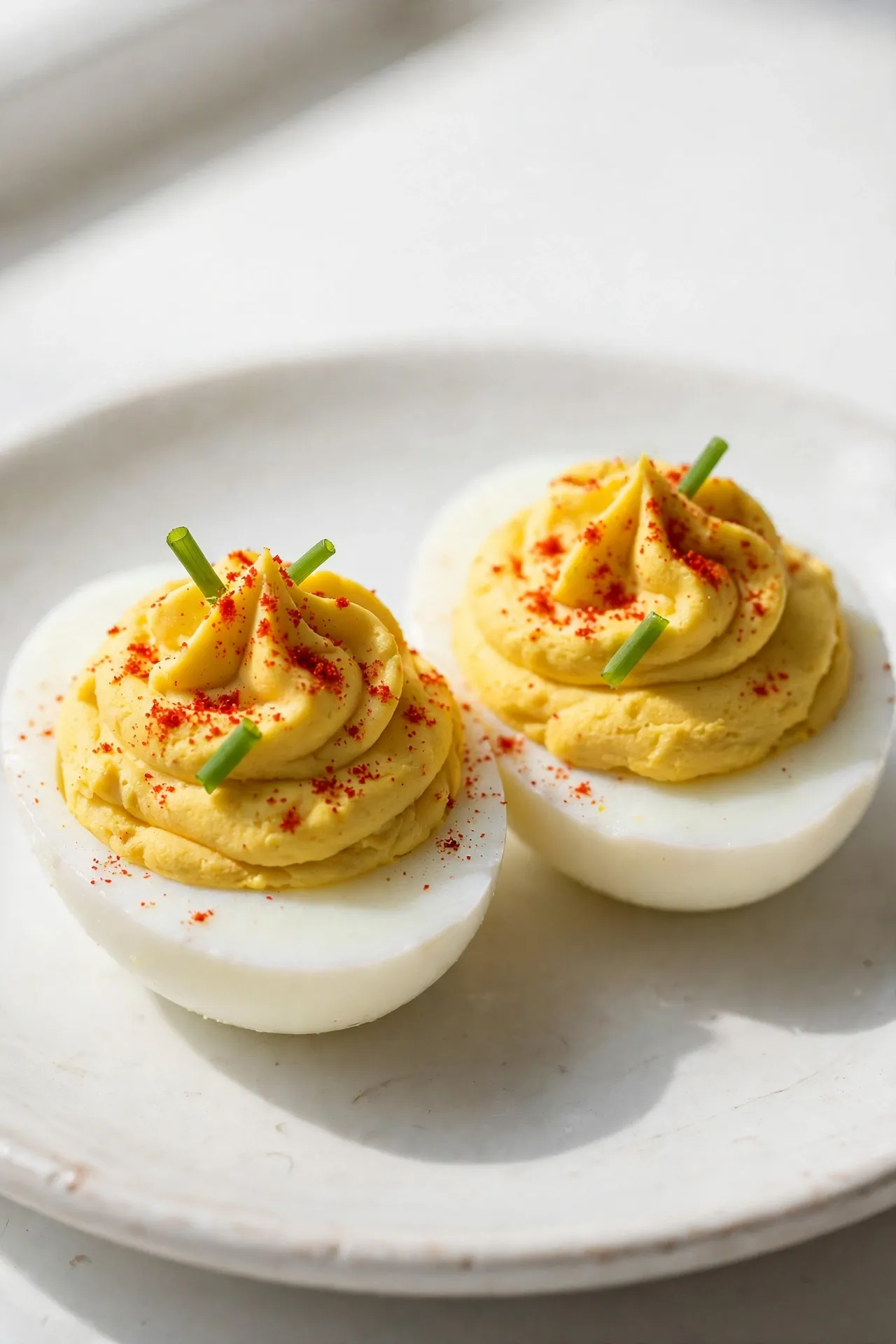
Spoon the filling into a zip-lock bag and seal it. Snip one small corner off with scissors and pipe the filling into each egg white half, mounding it slightly above the rim of the white. A regular spoon works just as well if you prefer a more relaxed, casual look.
7. Garnish and serve
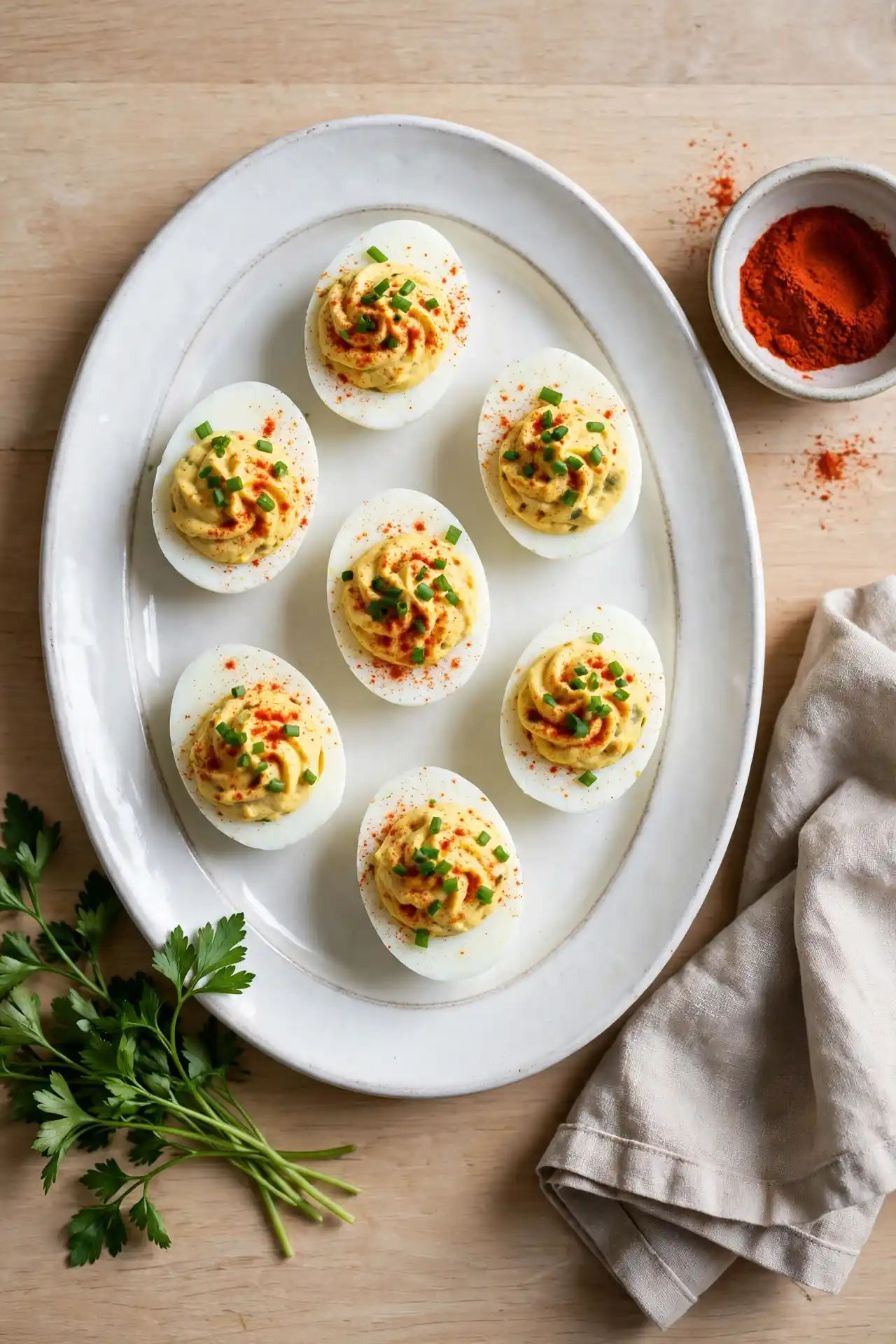
Dust each filled half with a small pinch of paprika. Scatter fresh chives over the top if using. Serve immediately or cover and refrigerate until needed.
Common Mistakes to Avoid
These four errors account for most failed batches of deviled eggs, and each one is avoidable.
Using eggs that are too fresh
Very fresh eggs have a membrane that bonds tightly to the shell and causes the whites to tear during peeling. Eggs that are 7 to 10 days old separate far more cleanly. If you only have fresh eggs, extend the ice bath to 15 minutes and peel slowly under running water.
Overcooking the eggs
Anything beyond 13 minutes at a rolling boil produces a grey-green ring around the yolk and a noticeably rubbery white. Set a timer as soon as the water reaches a full boil and pull the eggs at exactly 12 minutes.
Skipping the dry-mash step
Adding mayo to poorly mashed yolks leaves chunks that never break down, no matter how long you mix. Always mash to a fine, dry crumble before adding any wet ingredient.
Leaving filled eggs uncovered
Exposed filling dries out and forms a thin skin on the surface within an hour. If you’re not serving them right away, press plastic wrap directly against the surface of the filling, or cover the tray tightly before refrigerating.
Variations and Substitutions
Without mustard: Replace the Dijon with 1 teaspoon of pickle juice and an extra small pinch of salt. The filling stays creamy but loses the mustard sharpness entirely. This works well for anyone who finds Dijon too forward.
Smoked paprika version: Use smoked paprika in the garnish and stir 1/4 teaspoon into the filling as well. This gives the eggs a warmer, slightly deeper flavor that holds up well at outdoor spreads.
What to Serve With Deviled Eggs
These pair well with cold spreads where nothing else needs reheating:
Potato salad: The richness of both dishes balances well at room temperature.
Cucumber rounds and carrot sticks: Adds crunch without competing for attention on the plate.
Sliced bread or warm pita: Works well if you’re building a light lunch around them rather than just an appetizer.
Lemon sparkling water: Cuts through the fat cleanly between bites without clashing with the flavor.
Storage and Make-Ahead
Deviled eggs hold up well in the fridge when stored correctly. Cover the tray tightly with plastic wrap pressed directly against the surface of the filling, or transfer them to an airtight container. They keep well for up to 2 days. After 48 hours, the egg whites begin to release moisture and the filling loses its texture.
Make-ahead: Hard-boil and peel the eggs up to 3 days before you need them. Store the whites in a covered container and the yolk filling in a sealed zip-lock bag, both refrigerated separately. Fill them the morning of your event for the freshest result.
Freezer: Don’t freeze these. The egg whites turn rubbery after thawing and the filling separates. There is no way to recover them after freezing.
Allergen and Dietary Information
Contains eggs. This recipe cannot be made egg-free.
Contains soy. Most commercial mayonnaise contains soybean oil or soy derivatives. To make this deviled eggs recipe soy-free, use avocado oil-based mayonnaise, which is typically soy-free. Always read the ingredient label before using.
This recipe contains no dairy, gluten, or tree nuts by default.
Nutrition Information
Per serving (2 halves):
| Nutrient | Per Serving |
|---|---|
| Calories | 105 kcal |
| Protein | 6 g |
| Total Carbohydrates | 1 g |
| Dietary Fiber | 0 g |
| Total Sugars | 0 g |
| Total Fat | 9 g |
| Saturated Fat | 2 g |
| Sodium | 150 mg |
| Cholesterol | 185 mg |
| Potassium | 65 mg |
| Iron | 0.8 mg |
Nutritional values are estimates only and may vary based on specific ingredients, brands, and portion sizes used. For precise dietary needs, consult a registered dietitian.
For general guidance on understanding egg nutrition, see NIH’s nutrition data resources.
Frequently Asked Questions
Can you make deviled eggs the night before?
Yes, but keep the components separate. Store the peeled whites in a covered container and the yolk filling in a sealed zip-lock bag in the fridge. Fill them the morning of your event. Eggs filled the night before sometimes develop a slightly watery surface by the next day where the filling meets the white.
How do you keep deviled eggs from getting watery?
The two main causes are too much vinegar and using light mayo instead of full-fat. Full-fat mayonnaise holds the filling together much better. Also, make sure the egg white halves are completely dry before you fill them: any water sitting in the cavity will gradually loosen the filling.
Why is my deviled egg filling lumpy instead of smooth?
The yolks weren’t mashed finely enough before the mayo was added. Mash them dry with a fork until they look like fine crumbs, then add the wet ingredients. If the filling is already made and still lumpy, pressing it through a fine mesh sieve will smooth it out.
How many deviled eggs per person for a party?
Plan on 2 to 3 halves per person as an appetizer, or 4 to 6 halves if they’re the main snack on the table. For 20 guests, two batches of this recipe (48 halves) gives you roughly 2 to 3 per person with a small buffer for seconds.
What can I use instead of Dijon mustard?
Yellow mustard is the closest substitute and gives a milder, slightly sweeter flavor. Pickle juice also works: use 1 teaspoon in place of the Dijon and reduce the white vinegar by half to avoid over-acidifying the filling.
How long do deviled eggs last in the refrigerator?
Up to 2 days when stored covered. After 48 hours, the egg whites start to weep moisture and the filling loses its smooth texture.
Can I make deviled eggs without mayonnaise?
Plain full-fat Greek yogurt is the closest substitute. Use the same quantity you’d use for mayo and add an extra pinch of salt. The flavor is tangier and slightly less rich, but the filling pipes well and holds its shape.
Conclusion
Deviled eggs are one of those recipes where small technique details make a real difference. Egg age for clean peeling, an immediate ice bath, and a complete dry mash before adding any wet ingredient are the three things that separate a smooth result from a watery or lumpy one.
Once you have the method down, this recipe scales without any adjustments. You can make 4 dozen the same way you’d make one dozen. Keep the whites and filling separate until the day of, fill them fresh, and they hold up on a serving table for hours.
If the filling is ever too thick to pipe easily, stir in a small splash of white vinegar. That usually brings it right back.
Deviled Eggs Recipe Card
Classic Deviled Eggs
Ingredients
Method
- Place eggs in a single layer in a medium saucepan. Cover with cold water by at least 1 inch. Bring to a full boil, reduce to a gentle boil, and cook for 12 minutes.
- Transfer immediately to a large bowl of ice water. Cool for 10 minutes. Peel each egg under cold running water, starting from the wide end.
- Slice each egg in half lengthwise. Press yolks into a medium mixing bowl. Arrange whites cut-side up on a serving plate or deviled egg tray.
- Mash yolks with a fork until completely dry and crumb-like with no chunks remaining.
- Add mayonnaise, Dijon mustard, white vinegar, salt, and pepper. Mix until completely smooth. Taste and adjust salt.
- Transfer filling to a zip-lock bag, snip one corner, and pipe into each egg white half, mounding slightly above the rim.
- Dust each filled egg with paprika and scatter chives on top. Serve immediately or cover and refrigerate for up to 24 hours.