
Beef Stew Recipe — Thick, Tender, and Full of Flavor
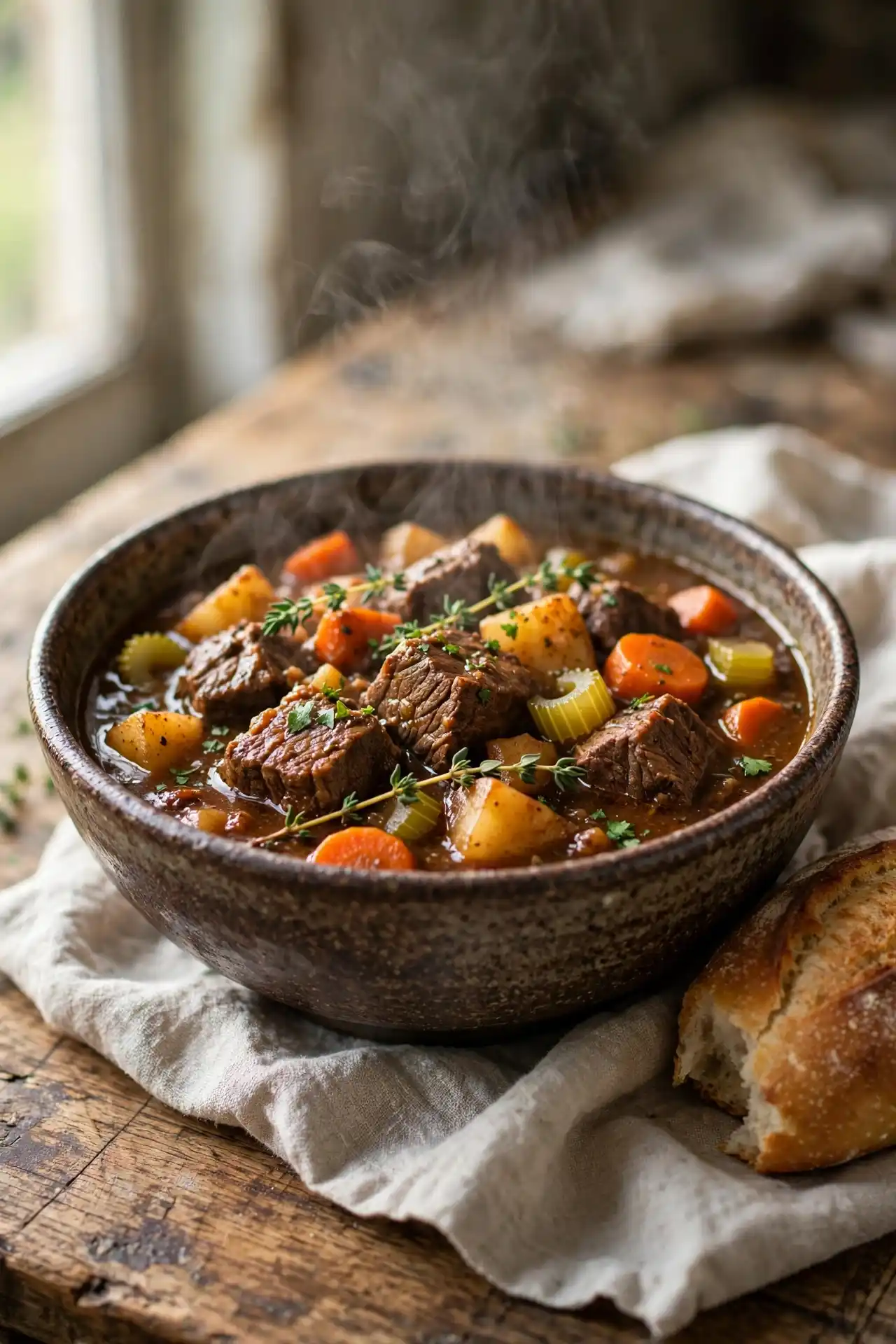
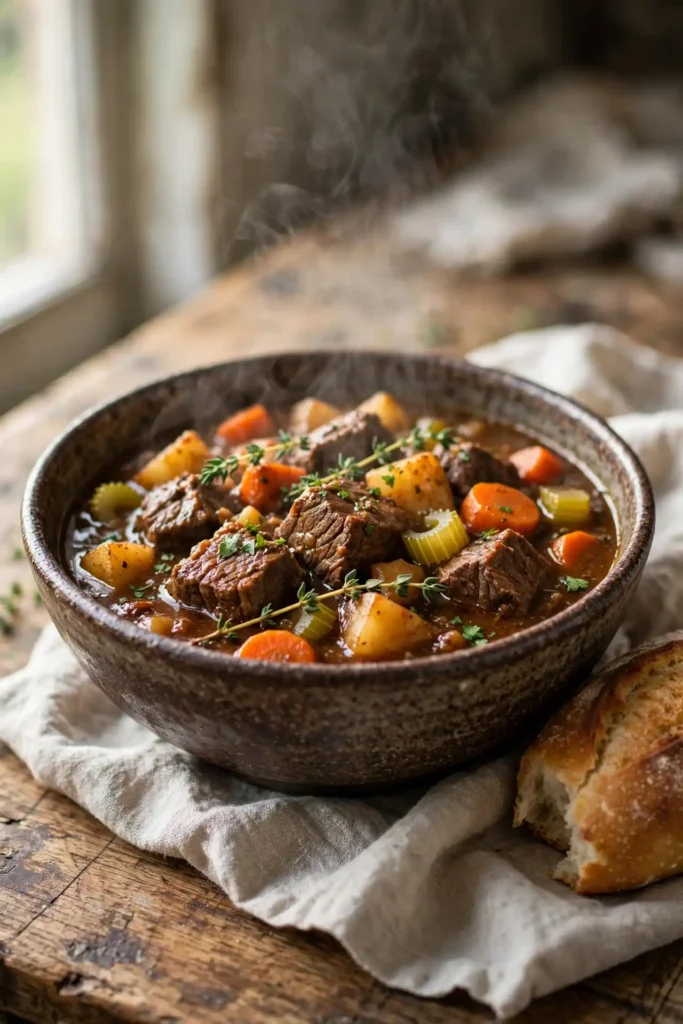
Chuck roast cooked low and slow breaks down into something that no other cut can match — soft, pull-apart beef surrounded by thick, savory broth with sweet carrots and creamy potatoes. This beef stew builds its flavor the old-fashioned way: browning the meat properly, deglazing the pan to catch every bit of caramelization, and giving it enough time on the stove to come together into something genuinely satisfying.
There are no shortcuts here that matter, but there are no hard techniques either. If you have a heavy pot and 90 minutes, you can make a stew that tastes like it took all day.
Why You’ll Love This Beef Stew
- The beef becomes fork-tender because chuck roast has the right fat-to-collagen ratio for braising — not all cuts do
- The broth is thick and deeply savory without adding flour at the end
- Everything cooks in one pot from start to finish
- It reheats better the next day, which makes it ideal for meal prep
- No specialty ingredients — beef, vegetables, and pantry staples you already have
Ingredients You’ll Need
For the Stew
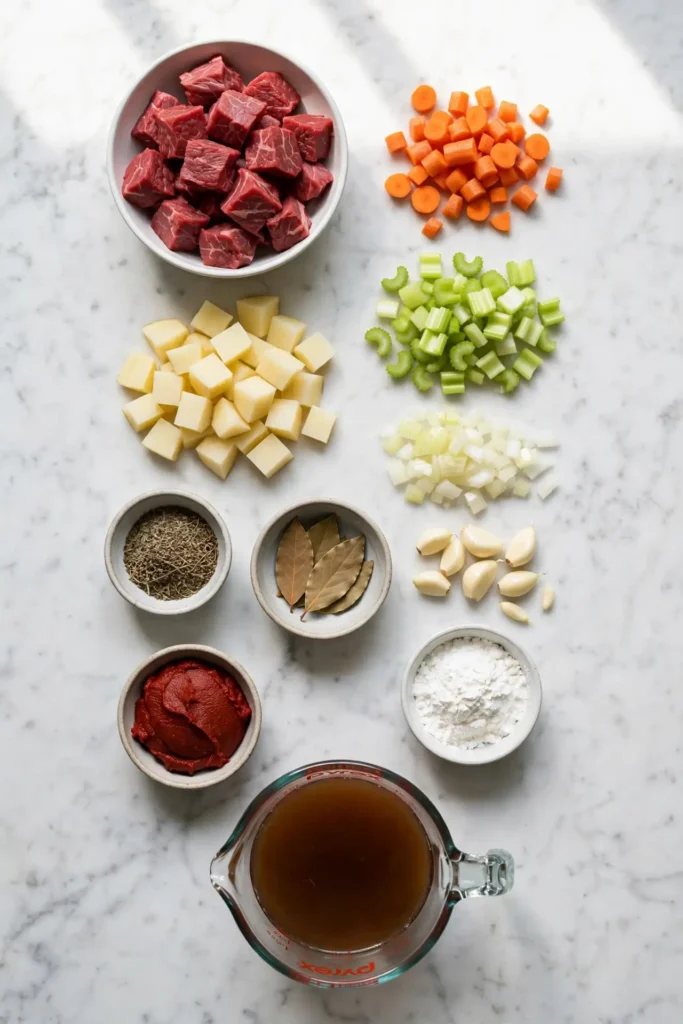
- 900 g (2 lbs) beef chuck roast, cut into 4 cm (1.5-inch) cubes — chuck has enough marbling to stay tender during the long cook time; leaner cuts dry out
- 2 tablespoons vegetable oil — for browning the beef
- 1 large onion, roughly chopped
- 4 garlic cloves, minced
- 3 tablespoons tomato paste — adds depth and color to the broth
- 1 tablespoon Worcestershire sauce — check label for halal certification; adds savory umami
- 750 ml (3 cups) beef broth, low sodium
- 250 ml (1 cup) water
- 3 medium carrots, cut into 2 cm chunks
- 3 medium potatoes (Yukon Gold or Russet), peeled and cut into 3 cm cubes
- 2 celery stalks, sliced
- 2 bay leaves
- 1 teaspoon dried thyme
- 1 teaspoon salt, plus more to taste
- ½ teaspoon black pepper
For the Thickening
- 2 tablespoons cornstarch
- 3 tablespoons cold water
Recipe Timing
| Timing Element | Duration |
|---|---|
| Prep Time | 20 minutes |
| Cook Time | 1 hour 30 minutes |
| Rest Time | 5 minutes |
| Total Time | 1 hour 55 minutes |
Servings: 4–6 | Difficulty: Easy–Medium | Cuisine: Western | Course: Main
How to Make Beef Stew — Step by Step
Step 1 — Dry and season the beef
Pat the beef cubes completely dry with paper towels. Season all sides with salt and black pepper. Drying the surface is not optional — wet beef steams instead of browns, and you lose the deep flavor that comes from a proper sear.
Why this works: Moisture on the surface of meat drops the pan temperature and prevents browning. Dry beef makes direct contact with the hot pan and develops a caramelized crust that carries flavor through the entire stew.
⚠️ Food Safety: Keep raw beef separate from vegetables and other ingredients throughout prep. Wash hands and cutting boards thoroughly after handling raw meat.
Step 2 — Brown the beef in batches
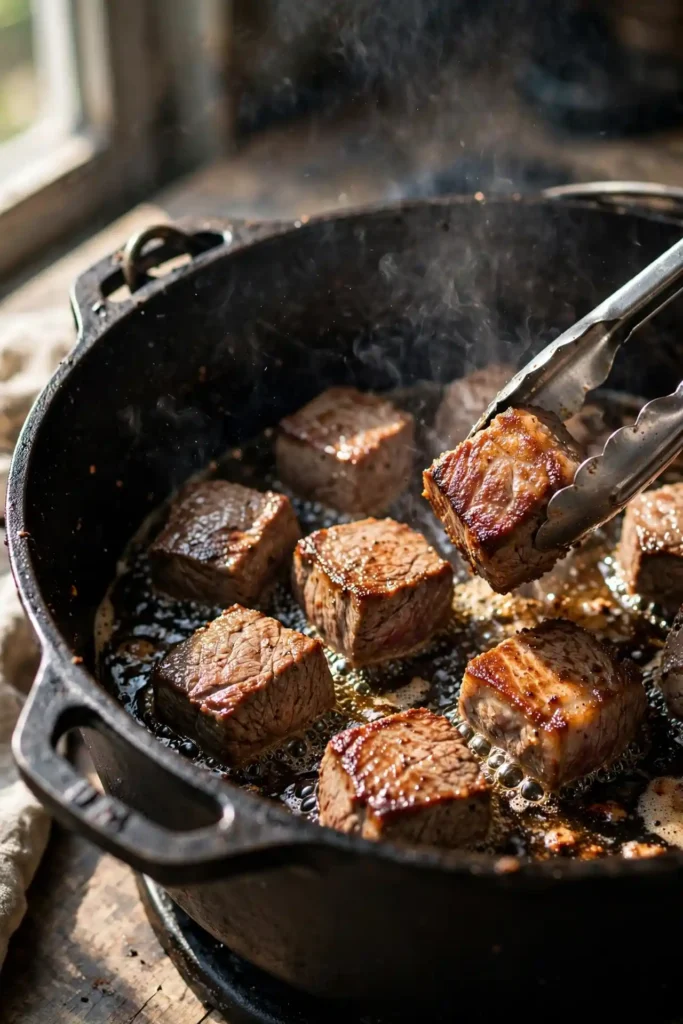
Heat the vegetable oil in a large Dutch oven or heavy-bottomed pot over medium-high heat. When the oil shimmers, add the beef in a single layer — do not crowd the pot. Sear for 3–4 minutes per side without moving until a deep brown crust forms on all sides. Work in two batches. Transfer browned beef to a plate.
Why this works: Crowding the pan drops the temperature below what’s needed for browning. One layer at a time ensures even caramelization on every piece.
Step 3 — Sauté the onion and garlic
Reduce heat to medium. In the same pot with the remaining oil and browned bits at the bottom, add the chopped onion. Cook for 5 minutes, stirring occasionally, until the onion softens and turns translucent. Add the minced garlic and cook for 1 minute more until fragrant.
Step 4 — Add tomato paste and deglaze
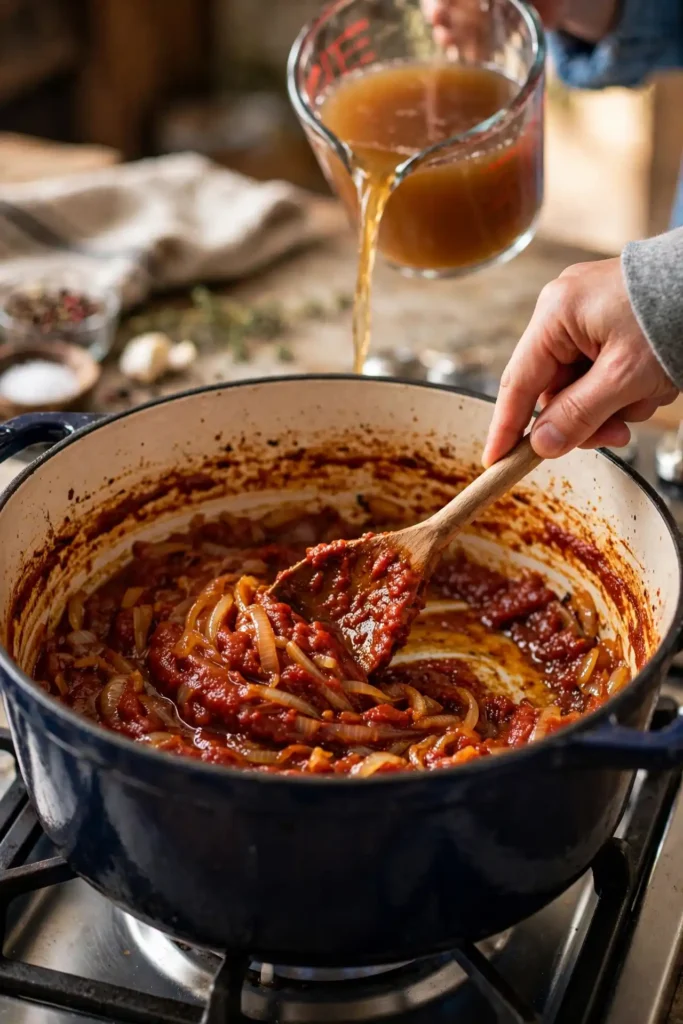
Add the tomato paste to the pot and stir it into the onions. Cook for 2 minutes, letting the paste darken slightly. Pour in the beef broth and water, then scrape the bottom of the pot with a wooden spoon to lift all the browned bits. Add Worcestershire sauce, bay leaves, dried thyme, salt, and pepper.
Why this works: Those browned bits stuck to the bottom of the pot — called fond — are concentrated flavor. The liquid releases them and they dissolve into the broth, making it significantly richer.
Step 5 — Return beef and start simmering
Return the browned beef and any resting juices from the plate back into the pot. Bring everything to a boil over high heat, then reduce to a low simmer. Cover with a lid and cook for 45 minutes.
⚠️ Food Safety: Make sure the stew reaches a full boil before reducing to a simmer, ensuring the beef reaches a safe internal temperature of at least 75°C (165°F) during cooking.
Step 6 — Add the vegetables
After 45 minutes, add the carrots, potatoes, and celery. Stir to combine, replace the lid, and continue simmering for 35–40 minutes until the potatoes are completely tender when pierced with a fork and the beef pulls apart easily.
Step 7 — Thicken the stew
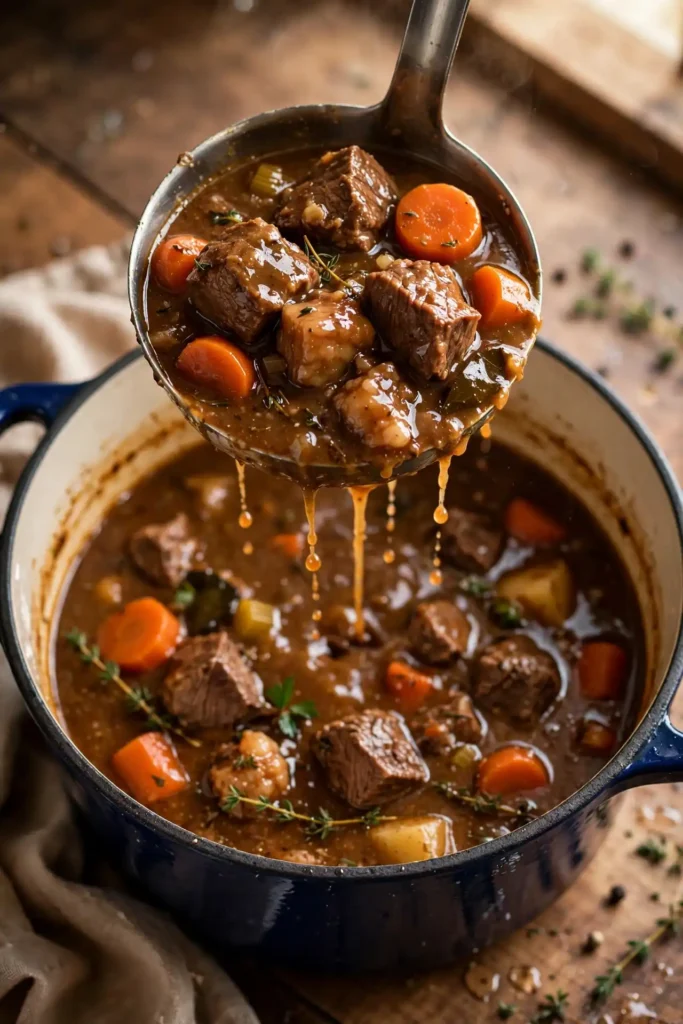
Mix the cornstarch and cold water in a small bowl until smooth. Stir this slurry into the simmering stew and cook uncovered for 5–8 minutes, stirring occasionally, until the broth thickens to a glossy, spoon-coating consistency.
Why this works: Cornstarch slurry added at the end thickens without making the broth cloudy or starchy-tasting. Cold water prevents lumps; adding it to a hot liquid does not.
Step 8 — Taste, rest, and serve
Remove the bay leaves. Taste and adjust salt and pepper. Let the stew sit uncovered for 5 minutes before serving — this allows the broth to settle and the flavors to come together.
Common Mistakes to Avoid
Mistake 1: Not browning the beef
Why it happens: Skipping the sear to save time.
How to avoid it: Browning is the most important flavor step in this recipe. An unbrowsed stew tastes flat, no matter how long you cook it. Give it 10–12 minutes total at the start.
Mistake 2: Crowding the pan during browning
Why it happens: Trying to brown all the beef at once.
How to avoid it: Use two batches. The pan needs space around each piece so heat circulates and evaporation happens. Crowded beef will steam and turn grey.
Mistake 3: Adding vegetables too early
Why it happens: Adding everything to the pot at the start.
How to avoid it: Carrots and potatoes need 35–40 minutes, not 80. Added too early they turn to mush and lose their texture.
Mistake 4: Boiling instead of simmering
Why it happens: Leaving the heat too high after adding the broth.
How to avoid it: A rolling boil makes tough beef. The collagen in chuck roast only converts to gelatin at a low, steady simmer. Adjust the heat so you see small bubbles breaking the surface, not vigorous bubbling.
Variations and Substitutions
Swap the thickener: If you prefer a flour-based stew, coat the raw beef cubes in 3 tablespoons of flour before browning in Step 2. This builds the thickening directly into the stew from the start. The result is a slightly denser, more opaque broth compared to the cornstarch version.
Root vegetable swap: Replace potatoes with parsnips or turnips for a more earthy, slightly bitter flavor profile. Cut them the same size as the potatoes so they cook at the same rate.
Add mushrooms: Stir in 200 g of sliced button or cremini mushrooms along with the onions in Step 3. They reduce significantly and add an extra layer of umami to the broth.
What to Serve With Beef Stew
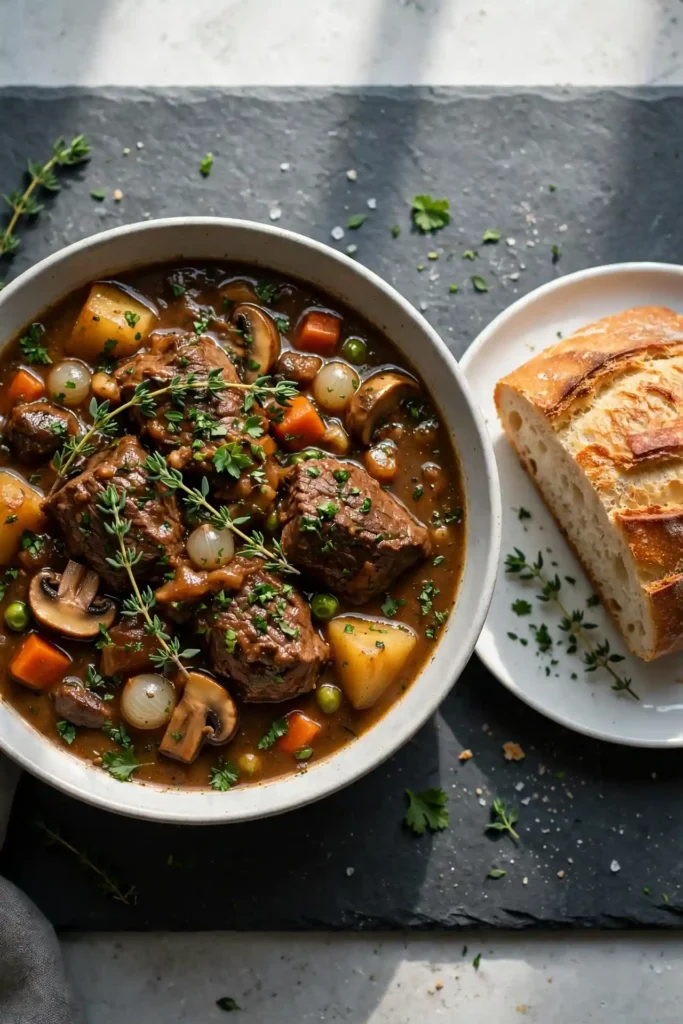
Crusty bread or dinner rolls — the most practical choice; you’ll want something to soak up the broth
Steamed white rice — absorbs the broth well and stretches servings further for a larger family
Mashed potatoes — a richer option if you want to skip the potatoes inside the stew itself
Steamed green beans or peas — adds color and a fresh contrast to the heavy broth
Simple green salad — keeps the meal balanced if the stew is the main event
Storage, Reheating and Make-Ahead
Fridge: Store in an airtight container for up to 4 days. The stew thickens considerably once cold — this is normal.
Freezer: Cool completely before transferring to freezer-safe containers or zip-lock bags. Freeze flat for up to 3 months. Thaw overnight in the fridge before reheating. Do not freeze with potatoes already in it if you can help it — they become grainy after thawing.
Reheat: Warm in a pot over medium-low heat, stirring occasionally, for 8–10 minutes until hot throughout. Add a splash of beef broth or water to loosen the broth back to its original consistency. Avoid microwaving at full power — it can make the beef rubbery.
Make-Ahead: The entire stew can be made 1–2 days ahead and refrigerated. The flavors deepen overnight. Reheat gently on the stovetop before serving.
Allergen and Dietary Information
Contains gluten via Worcestershire sauce (most brands contain malt vinegar derived from barley). For a gluten-free version, use a certified gluten-free Worcestershire sauce or substitute with 1 teaspoon soy sauce made from rice plus a few drops of white vinegar.
Contains soy if using certain Worcestershire sauce brands. Check the label if soy is a concern.
Nutritional values are estimates only and may vary based on specific ingredients, brands, and portion sizes used. For precise dietary needs, consult a registered dietitian.
Nutrition Information
(Per serving, based on 6 servings)
| Nutrient | Per Serving |
|---|---|
| Calories | 385 kcal |
| Protein | 32 g |
| Total Carbohydrates | 28 g |
| Dietary Fiber | 4 g |
| Total Sugars | 5 g |
| Total Fat | 16 g |
| Saturated Fat | 5 g |
| Sodium | 580 mg |
| Cholesterol | 85 mg |
| Potassium | 920 mg |
| Vitamin C | 18 mg |
| Calcium | 55 mg |
| Iron | 4 mg |
Nutritional values are estimates only and may vary based on specific ingredients, brands, and portion sizes used. For precise dietary needs, consult a registered dietitian.
Frequently Asked Questions
What cut of beef is best for stew?
Chuck roast is the best option. It has a high amount of connective tissue and intramuscular fat that breaks down during slow cooking, giving you tender, pull-apart beef. Leaner cuts like sirloin or round dry out and turn chewy no matter how long they cook.
How do I make beef stew meat more tender?
Two things matter: the right cut (chuck roast, not lean beef) and a low, slow simmer. Boiling toughens the proteins. A gentle simmer over 60–75 minutes gives the collagen time to convert to gelatin, which is what makes the meat soft and the broth silky.
Can I make beef stew ahead of time?
Yes, and it actually improves with time. Make it up to 2 days ahead, refrigerate it, and reheat gently on the stovetop. Add a small splash of broth when reheating to loosen the consistency.
How do I thicken beef stew without flour?
A cornstarch slurry (2 tablespoons cornstarch mixed with 3 tablespoons cold water) stirred in during the last 5–8 minutes works well. It thickens the broth without adding flavor or cloudiness.
Why does my beef stew taste bland?
Usually one of three reasons: the beef was not browned properly, the broth is undersalted, or the tomato paste was skipped. Taste the broth before serving and add salt in small increments. A teaspoon of Worcestershire sauce added at the end can also lift the flavor significantly.
Can I freeze beef stew?
Yes. Cool completely, transfer to freezer-safe containers, and freeze for up to 3 months. If the stew contains potatoes, they may turn grainy after freezing — remove them before freezing if you plan ahead, or accept the texture change.
How long does beef stew need to cook?
The beef needs at least 60–75 minutes at a low simmer to become tender. The vegetables need 35–40 minutes. Total cooking time from start to finish is about 90 minutes. Cutting it short means tough beef and undercooked vegetables.
Conclusion
A good beef stew comes down to two things you cannot skip: browning the meat and giving it enough time. Both take patience, neither takes skill. The payoff is a pot of food that improves overnight and feeds a family with minimal effort.
If you find the broth too thin at the end, let it simmer uncovered for 10 minutes before adding the cornstarch slurry — reduction concentrates the flavor and reduces the amount of thickener you need. This beef stew recipe is worth making on a Sunday so you can eat well for the next two days.
Beef Stew — Recipe Card
Beef Stew
Ingredients
Method
- Pat beef cubes dry with paper towels. Season all sides with salt and pepper.
- Heat oil in a Dutch oven over medium-high heat. Brown beef in two batches, 3–4 minutes per side, until deep brown crust forms. Transfer to a plate.
- In the same pot, sauté onion over medium heat for 5 minutes until softened. Add garlic and cook 1 minute more.
- Add tomato paste and stir into onions. Cook 2 minutes. Pour in broth and water, scraping the bottom to release all browned bits. Add Worcestershire sauce, bay leaves, thyme, salt, and pepper.
- Return beef and juices to the pot. Bring to a boil, then reduce to a low simmer. Cover and cook 45 minutes.
- Add carrots, potatoes, and celery. Cover and simmer 35–40 minutes until vegetables are tender and beef pulls apart easily.
- Mix cornstarch and cold water in a small bowl. Stir into the simmering stew and cook uncovered 5–8 minutes until broth thickens.
- Remove bay leaves. Taste and adjust salt. Rest 5 minutes before serving.