French Toast Recipe: Crispy Outside, Custardy Inside
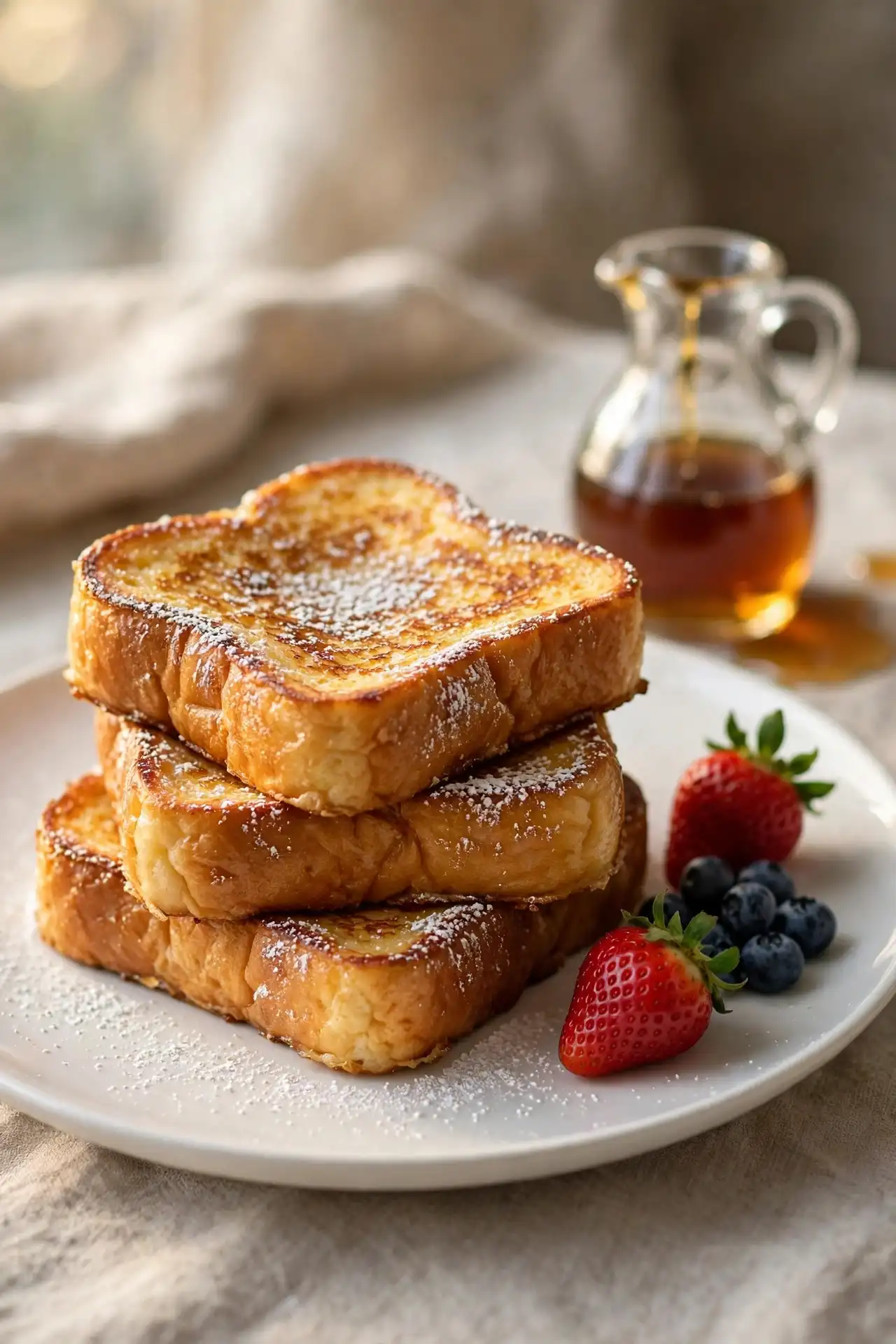
Brioche french toast sounds simple until you actually make it and end up with something soggy in the middle or scorched on the outside. Most recipes miss the two things that matter most: the custard ratio and the cooking temperature. This french toast recipe fixes both with one small adjustment to each.
The version here came from watching a family member who never measured a thing but always soaked the bread longer than felt right and cooked it over medium heat with more patience than most people give a Tuesday morning. The result was french toast with a caramelized, firm crust and a center that was soft without being wet.
Why You’ll Love This French Toast Recipe
- The extra egg yolk in the custard adds richness without requiring cream
- The soak time is long enough that the center cooks through, not just the crust
- Works with brioche, challah, or whatever thick bread you have
- Reheats well in the oven, so leftovers taste close to fresh
- No special equipment, just a skillet, a shallow dish, and a spatula
Ingredients You’ll Need
For the Custard Mixture
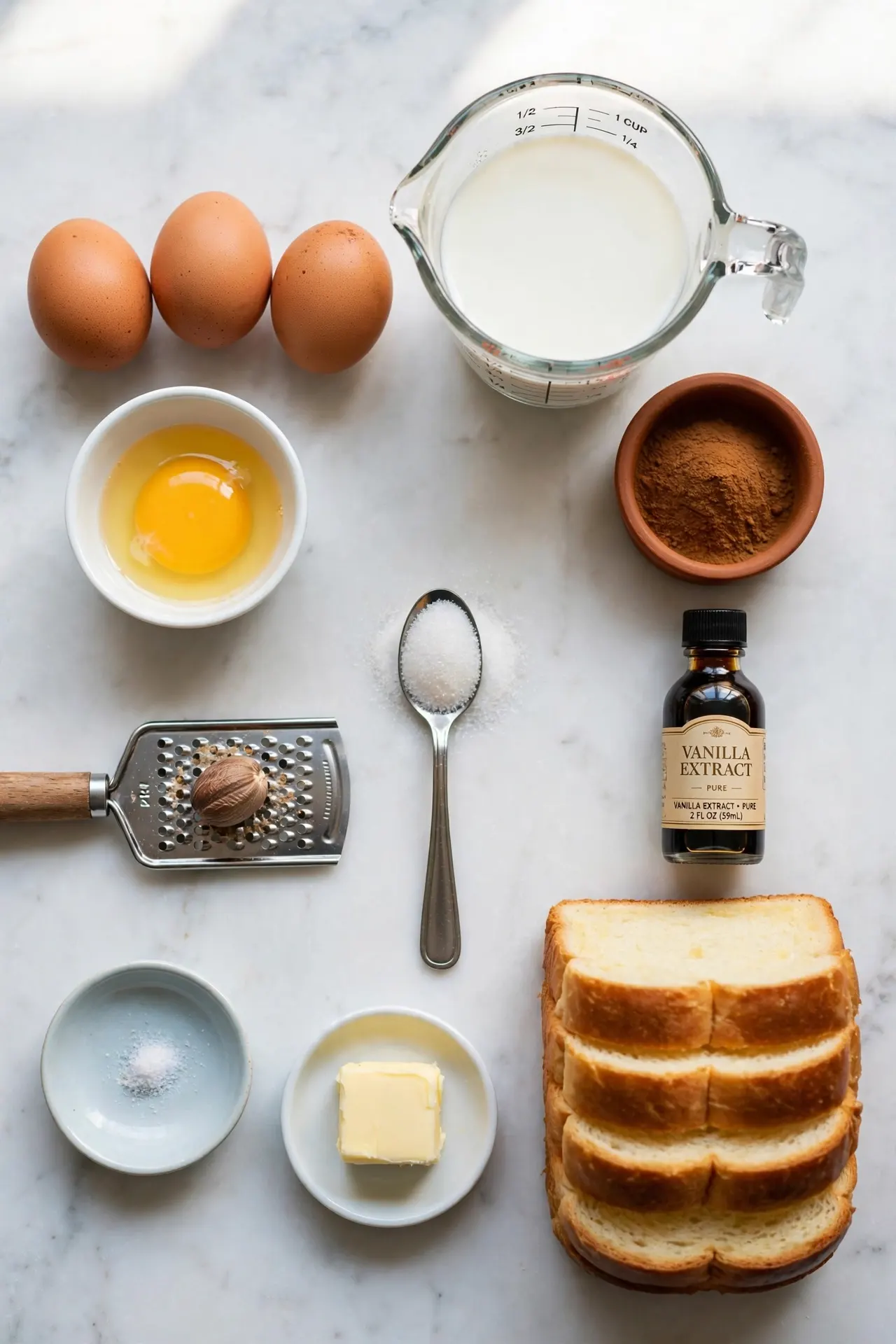
- 3 large eggs plus 1 extra egg yolk — the extra yolk adds a richer flavor and helps the custard set up firmer during cooking
- 120ml (½ cup) whole milk — whole milk provides enough fat content to hold the custard together; skim milk produces a watery mixture
- 1 tsp vanilla extract — adds warmth to the custard base; vanilla paste works as a direct swap at the same quantity
- 1 tsp ground cinnamon — whisked into the liquid first so it distributes evenly rather than settling on one side
- ¼ tsp freshly grated nutmeg — optional, but noticeably different from pre-ground; a small amount goes a long way
- 1 tbsp granulated sugar — helps the surface caramelize in the pan without making the bread noticeably sweet
- Pinch of fine salt — balances the sweetness and makes the custard flavor sharper
For Cooking and Serving
- 4 thick slices of bread, 2.5cm (1 inch) thick — brioche or challah preferred; see Variations for alternatives
- 2 tbsp unsalted butter — divided between two cooking batches; salted butter works but reduces how much caramelization you see
- Maple syrup and powdered sugar, to serve
- Fresh berries, optional
Recipe Timing
| Timing Element | Duration |
|---|---|
| Prep Time | 8 minutes |
| Cook Time | 12 minutes |
| Soak Time | 2 minutes |
| Total Time | 22 minutes |
Servings: 2 (2 slices each) | Difficulty: Easy | Cuisine: French-American | Course: Breakfast / Brunch
How to Make This French Toast Recipe, Step by Step
Step 1: Build the custard
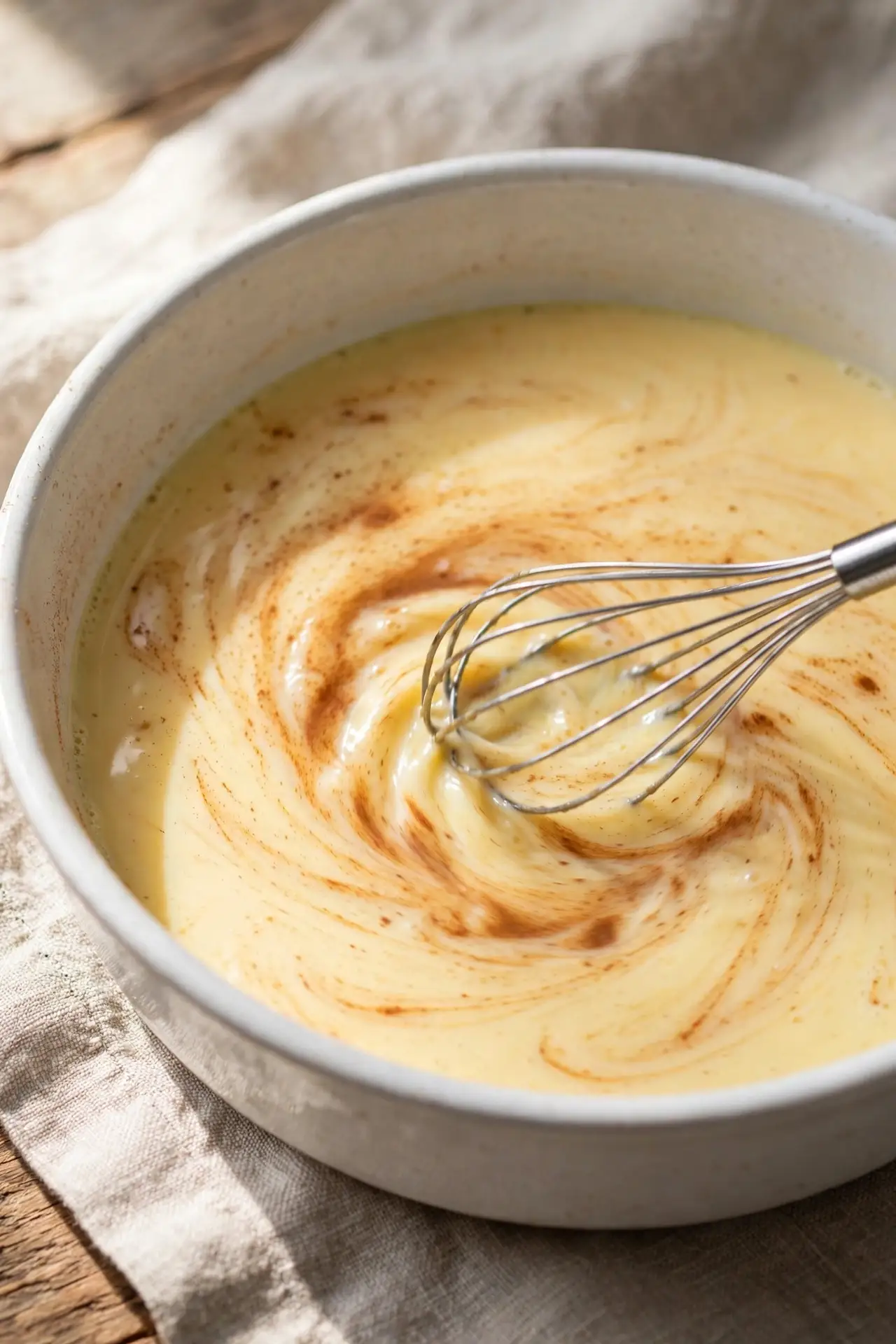
Crack the 3 whole eggs and the extra yolk into a shallow bowl or baking dish wide enough to lay a bread slice flat. Add the milk, vanilla extract, cinnamon, sugar, and salt. Whisk firmly for about 60 seconds until no streaks of egg white remain and the cinnamon is fully incorporated.
Why this works: A shallow dish lets you lay the bread completely flat, which means both sides absorb custard at the same rate. A deep bowl forces you to tip the bread at an angle and you end up with uneven soaking.
Step 2: Soak the bread
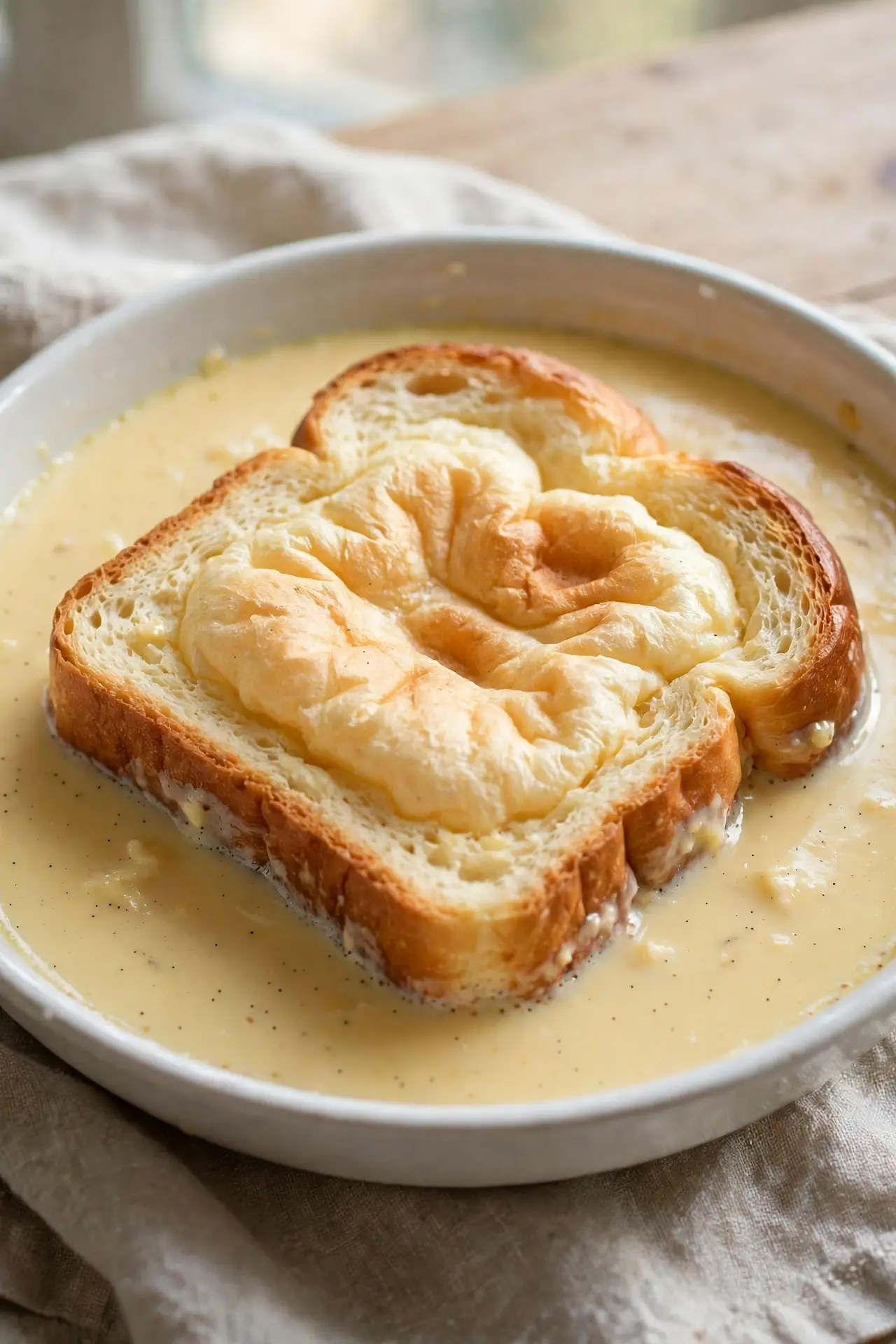
Place 2 bread slices flat in the custard. Let them sit for 45 seconds on the first side, then press each slice gently but firmly with your fingers before flipping. Soak the second side for another 45 seconds with the same press. Remove to a cutting board and let rest for 1 to 2 minutes before cooking.
Why this works: Pressing helps the custard travel past the surface crust and into the center of a thick slice. Skipping the press is the single most common reason the inside stays eggy after cooking.
⚠️ Food Safety: Eggs in the custard mixture are not fully cooked until the bread reaches a safe internal temperature. Make sure each slice reaches 74°C (165°F) before serving, particularly when cooking for young children or anyone with a compromised immune system.
Step 3: Heat the pan
Place a large skillet or griddle over medium heat. Add 1 tablespoon of butter and let it melt completely. Wait for the foam to rise and then begin to subside, about 90 seconds. The butter should be golden and fragrant, not brown or smoking.
Why this works: Butter that has moved past the foaming stage is at the right temperature for browning without burning. If the bread goes in while the butter is still actively foaming, the crust steams instead of caramelizing.
Step 4: Cook the first side
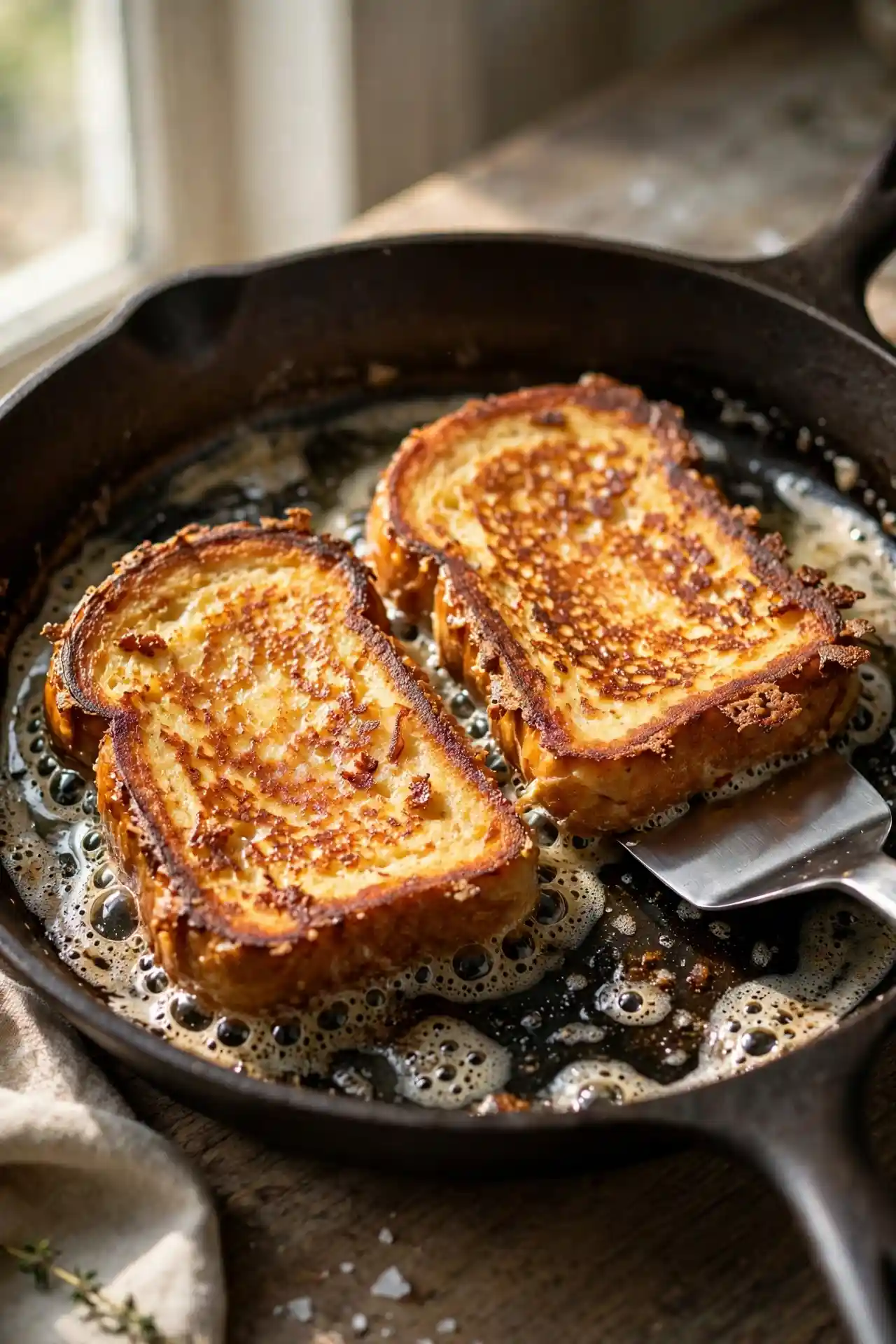
Place 2 soaked slices in the pan without touching. Cook undisturbed for 3 to 4 minutes. The bottom is ready when it is a deep, even golden brown and the edges of the bread look set and firm rather than wet and shiny.
Step 5: Flip and finish
Flip each slice once using a wide spatula. Cook the second side for 2 to 3 minutes. Press the center of each slice lightly with your finger; it should spring back firmly. If it compresses and stays flat, give it another 30 to 60 seconds.
Why this works: The second side always cooks faster because the custard has already started to set during the first cook. Color alone is not a reliable guide here; the press test tells you what is actually happening inside.
Step 6: Repeat with the remaining slices
Transfer the first batch to a warm plate. Add the second tablespoon of butter to the pan, wait for the foam to subside, then cook the remaining 2 soaked slices using the same method.
Common Mistakes to Avoid
Using thin, fresh sandwich bread
Why it happens: Standard pre-sliced bread is too thin and too soft to absorb custard without falling apart.
How to avoid it: Use bread that is at least 2.5cm (1 inch) thick. If thin sandwich bread is your only option, dip it briefly rather than soaking, about 15 seconds per side with no pressing.
Cooking on high heat to save time
Why it happens: The outside browns quickly so it looks done, but the custard inside has not had time to set.
How to avoid it: Medium heat only. This is the single most important rule in this recipe. High heat produces a burnt crust and an undercooked center every time.
Not pressing during the soak
Why it happens: The step feels unnecessary and easy to skip.
How to avoid it: A firm press with your fingers pushes the custard past the dense outer crust into the center of the bread. Without it, you get flavor only on the surface.
Skipping the rest after soaking
Why it happens: The pan is hot and waiting feels counterproductive.
How to avoid it: One to two minutes of rest on the cutting board lets the custard settle evenly through the slice. Bread that goes directly from the dish to the pan often releases liquid in the pan and steams rather than fries.
Variations and Substitutions
Bread choices: Day-old bread actually works better than fresh in this french toast recipe because slightly dry bread absorbs custard more evenly. Challah is the closest match to brioche in texture and richness. Thick-cut white sandwich bread or a day-old Italian loaf both work well. Avoid ciabatta; the large air pockets make it absorb too much custard and it tends to fall apart.
Dairy-free version: Full-fat oat milk is the strongest substitute in this french toast recipe because it has enough body to mimic the fat content of whole milk. Rice milk and almond milk are too thin and produce a noticeably flat, watery custard.
No vanilla extract: Vanilla paste at the same quantity is a direct swap. Vanilla powder works at half the amount. If you have neither, a small pinch of ground cardamom or half a teaspoon of finely grated orange zest gives a different but pleasant flavor.
Richer custard: Add 2 tablespoons of softened cream cheese to the custard mixture and blend it smooth before soaking. This thickens the custard significantly and produces a result closer to baked french toast, which works especially well when cooking for a group.
What to Serve With French Toast
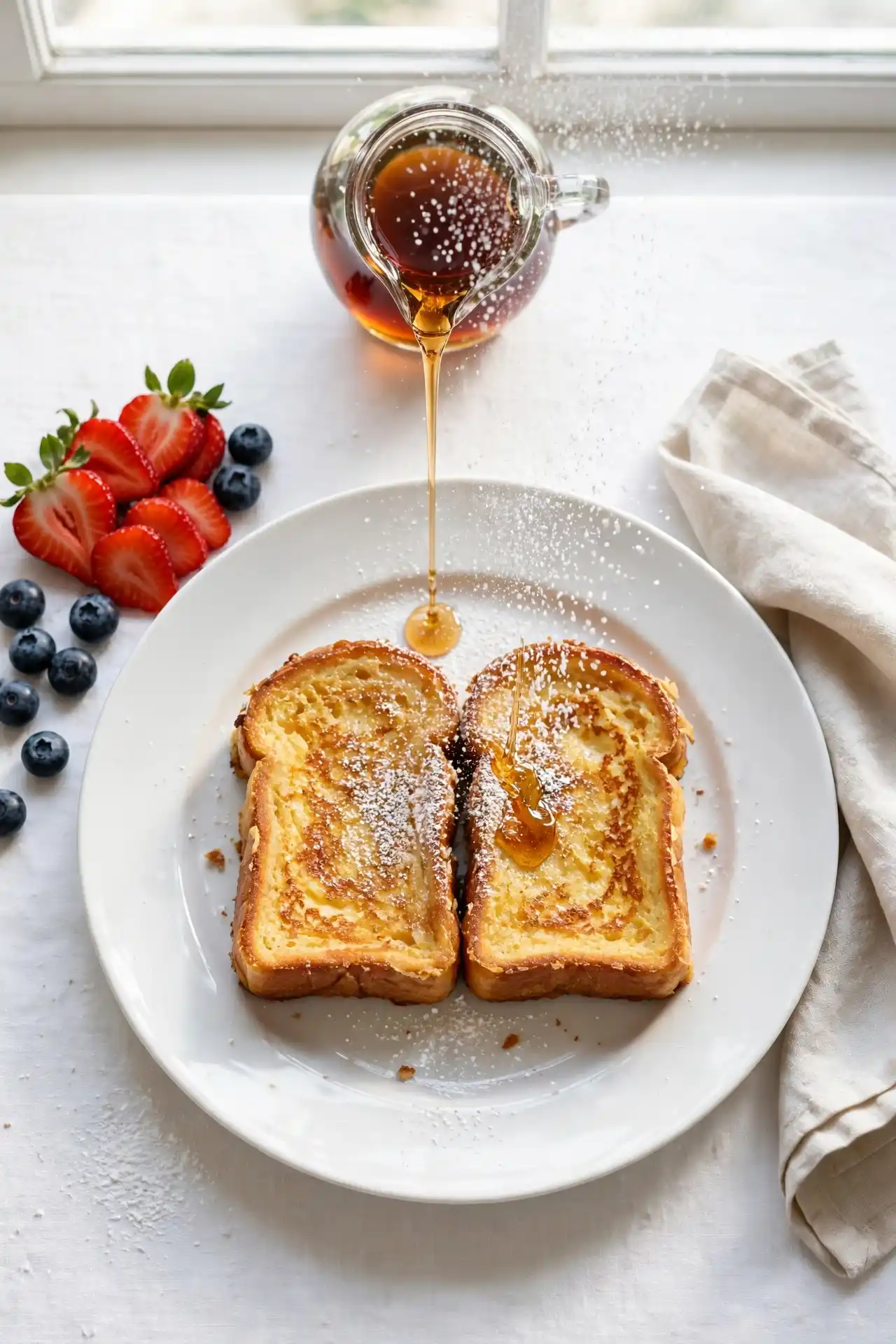
Maple syrup and powdered sugar: Pour the syrup at the table rather than on the plate so the crust stays crispy longer. A dusting of powdered sugar through a fine sieve gives a cleaner finish than sprinkling from the bag.
Fresh fruit: Sliced strawberries, blueberries, or banana all work. The acidity of the fruit cuts through the richness of the egg custard and balances each bite.
Savory pairing: A side of crispy turkey bacon or turkey sausage complements this french toast recipe well. The salt contrast sharpens the sweetness and makes the custard flavor more noticeable.
Thick yogurt and honey: A small bowl of strained yogurt with a drizzle of honey alongside is a lighter option that adds a creamy element without piling more fat on top.
Whipped cream: Keep it on the side rather than on top of the bread so it doesn’t soften the crust.
Storage, Reheating and Make-Ahead
Fridge: Store cooled slices in an airtight container with parchment paper between each slice. They keep well for up to 3 days.
Freezer: Lay cooled slices on a flat baking sheet and freeze for 1 hour until solid, then transfer to a freezer bag with parchment paper between each slice. They keep for up to 2 months. Thaw overnight in the fridge or reheat from frozen directly in the oven.
Reheating: An oven or toaster oven at 180°C (350°F) for 8 to 10 minutes, flipping once halfway through, is the best method. It restores the crispy exterior that microwaving cannot. If you use a microwave, 60 to 90 seconds on medium power works, but the crust softens.
Make-ahead: Mix the custard the night before, cover it, and store it in the fridge. Give it a quick whisk before using. Do not pre-soak bread slices and refrigerate them overnight; they absorb too much custard and fall apart in the pan.
Allergen and Dietary Notes
Contains gluten (bread), eggs, and dairy (milk, butter).
To make this dairy-free, replace the whole milk with full-fat oat milk and use a dairy-free butter alternative for cooking. The texture difference is minimal.
To make this gluten-free, use a thick-cut gluten-free loaf. Gluten-free bread varies widely in density, so reduce the soak time to about 20 seconds per side to prevent the slices from breaking apart in the pan.
Making this egg-free is not practical since eggs are the structural base of the custard.
Nutrition Information
Per serving (2 slices, calculated on ingredients above, without toppings):
| Nutrient | Per Serving |
|---|---|
| Calories | 420 kcal |
| Protein | 14 g |
| Total Carbohydrates | 42 g |
| Dietary Fiber | 2 g |
| Total Sugars | 10 g |
| Total Fat | 22 g |
| Saturated Fat | 10 g |
| Sodium | 380 mg |
| Cholesterol | 235 mg |
| Potassium | 190 mg |
| Calcium | 110 mg |
| Iron | 2.5 mg |
Nutritional values are estimates only and may vary based on specific ingredients, brands, and portion sizes used. For precise dietary needs, consult a registered dietitian.
Frequently Asked Questions
What bread works best for this french toast recipe? Brioche and challah are the strongest choices because they are enriched breads with a higher fat content; they absorb custard without going limp. Day-old bread of any kind works better than fresh because it is slightly drier and soaks more evenly. If standard sandwich bread is all you have, use the thickest slices available and dip briefly rather than soaking. According to the USDA safe handling guidelines, eggs in custard-based recipes need to reach a safe internal temperature before serving.
How do I keep french toast from being soggy? Two factors cause sogginess: too much custard absorption and too low a cooking temperature. Make sure the pan is genuinely at medium heat before the bread goes in; it should sizzle immediately on contact with the butter. Also check that you are not soaking longer than 45 to 60 seconds per side, depending on the bread type.
How long should I soak the bread? For brioche or challah: 45 seconds per side with a firm press. For dense artisan bread: 60 seconds per side. For standard sandwich bread: 15 to 20 seconds per side with no pressing. The soak time depends on the density and thickness of the bread, not just the recipe default.
Can I make this french toast recipe ahead of time? The custard mixture can be made the night before and stored covered in the fridge. Whisk it again before using. Cooked slices freeze well for up to 2 months and reheat well in the oven. Do not pre-soak raw bread slices and store them; they become too saturated and fall apart when you try to cook them.
Why does my french toast taste rubbery inside? Rubbery texture has two main causes. Either the bread was not soaked long enough and the center stayed undercooked, or the heat was too high and the outside set before the inside had time to firm up. Medium heat with a full 45-second soak and a press solves both problems in this french toast recipe.
Can I make this without vanilla extract? Yes. Vanilla paste at the same quantity is the cleanest substitute. Vanilla powder works at half the amount. Without any vanilla the custard still holds together and cooks correctly; it just tastes less complex. A small pinch of cardamom or a little orange zest are easy alternatives that add a different but pleasant note. For more on flavor substitutions in baking, Healthline’s overview of vanilla extract alternatives is a useful reference.
Can I freeze and reheat french toast? Yes, and it reheats well. Freeze cooled slices flat first, then bag them with parchment between each slice. Reheat from frozen at 180°C (350°F) for 10 to 12 minutes in the oven, flipping once. The crust comes back close to its original texture, which a microwave cannot replicate.
Conclusion
The difference between mediocre french toast and genuinely good french toast is not the bread or the toppings; it is the custard and the heat. This french toast recipe gets both right with no complicated technique, just a proper soak, a firm press, and the patience to keep the heat at medium. The extra egg yolk costs you nothing extra and makes a noticeable difference to the flavor and texture.
If you take one thing from this recipe, remember the press during soaking. It is the step most people skip and the one that matters most for getting the center to cook through without burning the outside.
French Toast Recipe Card
French Toast Recipe: Crispy Outside, Custardy Inside
Ingredients
Method
- Crack the 3 eggs and extra yolk into a shallow dish. Add the milk, vanilla, cinnamon, sugar, and salt. Whisk for 60 seconds until no egg white streaks remain.
- Place 2 bread slices flat in the custard. Soak 45 seconds on the first side, press firmly, flip, and soak 45 seconds on the second side with another press. Transfer to a cutting board and rest 1 to 2 minutes.
- Heat a skillet over medium heat. Add 1 tbsp butter and wait for the foam to subside, about 90 seconds.
- Place the 2 soaked slices in the pan. Cook 3 to 4 minutes undisturbed until deeply golden on the bottom and set at the edges.
- Flip and cook 2 to 3 minutes until the second side is golden and the center springs back firmly when pressed.
- Remove to a warm plate. Add the remaining 1 tbsp butter to the pan, wait for the foam to subside, then repeat with the remaining 2 soaked slices.
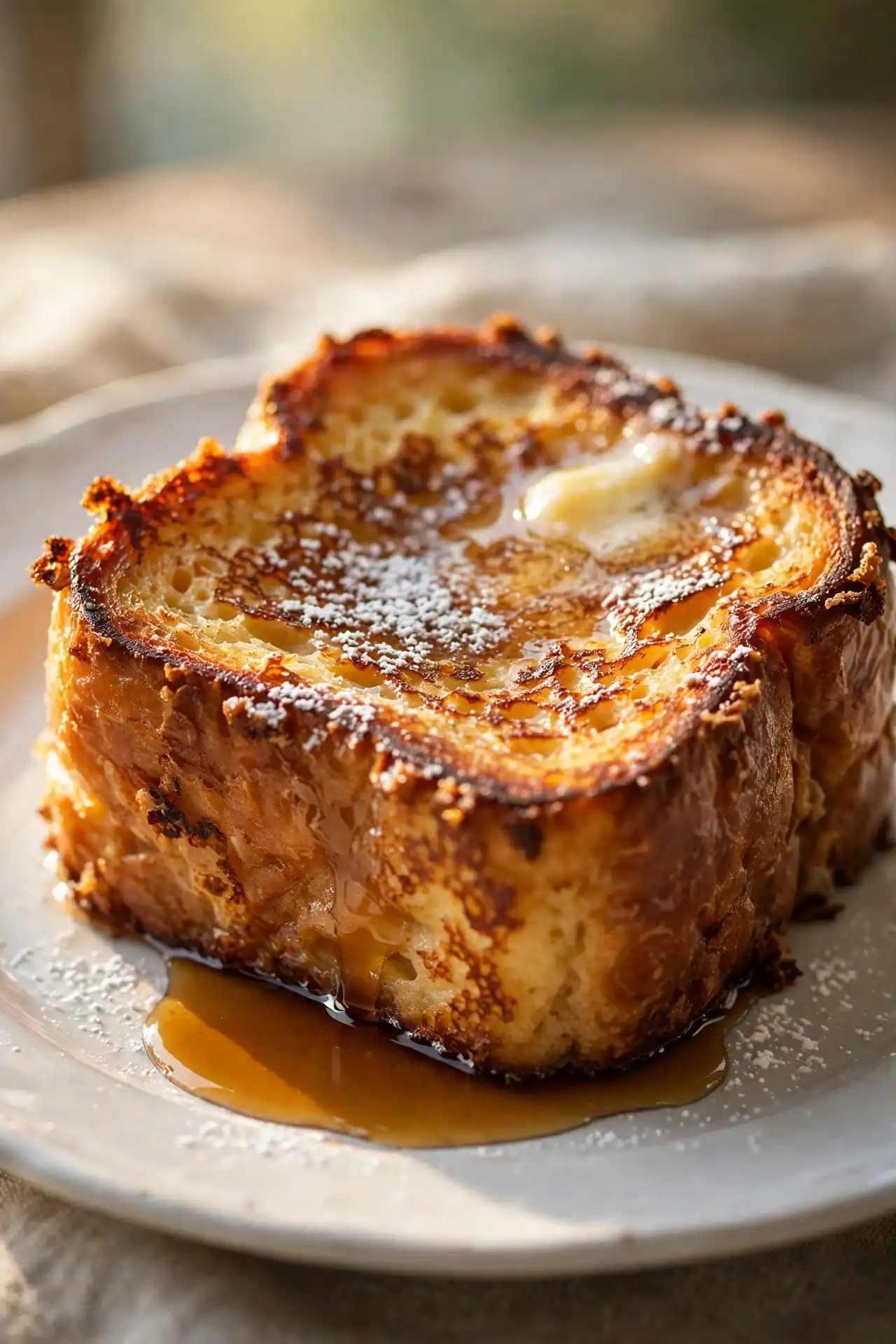
- Serve immediately with maple syrup and a dusting of powdered sugar.