Chicken Noodle Soup Recipe (Homemade & Comforting)
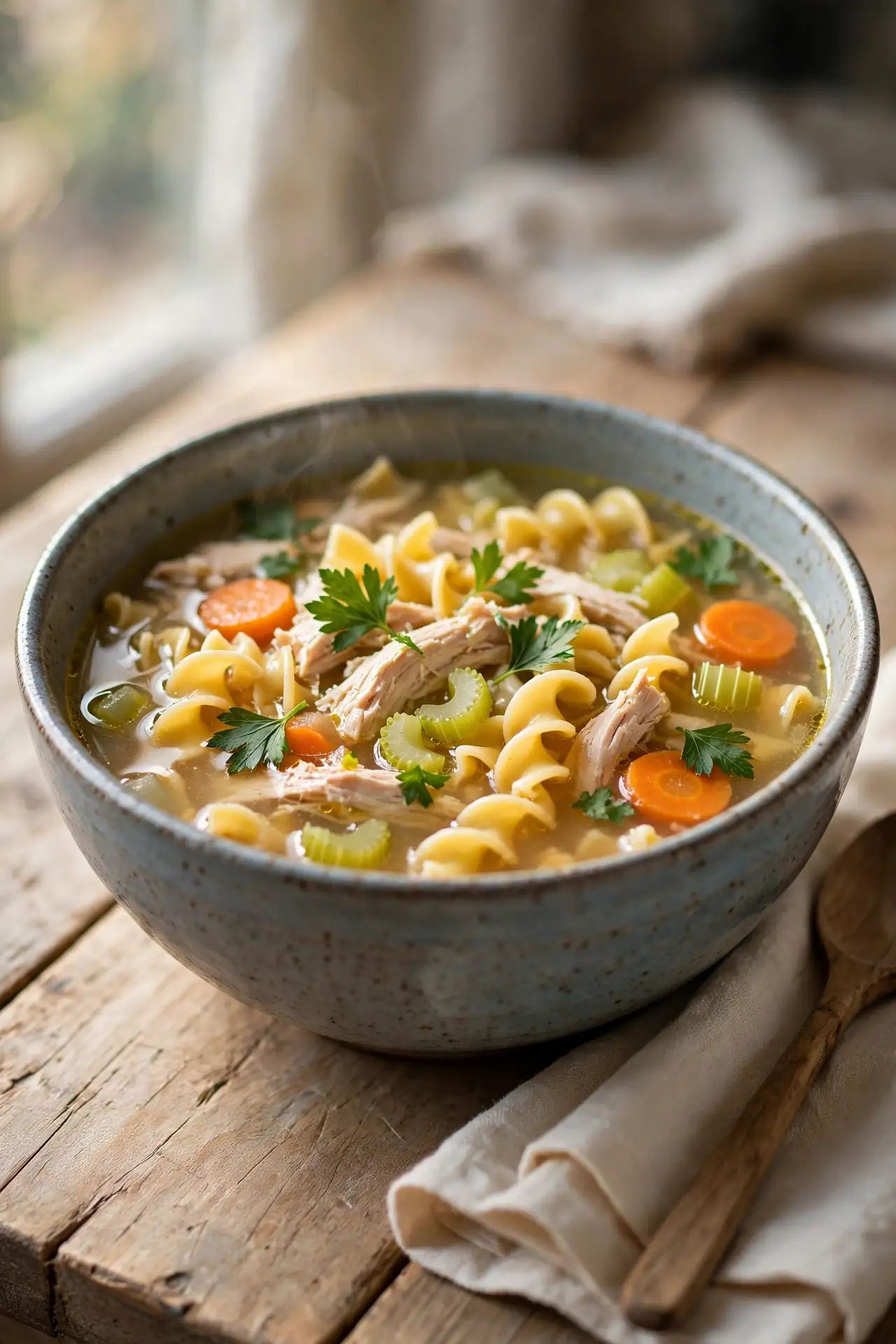
Chicken noodle soup made from scratch tastes nothing like the version from a can. The broth is the difference: genuinely golden, with a body that comes from the chicken itself rather than from a carton or a cube. Growing up, this was the one meal that needed no occasion — just a cold evening, a big pot on the stove, and a smell that filled the house for the next hour.
What makes this version worth making is where it starts. Most recipes use boneless chicken breast and store-bought stock, which gives you something edible but flat. Bone-in chicken pieces — thighs and drumsticks — release collagen and fat into the water as they simmer. That’s what gives the broth its slightly glossy, fuller quality that you simply cannot add in after the fact.
This takes about 70 minutes from start to finish. The hands-on work is roughly 15 of those minutes.
Why You’ll Love This Chicken Noodle Soup
- The broth builds its own flavor from the chicken bones and skin — no flavor packets needed
- Bone-in thighs and drumsticks shred into bigger, more satisfying pieces than chicken breast
- Egg noodles cooked directly in the broth absorb the flavor as they soften
- Works for weeknight dinners and straightforward enough to make when you’re not feeling well
- The soup base (broth, chicken, vegetables) freezes well for up to 3 months
Ingredients You’ll Need
For the Soup Base
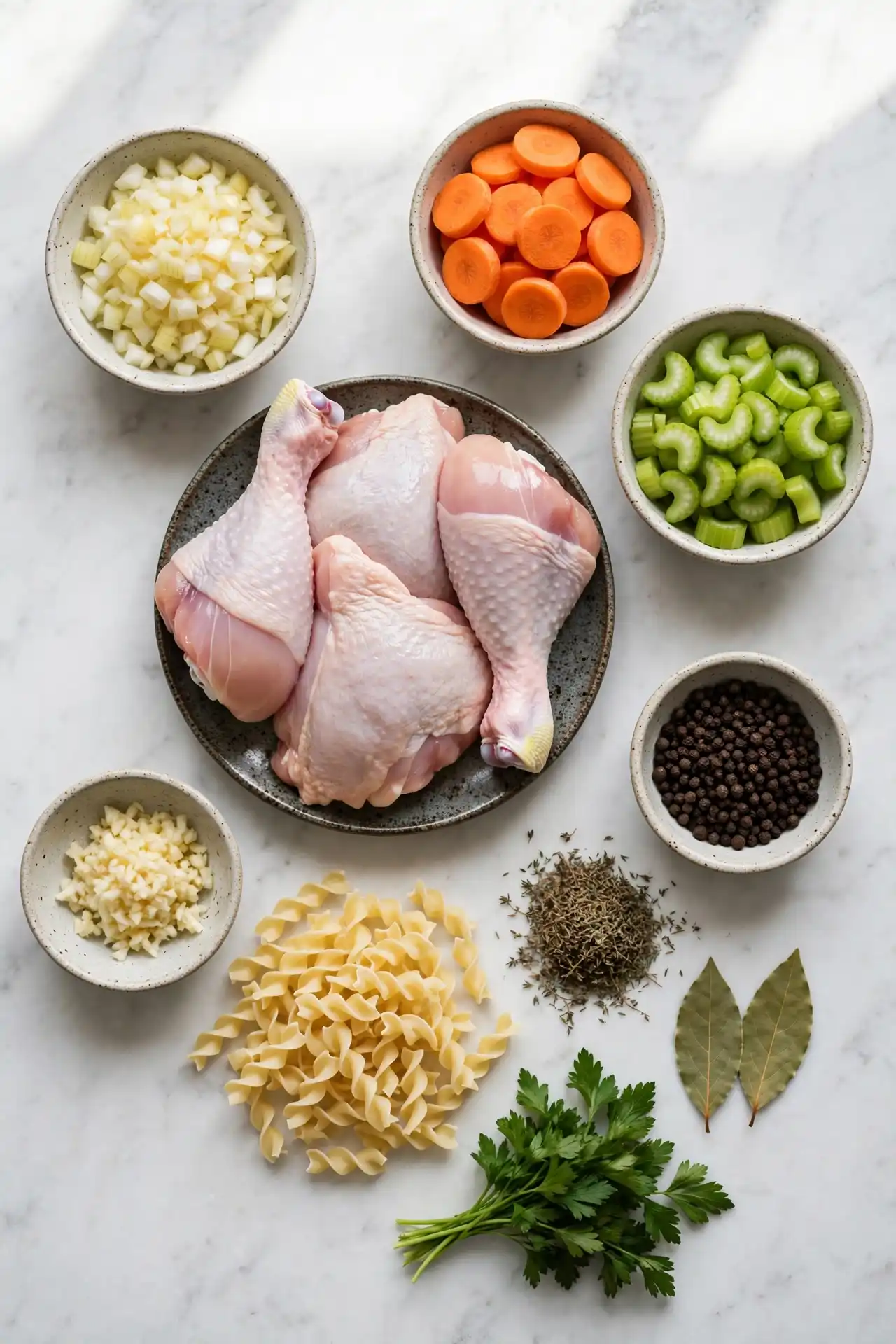
- 1.2 kg (2.6 lbs) bone-in, skin-on chicken thighs and drumsticks — skin-on gives the broth a richer color and body; thighs and drumsticks yield far more flavor than breast
- 2 tbsp olive oil — for softening the vegetables before the liquid goes in
- 1 large yellow onion, diced — forms the foundation of the flavor base
- 3 medium carrots, peeled and sliced into 5mm rounds — add natural sweetness and color
- 3 stalks celery, sliced — contribute a mild savory depth to the broth
- 4 cloves garlic, minced — added after the other vegetables to avoid burning
- 2 litres (8 cups) water or halal-certified low-sodium chicken broth — water lets the chicken build the broth from zero; pre-made broth adds depth faster if you’re short on time
- 2 bay leaves
- 1 tsp dried thyme
- 1½ tsp fine sea salt, plus more to taste
- ½ tsp black pepper
- Small bunch fresh flat-leaf parsley, stems and leaves separated — stems go into the pot during cooking, leaves reserved for garnish
For the Noodles
- 200g (7 oz) wide egg noodles — wide noodles hold their shape in hot broth better than thin varieties
Substitution: If egg noodles are unavailable, ditalini or small fusilli work well. Cooking time may vary by 1 to 2 minutes — check the packet.
Recipe Timing
| Timing Element | Duration |
|---|---|
| Prep Time | 15 minutes |
| Cook Time | 55 minutes |
| Total Time | 70 minutes |
Servings: 6 | Difficulty: Easy | Cuisine: American | Course: Main / Soup
How to Make Chicken Noodle Soup — Step by Step
Step 1: Soften the vegetables
Heat 2 tbsp olive oil in a large heavy-bottomed pot or Dutch oven over medium heat. Add the diced onion, sliced carrots, and celery. Cook, stirring occasionally, for 6 to 8 minutes until the onion is soft and translucent and the carrots have lost their raw look at the edges.
Add the minced garlic and stir for 1 minute until fragrant. Don’t let it brown.
Why this works: Sautéing the vegetables in oil before adding any liquid draws out their natural sugars, which gives the broth a rounder, slightly sweet depth. Soup made with raw vegetables added directly to water tastes noticeably flatter.
Step 2: Add the chicken and liquid
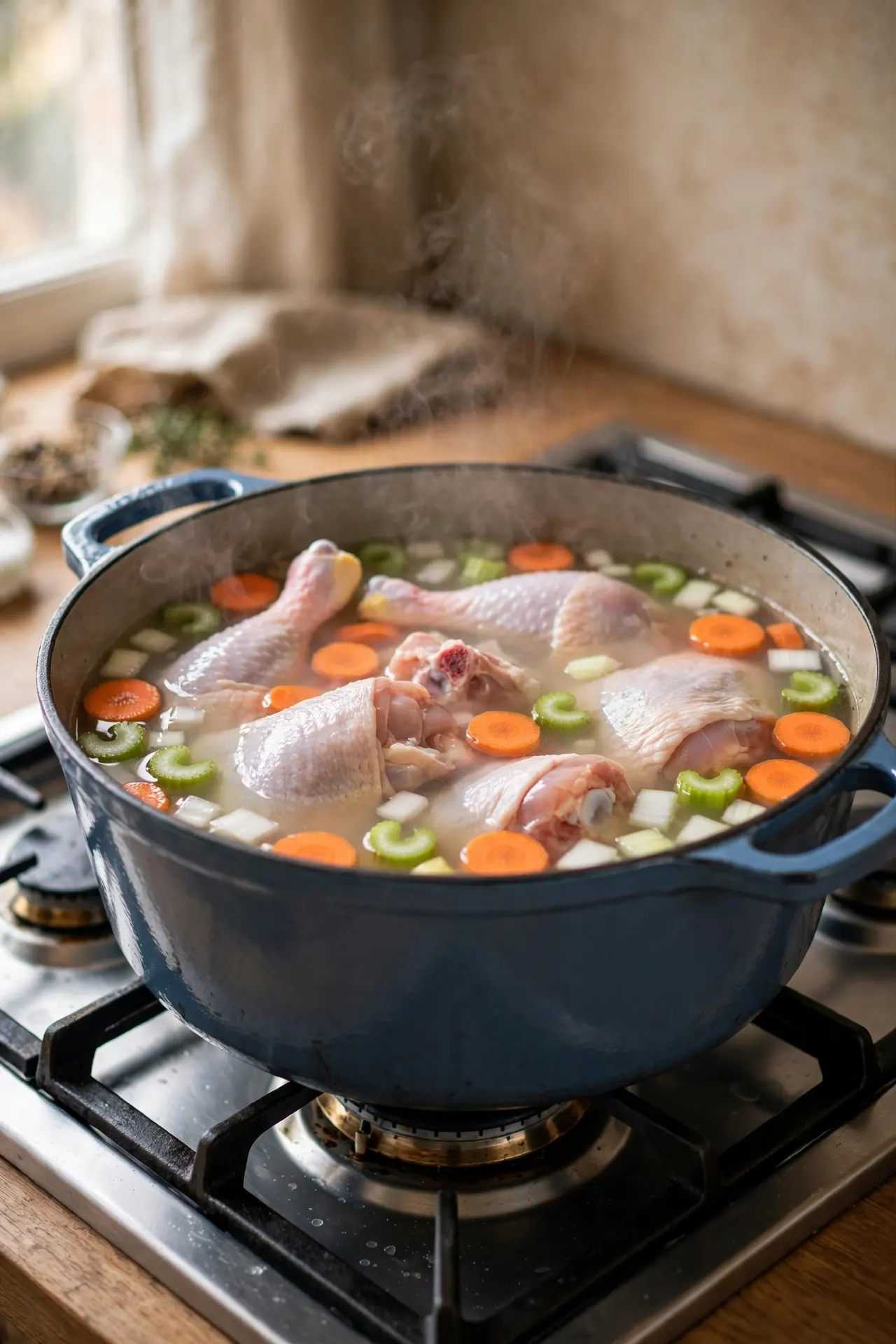
Place the chicken pieces skin-side down in the pot, nestling them among the vegetables. Pour in the 2 litres of water or chicken broth. Add the bay leaves, thyme, parsley stems, 1½ tsp salt, and black pepper.
⚠️ Food Safety: Handle raw chicken carefully. Wash your hands thoroughly before and after touching raw poultry. Keep it well away from ready-to-eat ingredients on your prep surface.
Increase the heat to high and bring the pot to a full boil. In the first 3 to 4 minutes, grey foam will rise to the surface. Skim it off with a wide spoon and discard it.
Why this works: That foam is coagulated protein releasing from the chicken. Removing it is what separates a clear, golden broth from a cloudy, slightly bitter one. It takes two minutes and makes a visible difference.
Step 3: Simmer the chicken
Reduce the heat to low. Partially cover the pot with the lid slightly ajar to allow some steam to escape. Simmer gently for 35 to 40 minutes.
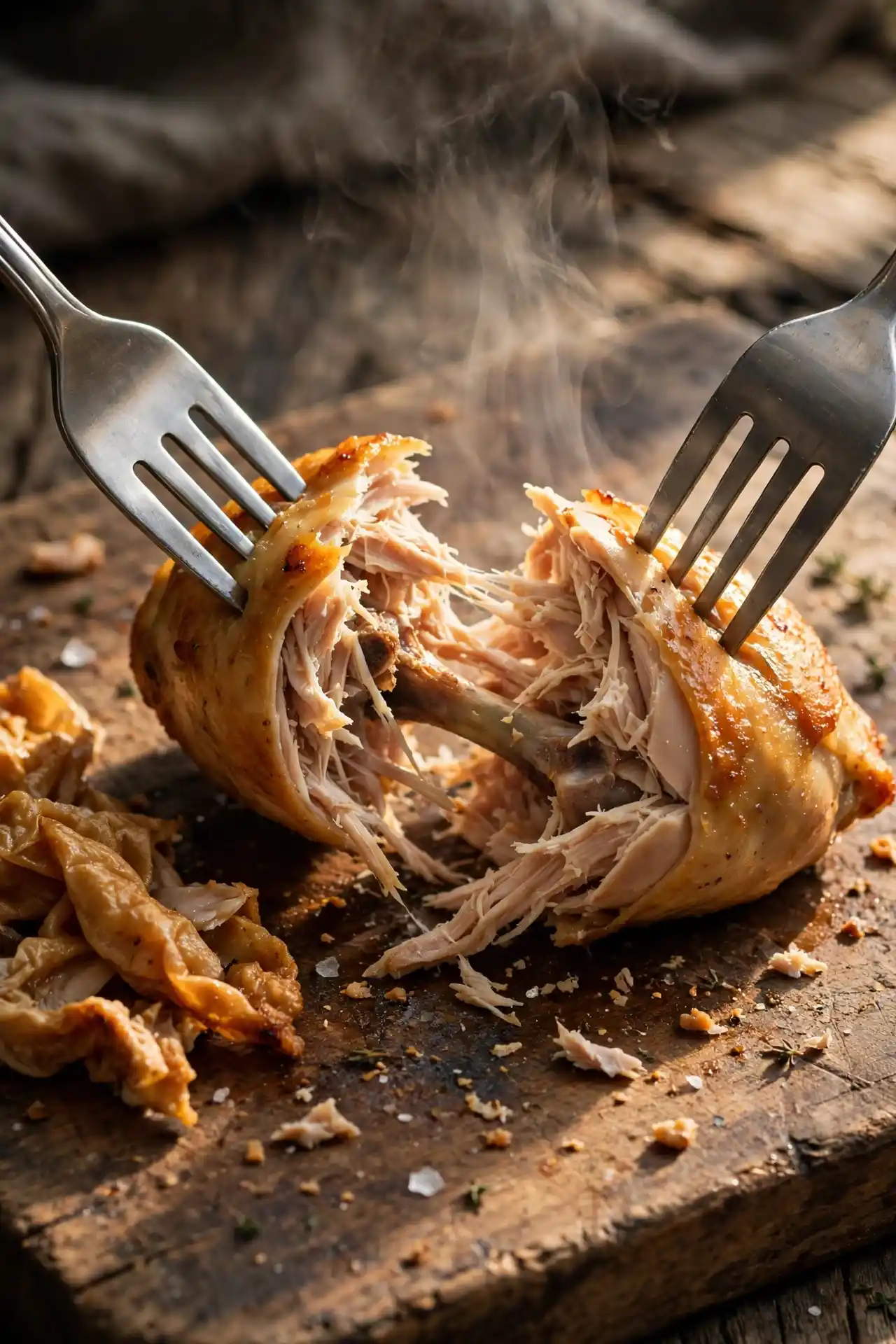
The chicken is fully cooked when the meat pulls away from the bone without resistance and an instant-read thermometer inserted into the thickest part of a thigh reads 75°C (165°F). This is the safe internal temperature for poultry recommended by the USDA. Remove the pieces with tongs and set them on a plate to cool for 5 minutes.
Step 4: Shred the chicken and clear the broth
Using two forks, pull the chicken meat from the bones in rough, bite-sized pieces. Discard the skin and bones. Set the shredded meat aside.
Fish out and discard the bay leaves and parsley stems from the broth. If a thin layer of fat sits on the surface, skim most of it off with a spoon for a cleaner result — or leave it for extra flavor.
Step 5: Cook the noodles
Bring the broth back to a rolling boil over high heat. Add the 200g of egg noodles and cook according to the packet directions — typically 6 to 8 minutes — until tender but still with a slight resistance when bitten.
Why this works: Cooking the noodles directly in the broth rather than in a separate pot means they absorb the chicken flavor as they soften. You get more depth in every bite with no extra effort.
Step 6: Combine, season, and serve
Return the shredded chicken to the pot and stir everything together. Taste the broth and adjust salt — depending on whether you used water or pre-made broth, another ¼ to ½ tsp is usually needed.
⚠️ Food Safety: After returning the shredded chicken, make sure the soup reaches a full simmer before serving, especially if the chicken sat on the plate for more than 10 minutes while the noodles cooked.
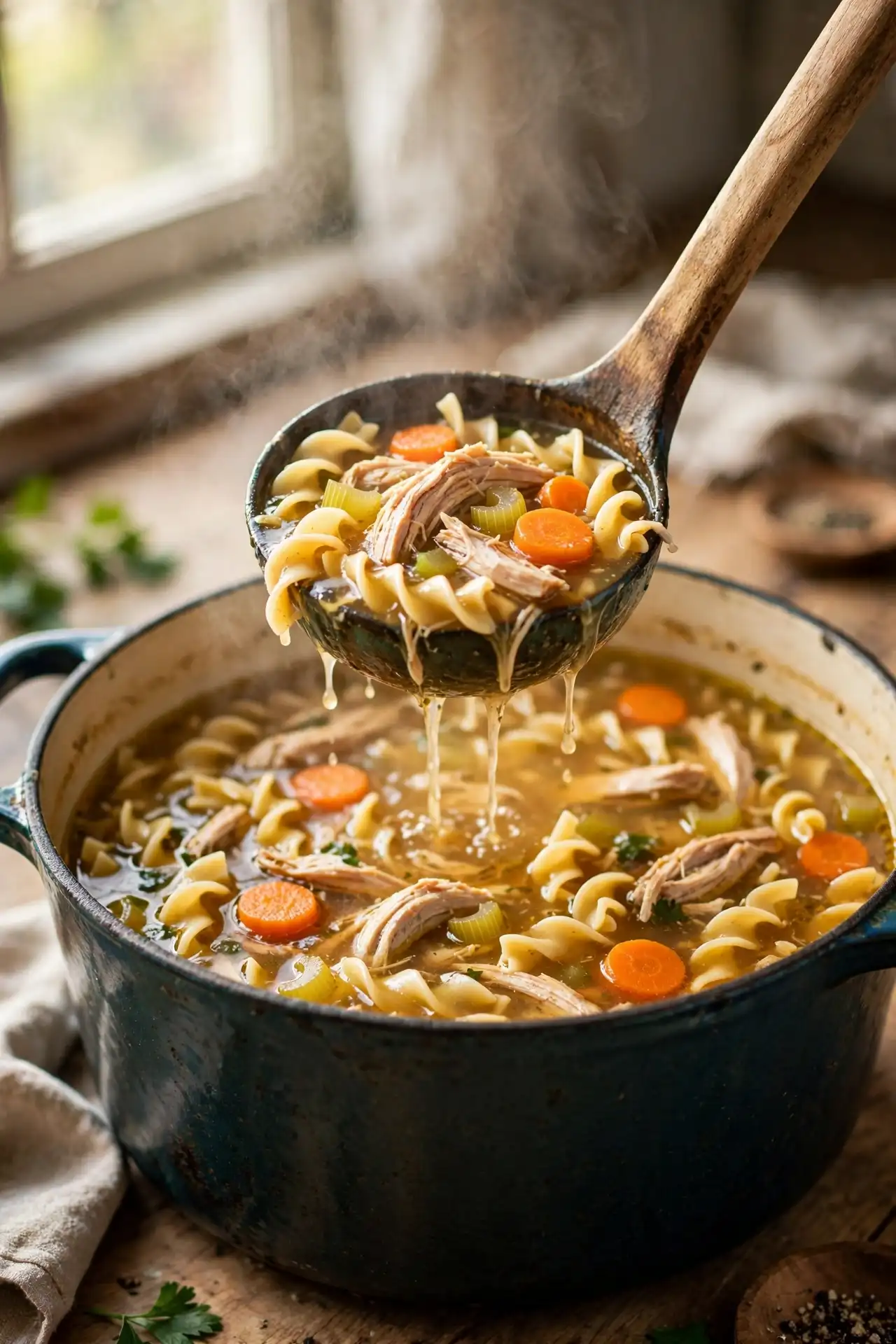
Ladle into bowls and top with the reserved fresh parsley leaves.
Key Tips for Best Results
Use bone-in, skin-on chicken — not boneless breast. This is the single most important variable in this recipe. The bones and skin release collagen into the liquid as they cook, giving the broth body and a slightly glossy finish. Boneless, skinless breast produces a noticeably thinner, paler broth.
Salt in stages, not all at once. Add about half the salt at the start and taste again after the chicken has simmered and once more after the noodles are done. The broth concentrates slightly as it cooks, and a final adjustment at the end is almost always needed.
Partially cover the pot during the simmer. A fully covered pot traps steam and raises the temperature too high, which pushes the simmer into a light boil. A lid left slightly ajar keeps the temperature gentle and the broth clear.
Common Mistakes to Avoid
Boiling instead of simmering after the initial skim.
Why it happens: Most people assume higher heat means faster cooking.
How to avoid it: After you’ve skimmed the foam, drop the heat to the lowest setting that keeps the surface gently bubbling. Continuous hard boiling makes the chicken rubbery and causes the broth to turn cloudy and slightly greasy-tasting.
Adding the noodles before the chicken finishes.
Why it happens: It seems efficient to cook everything together.
How to avoid it: Noodles added too early are overcooked well before the chicken is done. Always complete the chicken simmer and shred the meat first, then bring the broth back to a boil before adding noodles as the final step.
Under-seasoning throughout.
Why it happens: Most cooks add all the salt at the beginning and don’t taste again.
How to avoid it: Taste the broth at least twice — once after the simmer and once after the noodles cook. Both steps change the broth’s concentration and flavor. A final squeeze of lemon juice will also sharpen everything noticeably.
Variations & Substitutions
Slow cooker version. Complete Step 1 on the stovetop — the sauté step matters and can’t be skipped. Transfer everything to the slow cooker, add the liquid and seasonings, and cook on low for 6 to 7 hours. Shred the chicken when done and cook the noodles separately before serving.
Lemon herb version. Add the juice of one lemon and 1 tsp of lemon zest along with the parsley at the end. The acidity lifts the broth and makes it taste brighter without changing the overall character of the dish.
Orzo instead of egg noodles. Orzo holds up better than egg noodles in leftovers — it doesn’t absorb liquid as aggressively and reheats without going mushy as quickly. Use the same quantity by weight.
What to Serve With Chicken Noodle Soup
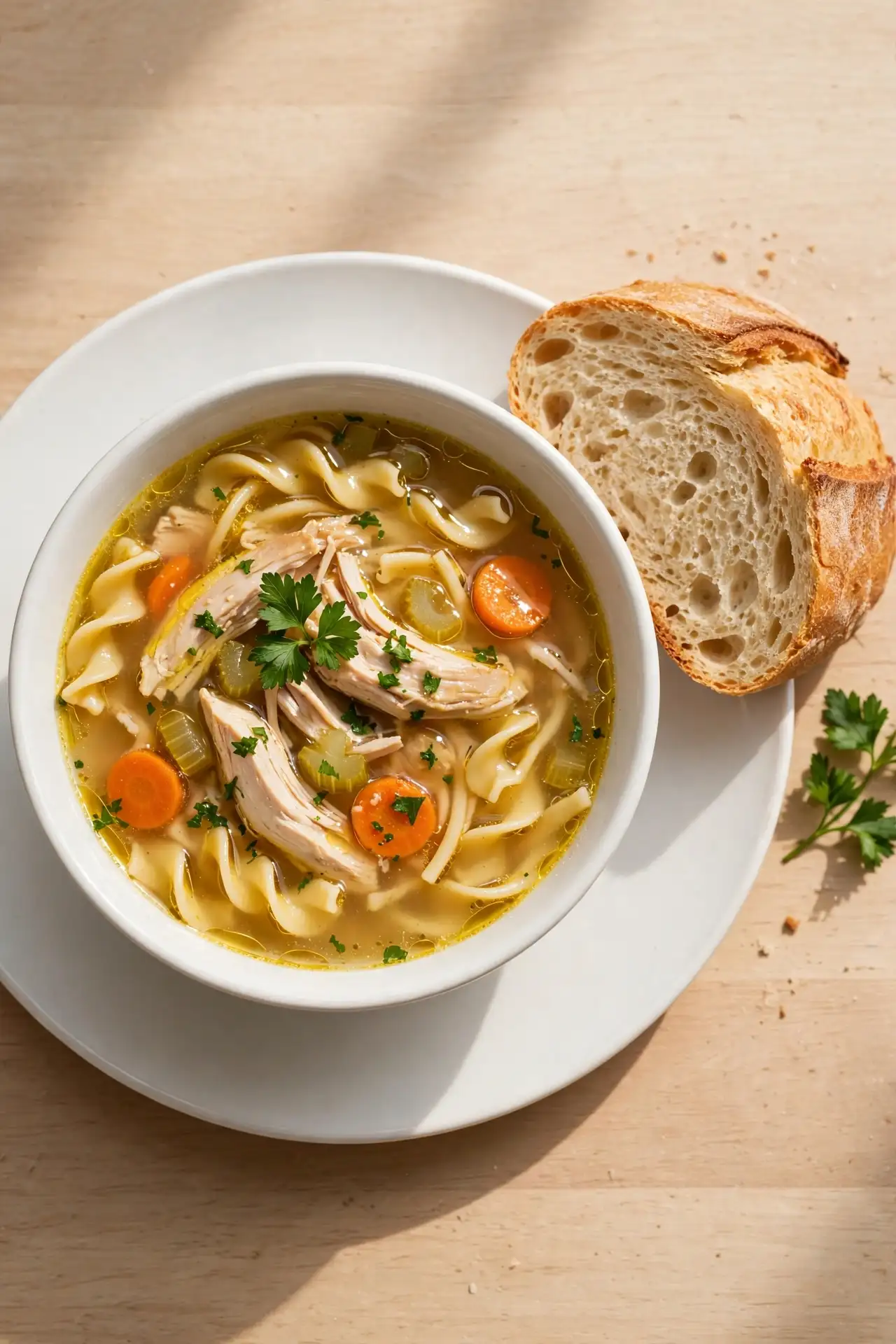
Crusty white bread or dinner rolls. The bread soaks up the broth, which is often the best part of the bowl. A thick slice works better than thin sandwich bread.
A simple green salad. Lightly dressed with lemon and olive oil, it balances the richness of the soup without competing with it.
Garlic toast. Broil a few slices of bread with butter and minced garlic for 3 to 4 minutes. The slight caramelization adds a texture contrast that plain bread doesn’t.
Steamed rice. If you skip the noodles, serve the chicken and broth ladled over plain steamed rice. Good option when you’re storing the soup base separately for later.
Storage, Reheating & Make-Ahead
Fridge: Store the soup base — broth, chicken, and vegetables — in an airtight container for up to 4 days. Keep cooked noodles in a separate container for up to 2 days. Combining them in the fridge means the noodles absorb most of the broth overnight.
Freezer: The soup base freezes well for up to 3 months. Do not freeze with noodles in it — they become very soft after thawing. Pour into freezer-safe containers or zip-lock bags, leaving 2cm of space at the top for expansion. Thaw overnight in the fridge.
Reheat: Warm the broth and chicken in a pot over medium heat for 8 to 10 minutes until it reaches a full simmer. Cook fresh noodles separately and add them when serving. If the broth has thickened in the fridge, add ¼ to ½ cup of water to bring it back to the right consistency.
Make-ahead: The entire soup base can be made up to 2 days in advance and refrigerated. Cook noodles fresh when you’re ready to serve.
Allergen & Dietary Disclosure
This recipe contains gluten (egg noodles) and eggs (egg noodles).
To make this gluten-free, try substituting the egg noodles with a certified gluten-free pasta or rice vermicelli. Cooking times will vary slightly depending on the brand.
To make this egg-free, use plain semolina pasta or any rice-based noodle in place of the egg noodles.
Nutrition Information
Per serving (based on 6 servings):
| Nutrient | Per Serving |
|---|---|
| Calories | 380 kcal |
| Protein | 32 g |
| Total Carbohydrates | 24 g |
| Dietary Fiber | 2 g |
| Total Sugars | 3 g |
| Total Fat | 11 g |
| Saturated Fat | 2.5 g |
| Sodium | 680 mg |
| Cholesterol | 95 mg |
| Potassium | 480 mg |
| Vitamin C | 8 mg |
| Calcium | 45 mg |
| Iron | 2 mg |
Nutritional data for individual ingredients referenced from the USDA FoodData Central database.
Nutritional values are estimates only and may vary based on specific ingredients, brands, and portion sizes used. For precise dietary needs, consult a registered dietitian.
Frequently Asked Questions
Can I use rotisserie chicken to make chicken noodle soup faster? Yes. Shred the meat off a store-bought rotisserie chicken and skip Steps 2 to 4. Use 2 litres of halal-certified chicken broth instead of water, since you won’t be building a broth from raw chicken. Simmer the vegetables in the broth for 15 minutes before adding the noodles and pre-shredded chicken. Total time drops to about 30 minutes.
Why does my homemade soup taste bland? Usually it’s two things: not enough salt, and not getting enough flavor out of the chicken during the simmer. Make sure you’re tasting and adjusting salt at least twice during cooking — at the start and again at the end. If you used water rather than broth, a full 40-minute simmer is essential. A squeeze of lemon juice just before serving will also sharpen the flavor noticeably.
Can I freeze chicken noodle soup with the noodles already in it? It’s not a good idea. Noodles absorb liquid as they freeze and turn very soft once thawed. Freeze the broth and shredded chicken separately, then cook fresh noodles each time you reheat. The base freezes well for up to 3 months.
What noodles work best in this soup? Wide egg noodles are the standard choice and hold up reasonably well in hot broth. Orzo and ditalini both reheat better if leftovers matter to you. Avoid angel hair or very thin pasta — they dissolve too quickly in the liquid and turn the broth starchy.
How long does homemade soup keep in the fridge? The broth and chicken keep well for 4 days in a sealed container. Cooked noodles stored separately last about 2 days. After 4 days, discard the soup even if it smells fine — bacterial growth doesn’t always produce a noticeable odor.
How do I stop the noodles from getting soggy in leftovers? Store them separately. After cooking, rinse the noodles briefly under cold water to stop the cooking process, drizzle with a small amount of olive oil to prevent sticking, and refrigerate in a separate container. Add them to each bowl at the point of reheating.
Can I make this in a slow cooker? Yes, with one non-negotiable adjustment: sauté the onion, carrots, and celery in olive oil on the stovetop first before transferring to the slow cooker. This step takes 8 minutes and meaningfully improves the broth flavor. Cook on low for 6 to 7 hours, shred the chicken, then cook the noodles separately before serving.
Conclusion
Chicken noodle soup made with bone-in chicken is a noticeably different result from versions that start with boneless breast and a carton. The 35-minute simmer does most of the work — you don’t need to do much besides skim the surface in the first few minutes and let the heat do the rest. If you make the base a day ahead, the flavor deepens overnight and the fat rises to the surface where you can lift it off cleanly before reheating. Keep the noodles stored separately and this becomes one of the most practical things you can have ready in the fridge during the week.
Chicken Noodle Soup — Recipe Card
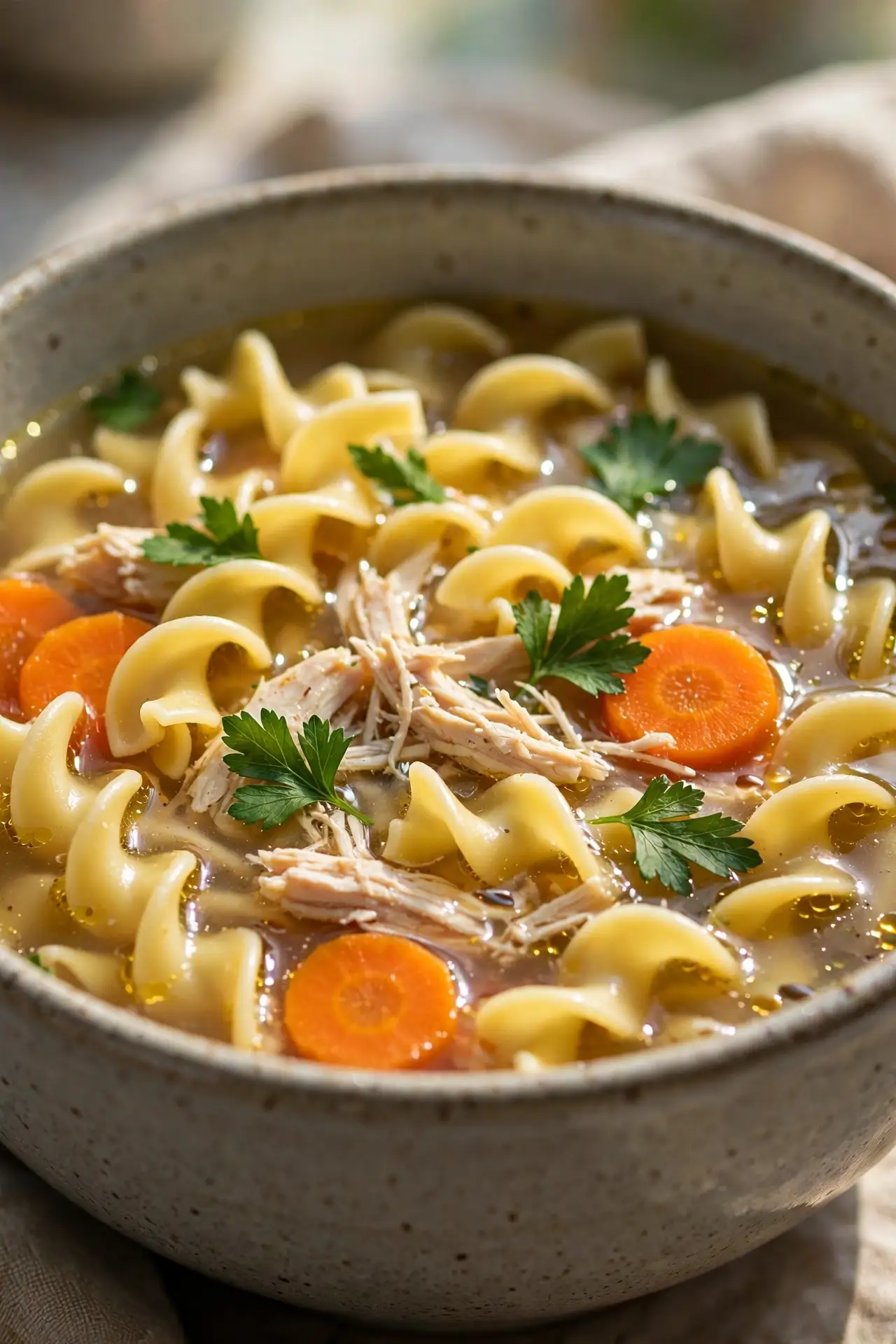
Chicken Noodle Soup
Ingredients
Method
- Heat olive oil in a large pot over medium heat. Add onion, carrots, and celery. Cook 6 to 8 minutes until softened. Add garlic and stir for 1 minute.
- Add chicken pieces, water or broth, bay leaves, thyme, parsley stems, 1½ tsp salt, and black pepper. Bring to a full boil.
- Skim grey foam from the surface. Reduce heat to low, partially cover, and simmer 35 to 40 minutes until chicken reaches 75°C (165°F) at the thickest point.
- Remove chicken with tongs. Cool 5 minutes, then shred the meat. Discard skin, bones, bay leaves, and parsley stems.
- Return broth to a rolling boil. Add egg noodles and cook 6 to 8 minutes until tender with a slight bite.
- Return shredded chicken to the pot. Taste and adjust salt. Serve hot, topped with fresh parsley leaves.