
Lasagna Soup — Rich, Cheesy, and Ready in 45 Minutes
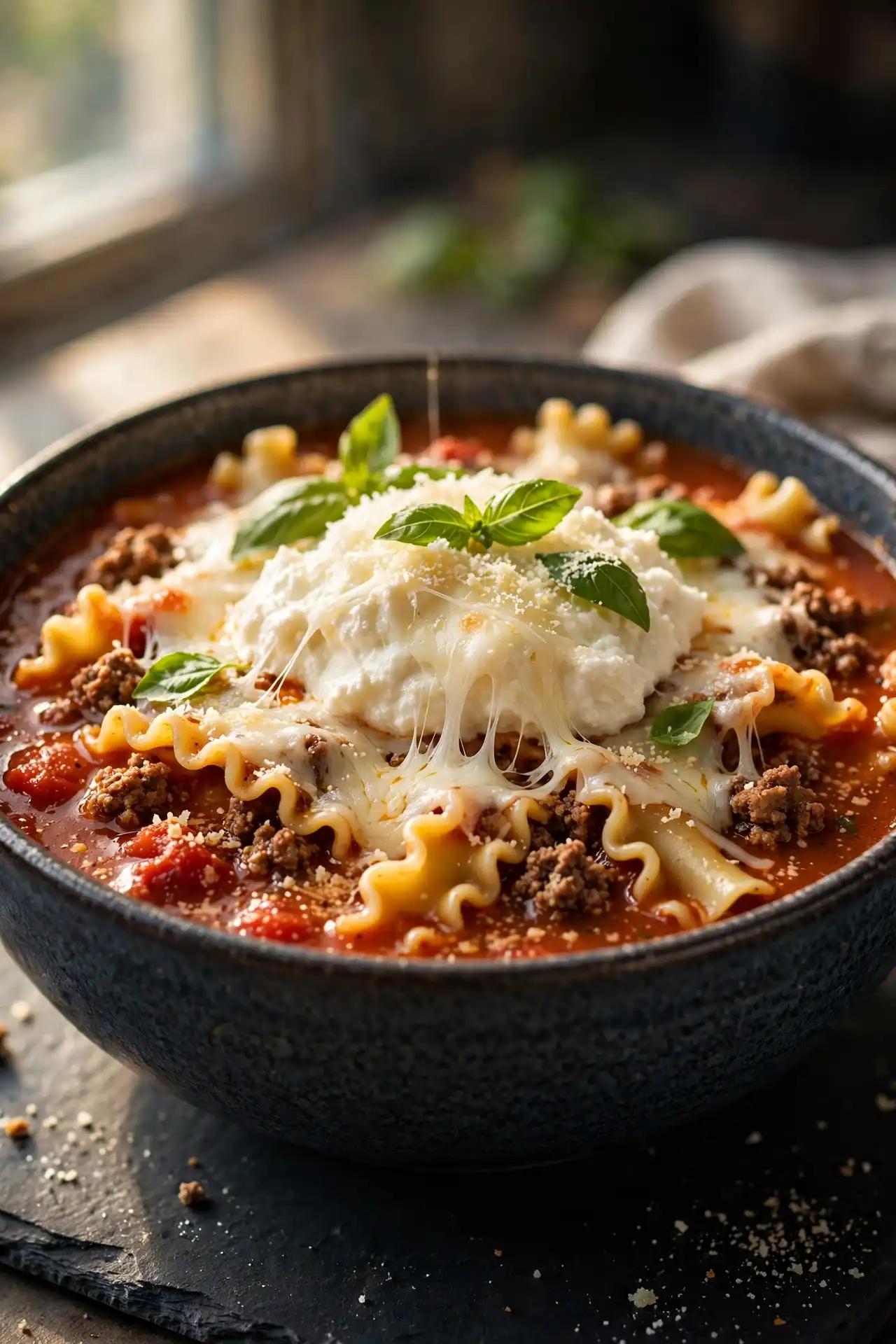
Lasagna soup gives you everything you love about a tray of baked lasagna — the beef, the tomatoes, the layers of melted cheese — without the hour of assembly and the dirty baking dish. It comes together in one pot, uses broken lasagna noodles cooked right in the broth, and hits the table in about 45 minutes.
This version builds a proper tomato-beef broth from scratch using tomato paste, crushed tomatoes, and good beef stock. The ricotta and mozzarella go on top, not stirred in, so every bowl gets that distinct lasagna-style cheese pull when you dig in.
Why You’ll Love This Lasagna Soup
One pot, no layering. Everything cooks in a single Dutch oven or heavy pot — no baking dish, no bechamel, no foil.
Real lasagna flavor. Tomato paste browned with the beef builds depth you don’t get from just adding canned tomatoes at the end.
Cheese that actually behaves. Keeping ricotta and mozzarella as a topping means the soup stays brothy and the cheese stays rich rather than disappearing into the liquid.
Ready in 45 minutes on a weeknight. From cold pan to bowls on the table, this takes less time than most baked pasta dishes take just to preheat.
Scales easily. The recipe makes 4 generous servings but doubles cleanly for a larger family or meal prep batch.
Ingredients You’ll Need
For the Soup Base
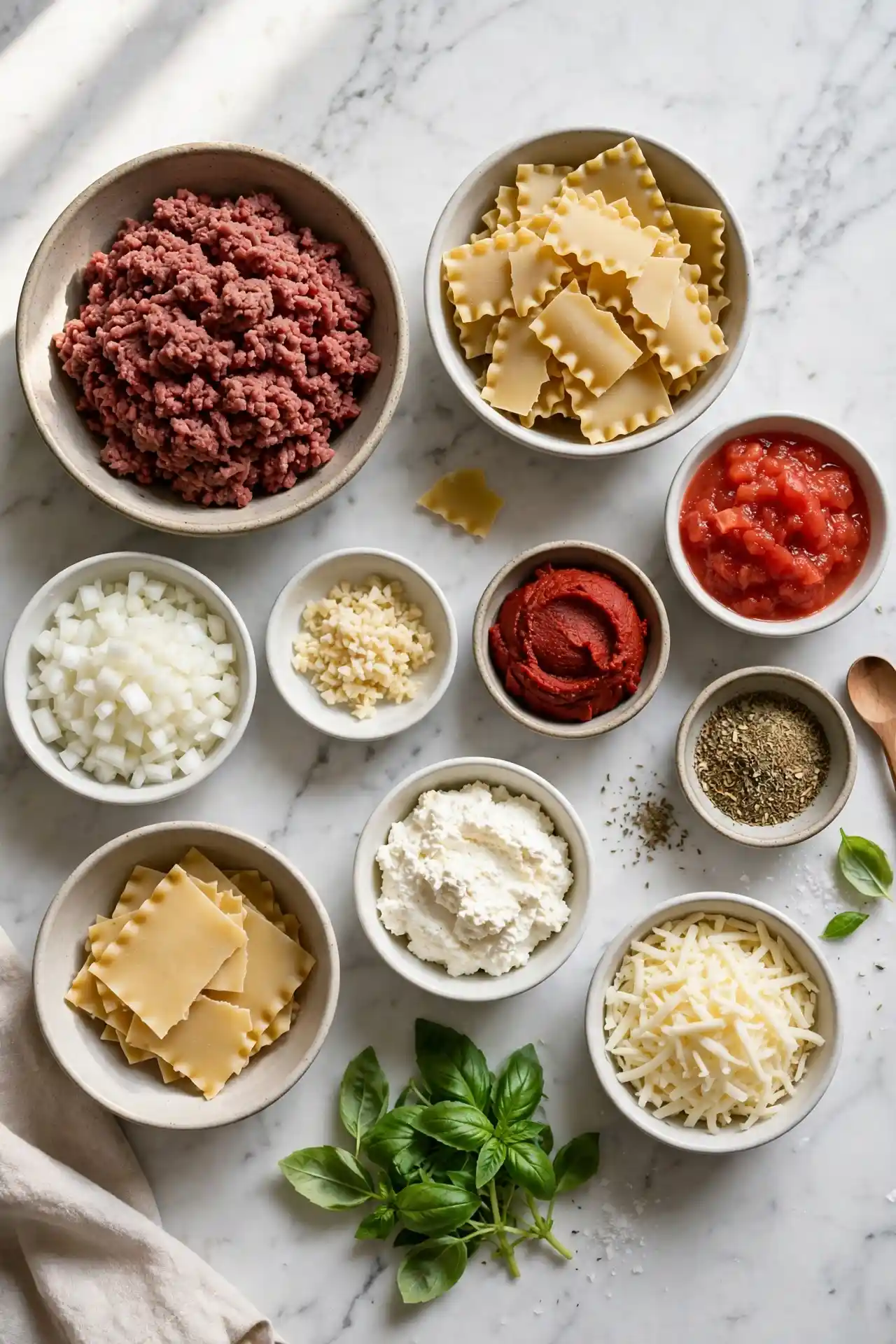
- 500g (1 lb) ground beef — 80/20 fat ratio gives the best flavor; lean beef tends to produce a drier, less rich broth
- 1 medium yellow onion, finely diced (about 1 cup) — forms the flavor base alongside garlic
- 4 cloves garlic, minced — adds sharp aromatic depth; add it after the onion softens to avoid burning
- 2 tbsp tomato paste — browning this directly in the pot before adding liquid is what gives the broth its concentrated, almost roasted tomato flavor
- 1 can (400g / 14 oz) crushed tomatoes
- 1 can (400g / 14 oz) diced tomatoes, with liquid
- 900ml (4 cups) beef broth — use a good-quality low-sodium broth so you can control the salt
- 1 tsp dried Italian seasoning
- 1 tsp dried oregano
- ½ tsp sweet paprika
- ½ tsp salt, plus more to taste
- ¼ tsp black pepper
- ½ tsp sugar — balances the acidity of the crushed tomatoes
- 8–10 lasagna noodles, broken into roughly 5cm (2-inch) pieces (about 200g / 7 oz dry)
- 1 tbsp olive oil
For the Cheese Topping
- 250g (1 cup) full-fat ricotta cheese — whole-milk ricotta holds its shape better than part-skim and gives a creamier result
- 150g (1½ cups) shredded mozzarella — low-moisture mozzarella melts better than fresh
- 30g (⅓ cup) finely grated parmesan
- 2 tbsp fresh basil, torn — add just before serving; heat kills the brightness
- Salt and black pepper to season the ricotta
Recipe Timing
| Timing Element | Duration |
|---|---|
| Prep Time | 10 minutes |
| Cook Time | 35 minutes |
| Rest Time | Not applicable |
| Total Time | 45 minutes |
Servings: 4 | Difficulty: Easy | Cuisine: Italian-American | Course: Main
How to Make Lasagna Soup — Step by Step
Step 1 — Brown the Beef
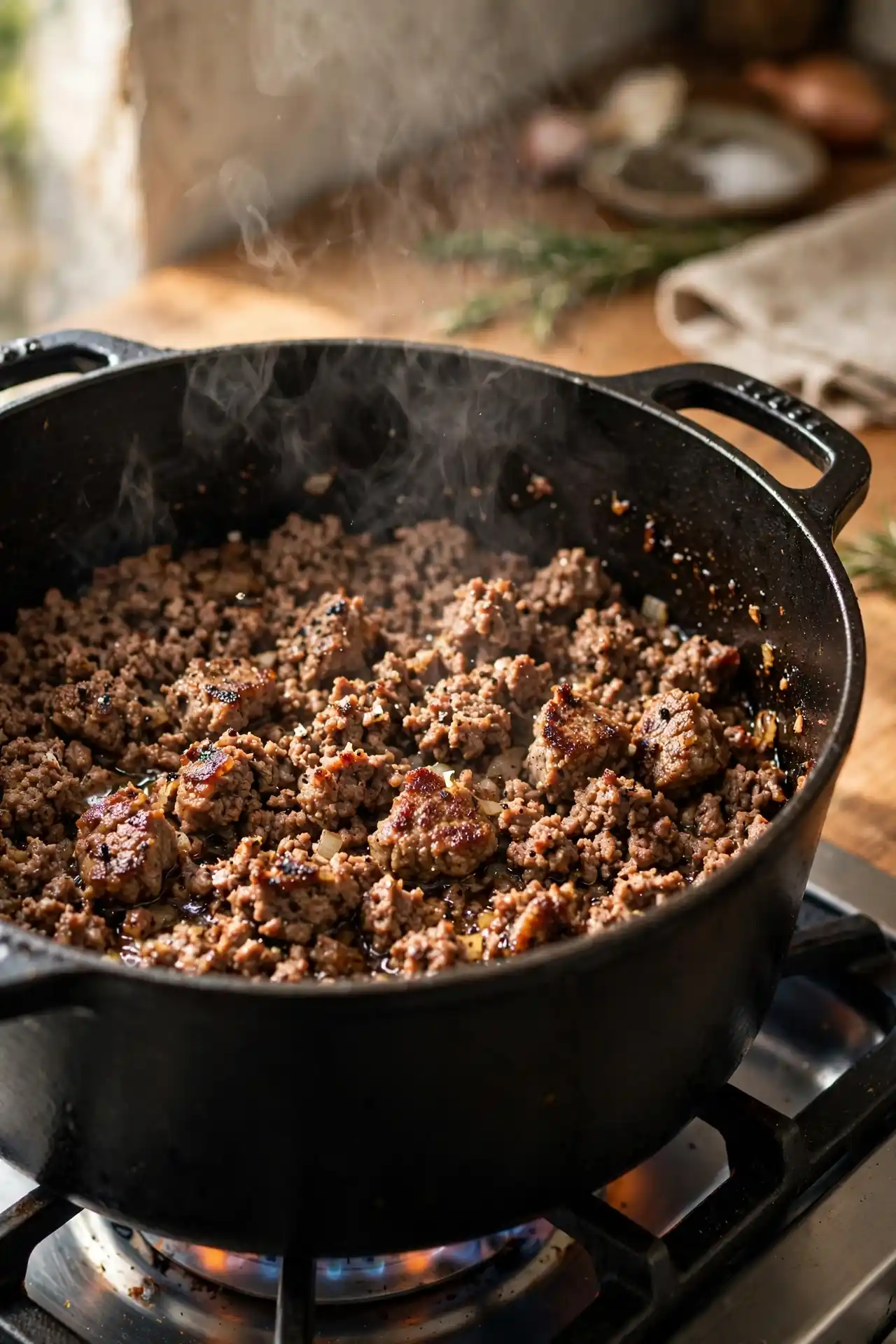
Heat 1 tbsp olive oil in a large Dutch oven or heavy-bottomed pot over medium-high heat. Add the ground beef and spread it into a single layer. Cook for 5–6 minutes without stirring, until the bottom side is deeply browned, then break it up and cook another 2–3 minutes until no pink remains and the beef registers at least 75°C (165°F) internally.
⚠️ Food Safety: Ground beef must reach an internal temperature of 75°C (165°F) throughout. Do not partially cook and set aside — cook fully before proceeding.
Drain excess fat if more than 2 tablespoons remain in the pot, but leave a small amount behind to cook the onion.
Why this works: Browning the beef before breaking it up creates a proper sear on the meat. That browned surface adds a layer of savory depth to the broth that stirring it from the start prevents.
Step 2 — Build the Base
Reduce the heat to medium. Add the diced onion to the pot and cook for 4–5 minutes, stirring occasionally, until softened and translucent with slightly golden edges. Add the minced garlic and cook for 1 minute until fragrant.
Push the beef and onion mixture to the sides of the pot. Add the tomato paste directly to the cleared center. Cook the paste, stirring it against the hot surface, for 2 full minutes until it darkens slightly and smells caramelized rather than raw.
Why this works: Cooking tomato paste directly on the hot pan surface triggers a mild caramelization that removes the tinny, raw taste and concentrates its umami. Two minutes is the minimum — less than that and you’ll taste it in the finished soup.
Stir the tomato paste into the beef and onion mixture until evenly combined. Add the Italian seasoning, oregano, paprika, salt, and black pepper. Stir for 30 seconds to bloom the spices in the residual fat.
Step 3 — Add Broth and Tomatoes
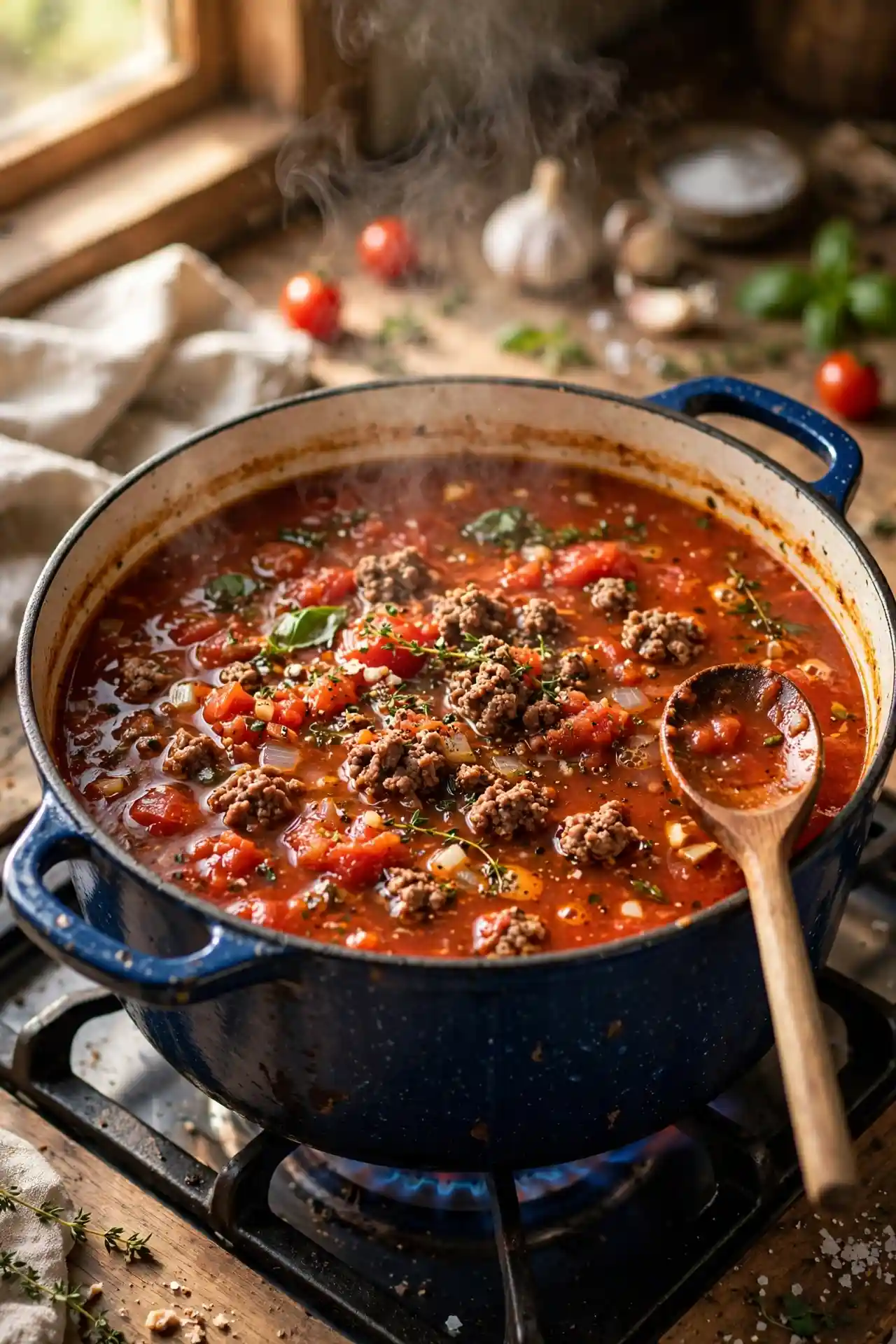
Pour in the crushed tomatoes, diced tomatoes (with all their liquid), and beef broth. Add the sugar. Stir well, scraping any browned bits from the bottom of the pot. Bring to a full boil over high heat.
Why this works: The browned bits on the bottom of the pot — called fond — carry concentrated flavor. Scraping them up and dissolving them into the broth is one of the main reasons this soup tastes richer than it has any right to for a 45-minute recipe.
Step 4 — Cook the Noodles
Once the broth reaches a boil, add the broken lasagna noodles and stir to separate them. Reduce the heat to a steady medium simmer. Cook uncovered for 10–12 minutes, stirring every 2–3 minutes to prevent the noodles from sticking to the bottom, until the noodles are tender but still have a slight bite (al dente).
Taste the broth and adjust salt as needed. If the soup has thickened more than you want, add up to 120ml (½ cup) more broth or water to loosen it.
Step 5 — Serve with Cheese
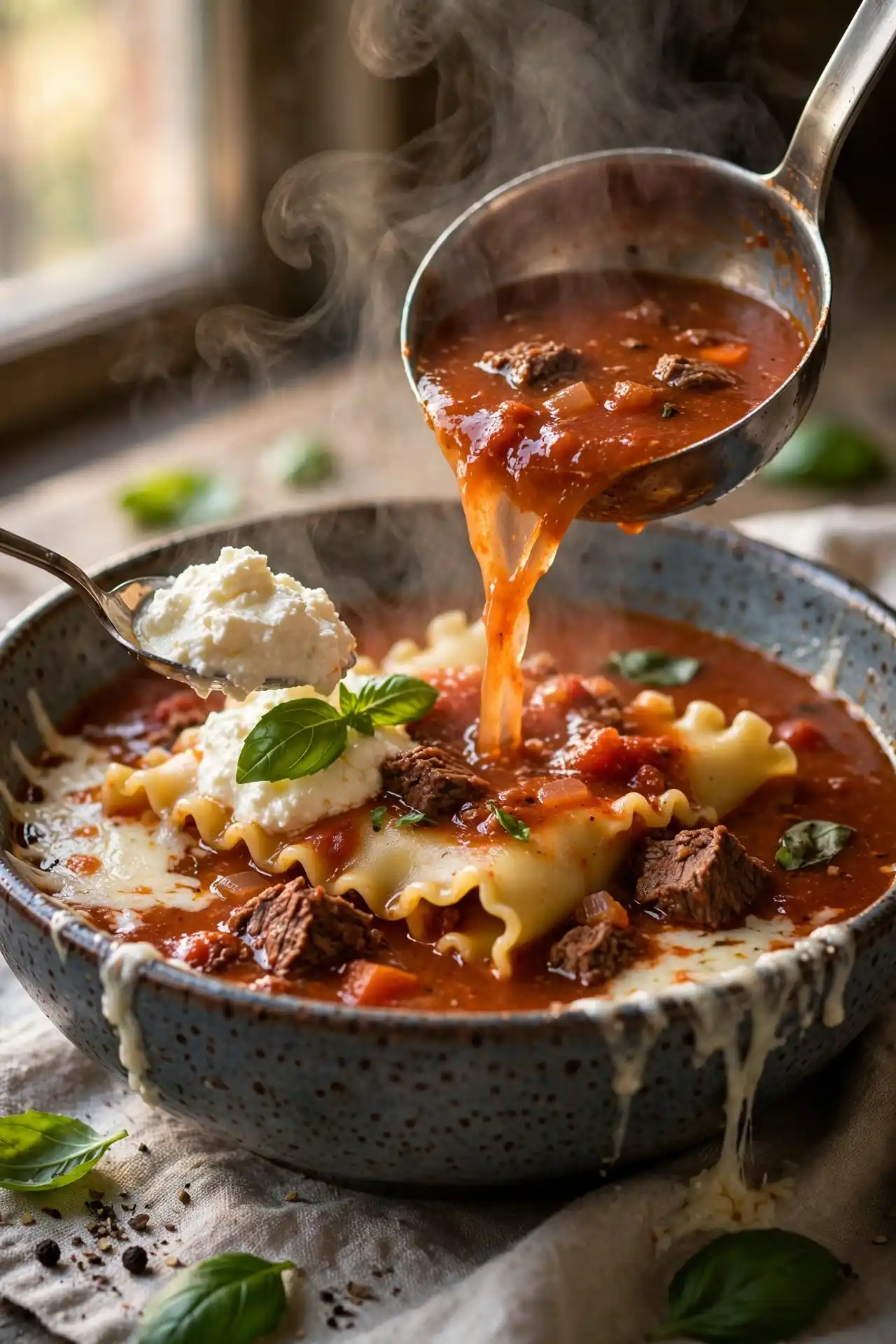
While the noodles finish cooking, mix the ricotta with a small pinch of salt and black pepper in a bowl. Ladle the soup into deep bowls. Spoon a generous dollop of seasoned ricotta into the center of each bowl. Top with shredded mozzarella and grated parmesan. Garnish with torn fresh basil.
Serve immediately while the cheese is still soft and the broth is hot.
Key Tips for Best Results
Break the noodles unevenly. Pieces between 4–6cm (1.5–2 inches) work best — they cook at the same rate as smaller broken pieces but give a more satisfying, lasagna-like texture in the bowl. Overly small pieces turn soft too fast.
Season the ricotta. Plain ricotta out of the container is flat. A pinch of salt and pepper wakes it up. Some cooks also add a small amount of grated parmesan directly into the ricotta dollop for extra sharpness.
Simmer uncovered for the noodles. A lid traps steam and can make the noodles cook unevenly in spots. Keeping the pot open lets you watch the liquid level and stir regularly.
If making for meal prep, cook noodles separately. Store cooked noodles in a separate container and add them to reheated soup just before serving. This keeps the noodles from absorbing all the broth overnight.
Taste before adding salt. Beef broth varies significantly in sodium by brand. Add the full ½ tsp salt called for during cooking, then taste and adjust after the noodles finish — the soup concentrates as it simmers.
Common Mistakes to Avoid
Skipping the tomato paste step. Adding tomato paste directly to the liquid without cooking it first produces a thinner, slightly sharp-tasting broth. Two minutes on the hot surface makes a clear difference in the finished soup.
Adding the noodles before the broth boils. Lasagna noodles dropped into simmering (not boiling) liquid cook unevenly — soft on the outside, still hard in the center. Wait for a full rolling boil before they go in.
Stirring in the cheese. Melting ricotta and mozzarella directly into the pot turns the broth cloudy and pasty. Keep cheese as a topping so each bowl has a clean, rich broth base and a distinct creamy cheese layer.
Making it too far ahead with the noodles in. Cooked pasta in soup absorbs liquid quickly. A soup that looks perfectly saucy at dinner will be thick and stodgy after two hours. If you’re not serving immediately, undercook the noodles by 2 minutes and account for carryover.
Variations and Substitutions
Ground turkey or chicken. Both work as a direct swap for ground beef. Use the same quantity (500g / 1 lb) and cook to 75°C (165°F). The broth will be lighter in color and slightly less rich, so consider adding an extra tablespoon of tomato paste to compensate.
Add spinach or kale. Stir in 2 large handfuls of baby spinach or roughly chopped kale during the last 2 minutes of cooking. Spinach wilts almost immediately; kale needs the full 2 minutes to soften without turning bitter.
Spicy version. Add ½ tsp red pepper flakes with the other spices in Step 2. This gives a steady, background heat that builds as you eat rather than hitting all at once.
What to Serve With Lasagna Soup
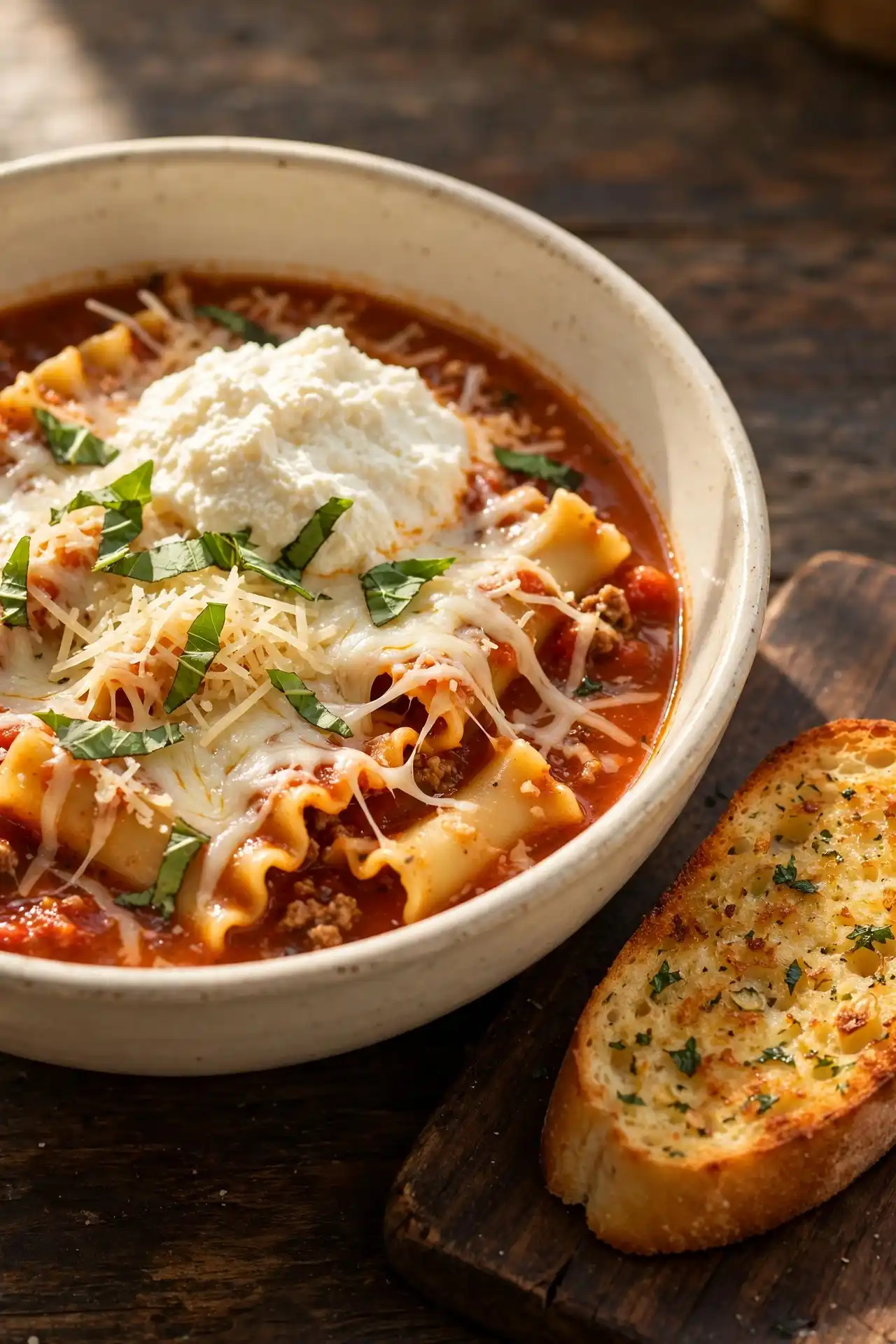
Crusty bread or garlic bread. The broth is rich enough to warrant something to soak it up. A thick slice of toasted sourdough or a simple garlic baguette makes this a full meal.
A sharp green salad. The acidity in a simple arugula or romaine salad with lemon vinaigrette cuts through the richness of the tomato-beef broth well.
Roasted vegetables on the side. Zucchini, bell peppers, or mushrooms roasted at 200°C (400°F) can be added directly to the bowl or served alongside.
Extra parmesan at the table. Put a small bowl of freshly grated parmesan out so each person can add as much as they want.
Storage, Reheating and Make-Ahead
Fridge: Store leftover soup (with noodles) in an airtight container for up to 3 days. The noodles will absorb broth as it sits, so the soup will thicken. Add a splash of beef broth or water when reheating to bring it back to the right consistency.
Freezer: Freeze the soup base (without noodles) in a sealed freezer-safe container for up to 3 months. Thaw overnight in the fridge. Cook fresh noodles when reheating, add them directly to the reheated broth, and top with fresh cheese.
Reheating: Reheat on the stovetop over medium heat for 5–7 minutes, stirring occasionally, until the soup reaches a full simmer. Add 60–120ml (¼–½ cup) broth as needed to restore the original texture. Avoid microwaving if the noodles are still in the soup — they turn unevenly soft.
Make-Ahead: The soup base (through Step 3, before adding noodles) can be made up to 2 days ahead and refrigerated. When ready to serve, bring it back to a boil and cook fresh noodles directly in the reheated broth.
Allergen and Dietary Information
This recipe contains gluten (lasagna noodles) and dairy (ricotta, mozzarella, parmesan).
To make this gluten-free, substitute certified gluten-free lasagna noodles or any gluten-free pasta of similar thickness. Check your beef broth label, as some brands contain wheat.
To make this dairy-free, omit the cheese topping entirely or use a plant-based ricotta and dairy-free mozzarella. The soup base itself contains no dairy.
Critical: Always verify individual ingredient labels for cross-contamination warnings if managing a diagnosed allergy.
Nutrition Information
Per serving (recipe makes 4 servings)
| Nutrient | Per Serving |
|---|---|
| Calories | 580 kcal |
| Protein | 38 g |
| Total Carbohydrates | 52 g |
| Dietary Fiber | 5 g |
| Total Sugars | 9 g |
| Total Fat | 22 g |
| Saturated Fat | 10 g |
| Sodium | 890 mg |
| Cholesterol | 95 mg |
| Potassium | 820 mg |
| Calcium | 280 mg |
| Iron | 5 mg |
Nutritional values are estimates only and may vary based on specific ingredients, brands, and portion sizes used. For precise dietary needs, consult a registered dietitian.
Frequently Asked Questions
Can I use regular full-length lasagna noodles instead of breaking them? Full-length noodles won’t fit in a standard pot and are difficult to serve from a ladle. Break them into roughly 5cm (2-inch) pieces before they go in. Alternatively, any wide, flat pasta such as mafaldine or pappardelle works well and doesn’t need breaking.
How do I stop the noodles from getting soggy when I store leftovers? The best method is to cook and store the soup base separately from the noodles. Keep cooked noodles in their own airtight container with a little olive oil to prevent sticking, then combine them per bowl when serving. If the noodles are already in the soup, reheat gently and serve the same day.
Can I make lasagna soup in a slow cooker? Yes. Brown the beef and build the base through Step 2 on the stovetop, then transfer everything to a slow cooker with the broth and tomatoes. Cook on low for 6–7 hours or high for 3–4 hours. Add the broken noodles in the last 25–30 minutes of cooking on high so they don’t over-soften.
What’s the best cheese combination for this soup? Ricotta, mozzarella, and parmesan together give you the full lasagna cheese experience. Ricotta provides the creamy layer, mozzarella adds the melt and pull, and parmesan brings sharpness. Using just one of them works, but all three together is what makes the soup read as lasagna rather than just a pasta soup.
Can I substitute ground chicken or turkey for the beef? Both work well. Ground chicken or turkey produces a lighter broth, so add an extra tablespoon of tomato paste and make sure your beef broth is full-flavored. Cook any ground poultry to a minimum internal temperature of 75°C (165°F).
How long does lasagna soup keep in the fridge? Up to 3 days in an airtight container. If the noodles are stored in the soup, they will absorb broth over time — add extra broth when reheating to restore the consistency. For longer storage, freeze the base without noodles for up to 3 months.
Why does my lasagna soup taste flat compared to restaurant-style versions? Three common reasons: the tomato paste wasn’t cooked long enough in the pot before adding liquid, the broth used was low-quality or very low-sodium, or the ricotta topping wasn’t seasoned. Fix all three — brown the
paste for a full 2 minutes, use a well-flavored beef broth, and always season your ricotta with salt and pepper before adding it to the bowl.
Conclusion
Lasagna soup is one of those weeknight recipes that consistently punches above its preparation time. The key is treating the tomato paste and beef with the same care you’d give a proper sauce — brown both properly, build the fond, and the broth takes care of itself. Keep the cheese on top rather than stirred in, and you get distinct layers of flavor in every spoonful. This lasagna soup recipe comes together in 45 minutes and honestly tastes like it took twice as long.
Lasagna Soup — Recipe Card
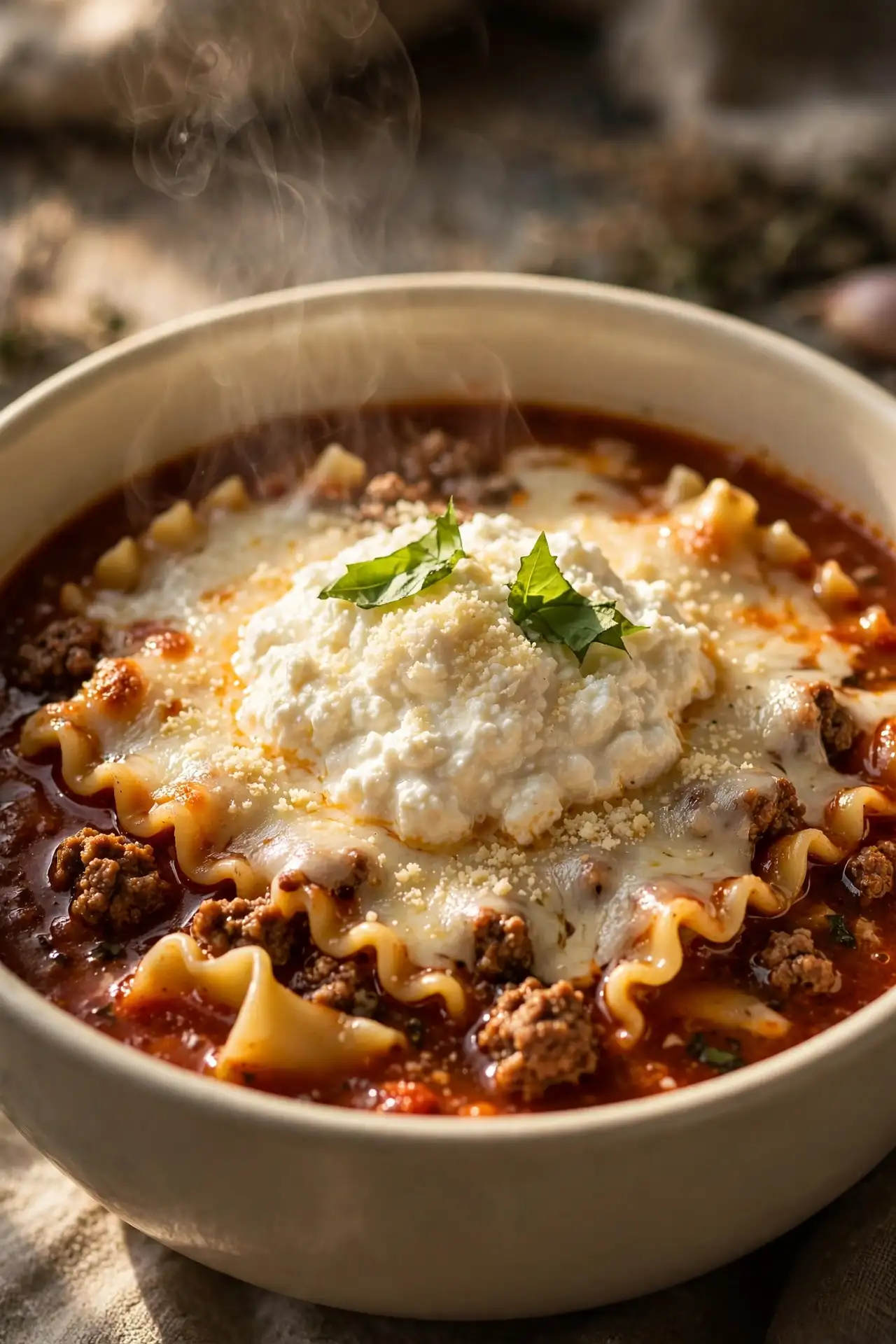
Lasagna Soup
Ingredients
Method
- Brown the beef. Heat 1 tbsp olive oil in a large Dutch oven or heavy-bottomed pot over medium-high heat. Add 500g (1 lb) ground beef and cook for 6–8 minutes, breaking it into small crumbles, until deeply browned with crispy edges. Do not stir constantly — let the meat sit undisturbed for 2–3 minutes at a time so it sears rather than steams.
- Build the flavor base. Reduce heat to medium. Add 1 diced medium yellow onion and cook 4–5 minutes until softened and translucent. Add 4 minced garlic cloves and cook 30 seconds until fragrant. Push the mixture to the sides, add 2 tbsp tomato paste to the cleared center, and cook 1–2 minutes, stirring, until it darkens to a brick-red color. Stir everything together, then add 1 tsp Italian seasoning, 1 tsp oregano, ½ tsp paprika, ½ tsp salt, ¼ tsp black pepper, and ½ tsp sugar.
- Add tomatoes and broth. Pour in 1 can (400g / 14 oz) crushed tomatoes, 1 can (400g / 14 oz) diced tomatoes with their liquid, and 900ml (4 cups) beef broth. Stir, scraping the bottom of the pot to release the browned bits. Bring to a boil, then reduce to a steady simmer.
- Cook the noodles. Once boiling, add 8–10 broken lasagna noodles (roughly 5cm / 2-inch pieces, about 200g / 7 oz dry). Stir to separate. Simmer uncovered for 10–12 minutes, stirring occasionally, until the noodles are al dente. Taste and adjust salt — add more if needed. If the soup thickens too much, stir in up to 240ml (1 cup) extra broth or water.
- Serve with the cheese topping. While the noodles cook, mix 250g (1 cup) ricotta with a pinch of salt and black pepper in a small bowl. Ladle the hot soup into bowls. Top each with a generous dollop of the seasoned ricotta, a handful of shredded mozzarella (150g / 1½ cups total), a sprinkle of parmesan (30g / ⅓ cup total), and torn fresh basil (2 tbsp). Serve immediately.