
French Toast Casserole With Brown Sugar Streusel
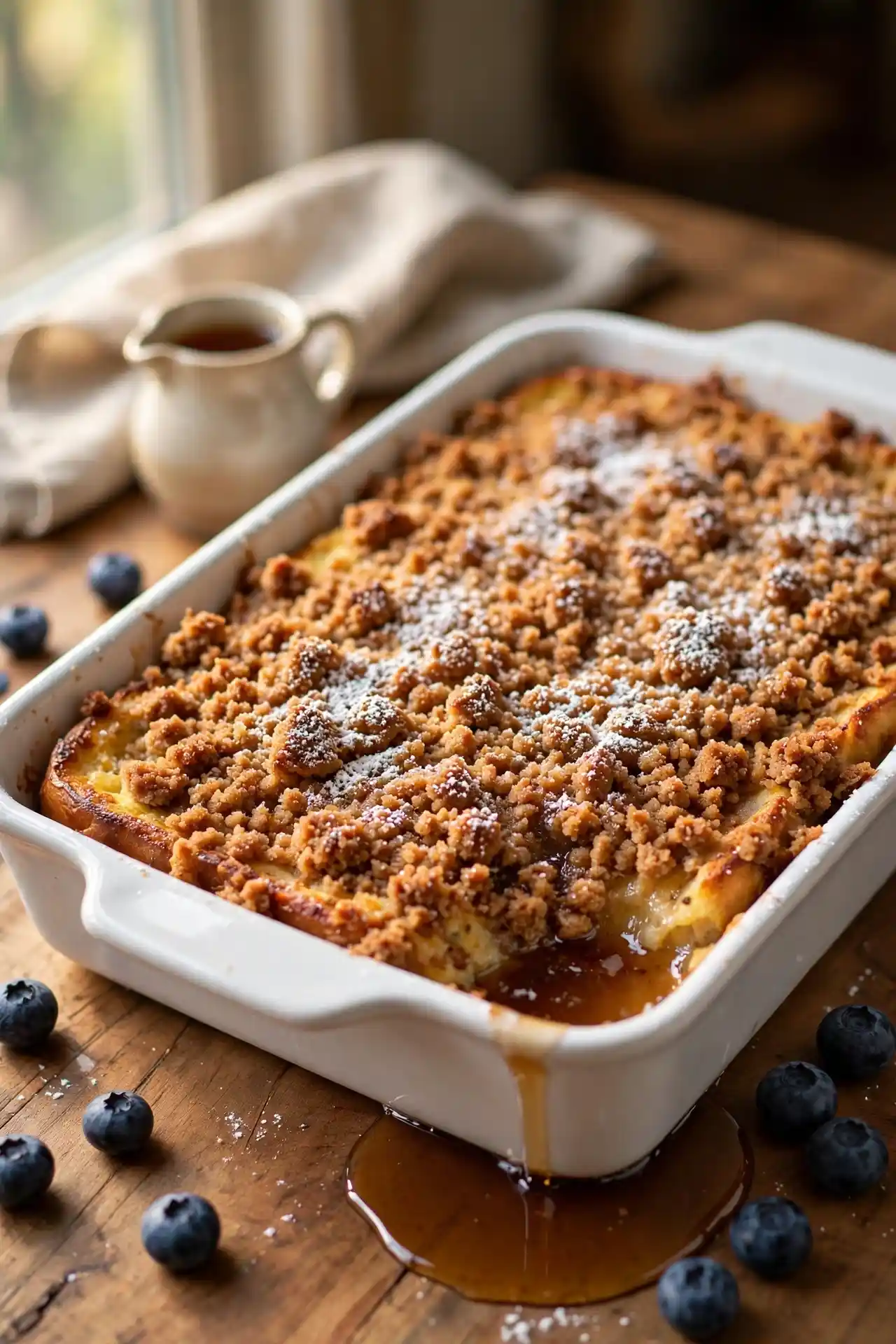
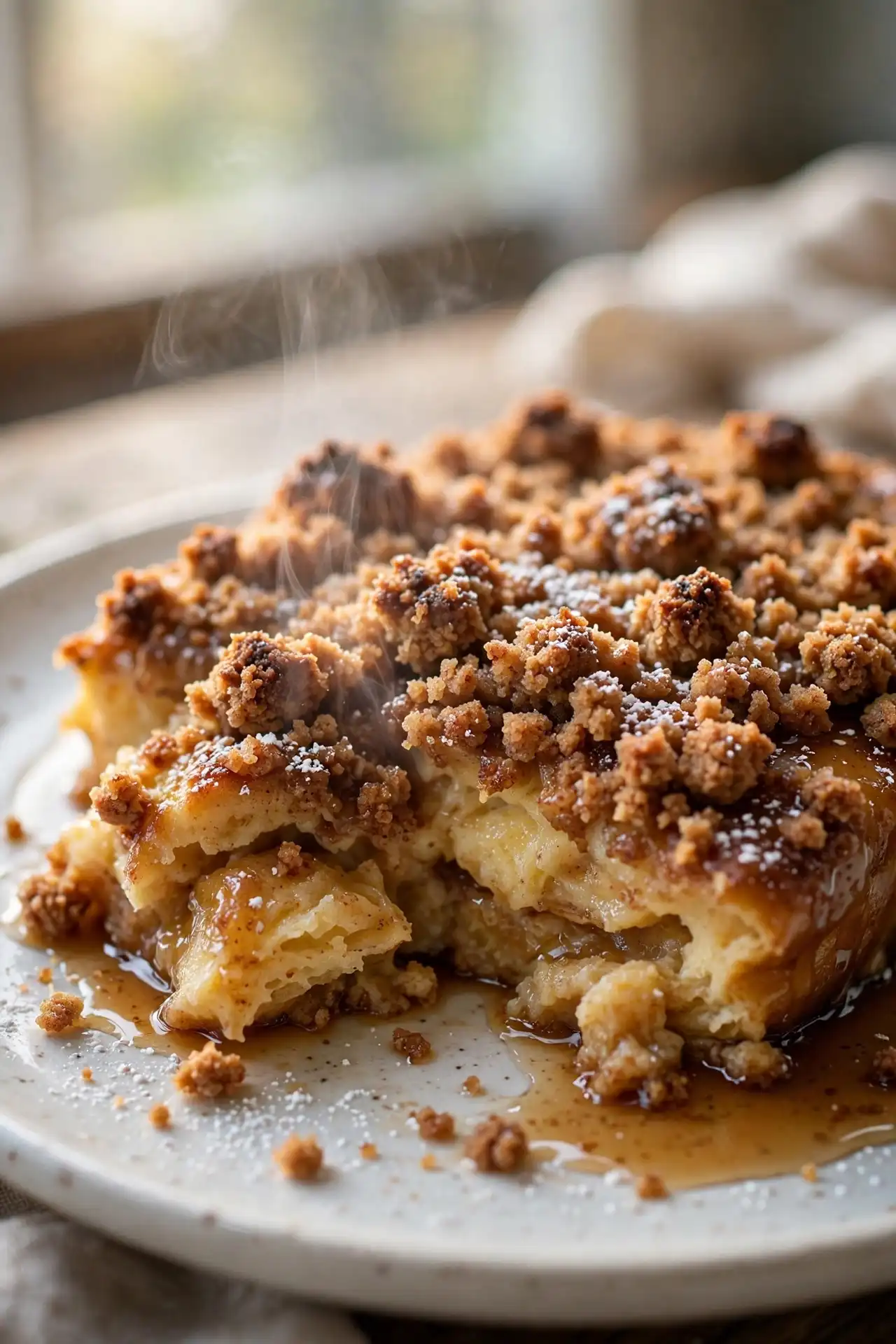
Pull a dish out of the fridge on a Saturday morning, slide it into the oven, and have breakfast on the table in 45 minutes without standing over a stove flipping individual slices. That is what this french toast casserole actually delivers. Thick-cut brioche soaks overnight in a spiced custard, then bakes under a brown sugar and cinnamon streusel that cracks into something between a crumble and a praline.
It feeds eight people from one pan, and the whole thing is ready before the first cup of coffee goes cold.
Why You’ll Love This French Toast Casserole
- Overnight prep: The custard soak happens the night before, so morning effort is minimal.
- Streusel crust: The brown sugar topping bakes into a crunchy layer that contrasts the soft, custardy interior.
- Brioche base: Brioche absorbs custard without turning to mush, keeping each piece distinct even after baking.
- Crowd-friendly portions: One 9×13 dish serves 8 comfortably, no batching, no waiting.
- Flexible timing: You can soak it for as little as 4 hours if you start in the morning, though overnight gives the best texture.
Ingredients You’ll Need
For the Custard
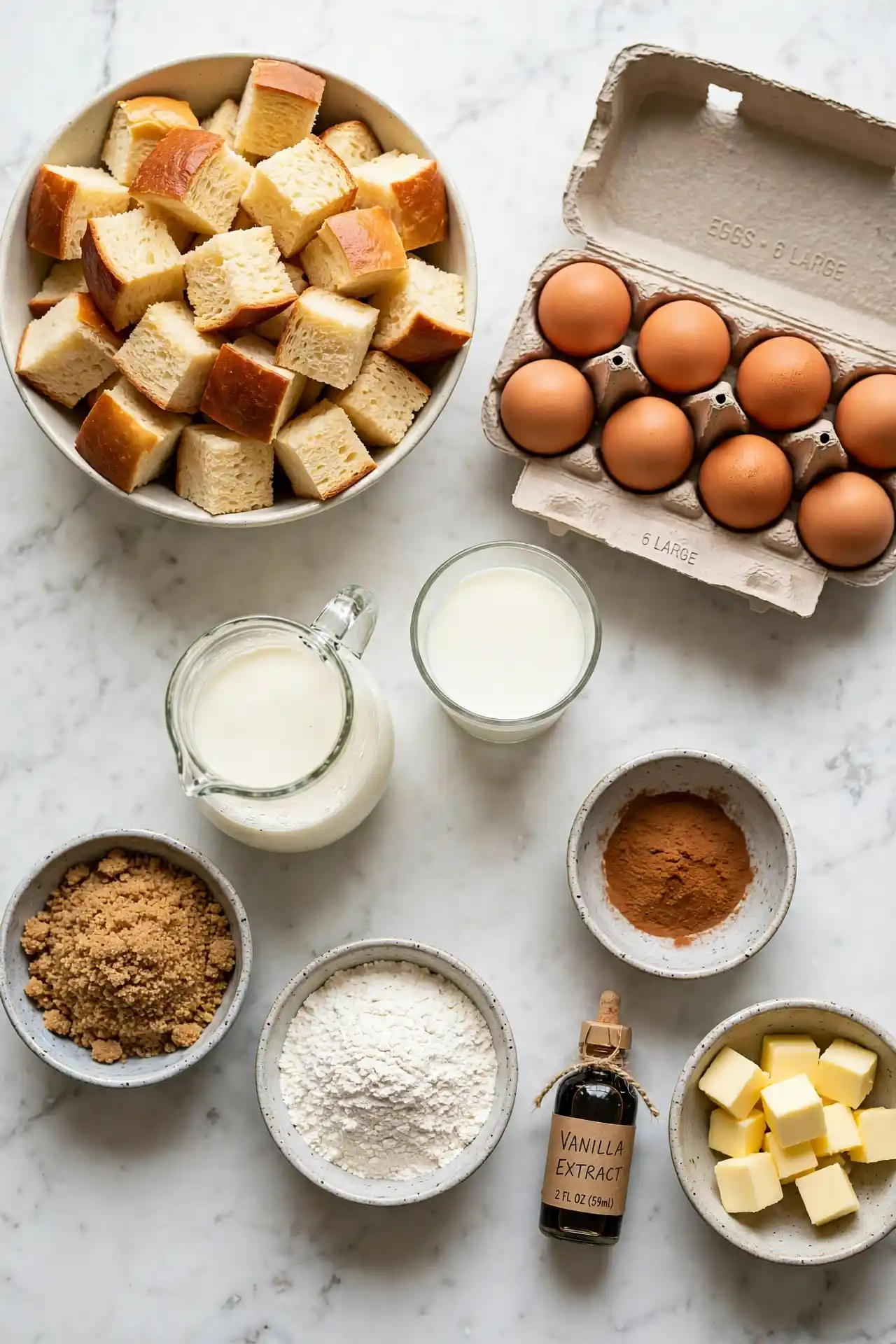
- 1 loaf (roughly 450g / 1 lb) brioche bread, cut into 4cm (1.5-inch) cubes — day-old or slightly stale bread absorbs custard without breaking apart
- 6 large eggs — provide structure and set the custard as it bakes
- 360ml (1½ cups) whole milk — whole milk gives body without making the custard too heavy
- 240ml (1 cup) heavy cream — adds richness and keeps the interior soft
- 3 tbsp granulated white sugar
- 2 tsp pure vanilla extract — use real vanilla, not imitation, for cleaner flavor
- 1½ tsp ground cinnamon
- ¼ tsp ground nutmeg — optional, adds a warm background note without being detectable
- ¼ tsp fine salt — balances the sweetness
For the Streusel Topping
- 100g (½ cup) packed light brown sugar — melts into a caramel crust during baking
- 60g (½ cup) all-purpose flour
- 1 tsp ground cinnamon
- ¼ tsp fine salt
- 115g (½ cup / 1 stick) cold unsalted butter, cut into small cubes — cold butter creates a crumbly, uneven texture that bakes into distinct clusters
Recipe Timing
| Timing Element | Duration |
|---|---|
| Prep Time | 20 minutes |
| Soak Time (overnight) | 8 hours (minimum 4 hours) |
| Cook Time | 45 minutes |
| Rest Time | 10 minutes |
| Total Active Time | 20 minutes prep + 45 minutes bake |
Servings: 8 | Difficulty: Easy | Cuisine: American | Course: Breakfast / Brunch
How to Make French Toast Casserole — Step by Step
Step 1: Prepare the baking dish and bread
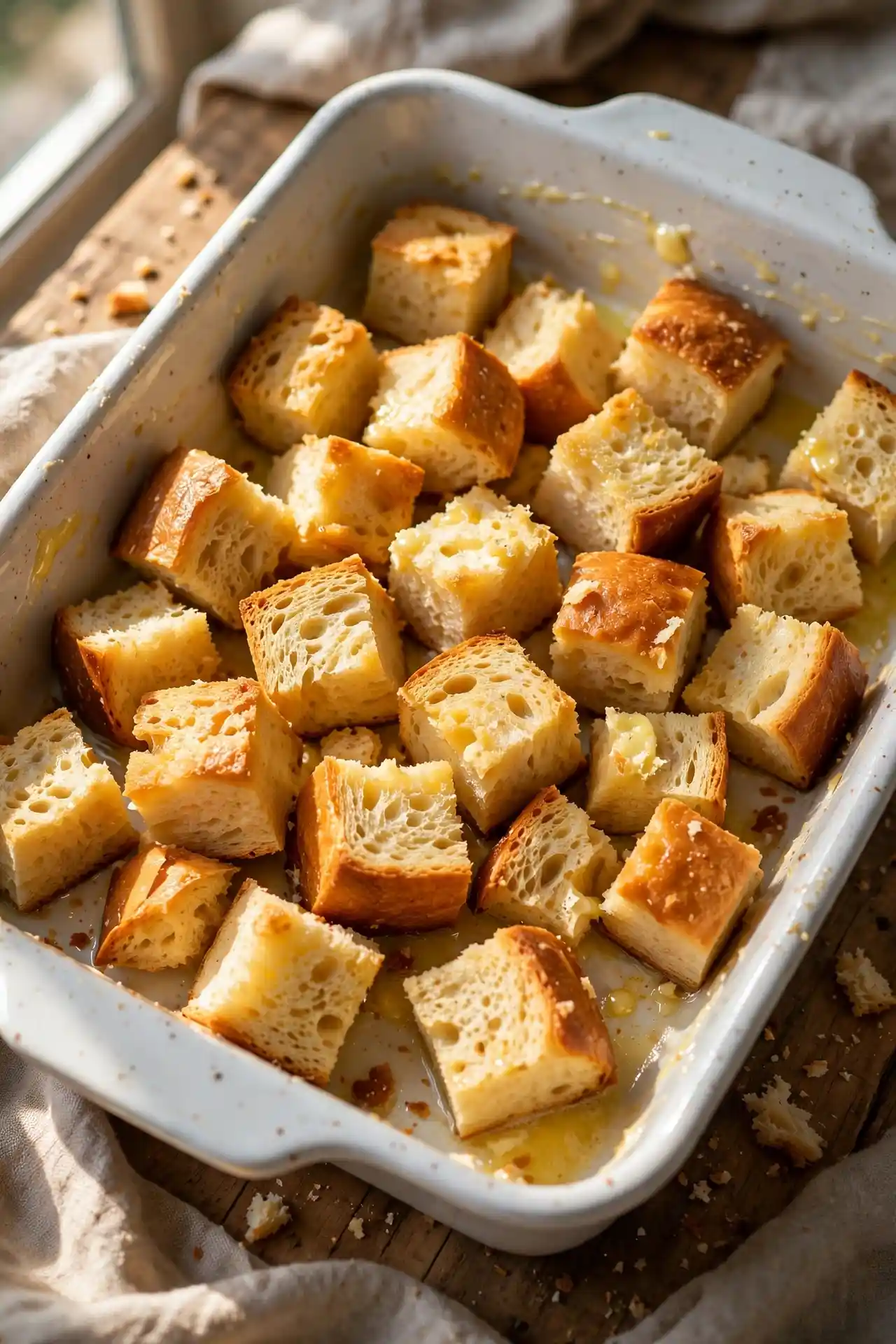
Grease a 9×13-inch (23x33cm) baking dish with butter or non-stick spray. Arrange the brioche cubes in the dish in an even layer, though a little randomness in the pile is fine.
Why this works: Using a slightly irregular arrangement creates pockets where custard collects and bakes into custardy, tender bites rather than one uniform texture throughout.
Step 2: Mix the custard
Crack 6 eggs into a large bowl and whisk until the yolks and whites are fully combined. Add the milk, heavy cream, granulated sugar, vanilla, cinnamon, nutmeg, and salt. Whisk for about 60 seconds until the mixture looks uniform with no streaks of yolk.
⚠️ Food Safety: Crack eggs one at a time into a separate small bowl before adding to the main mixture to catch any shell fragments. Wash your hands and all surfaces after handling raw eggs.
Step 3: Soak the bread
Pour the custard evenly over the brioche cubes, then press the bread gently with the back of a spatula so every piece makes contact with the liquid. Cover the dish tightly with plastic wrap and refrigerate for at least 4 hours, ideally overnight (8 hours).
Why this works: The extended soak lets the custard fully penetrate each cube. Bread soaked less than 4 hours often has dry spots at the center after baking.
Step 4: Make the streusel
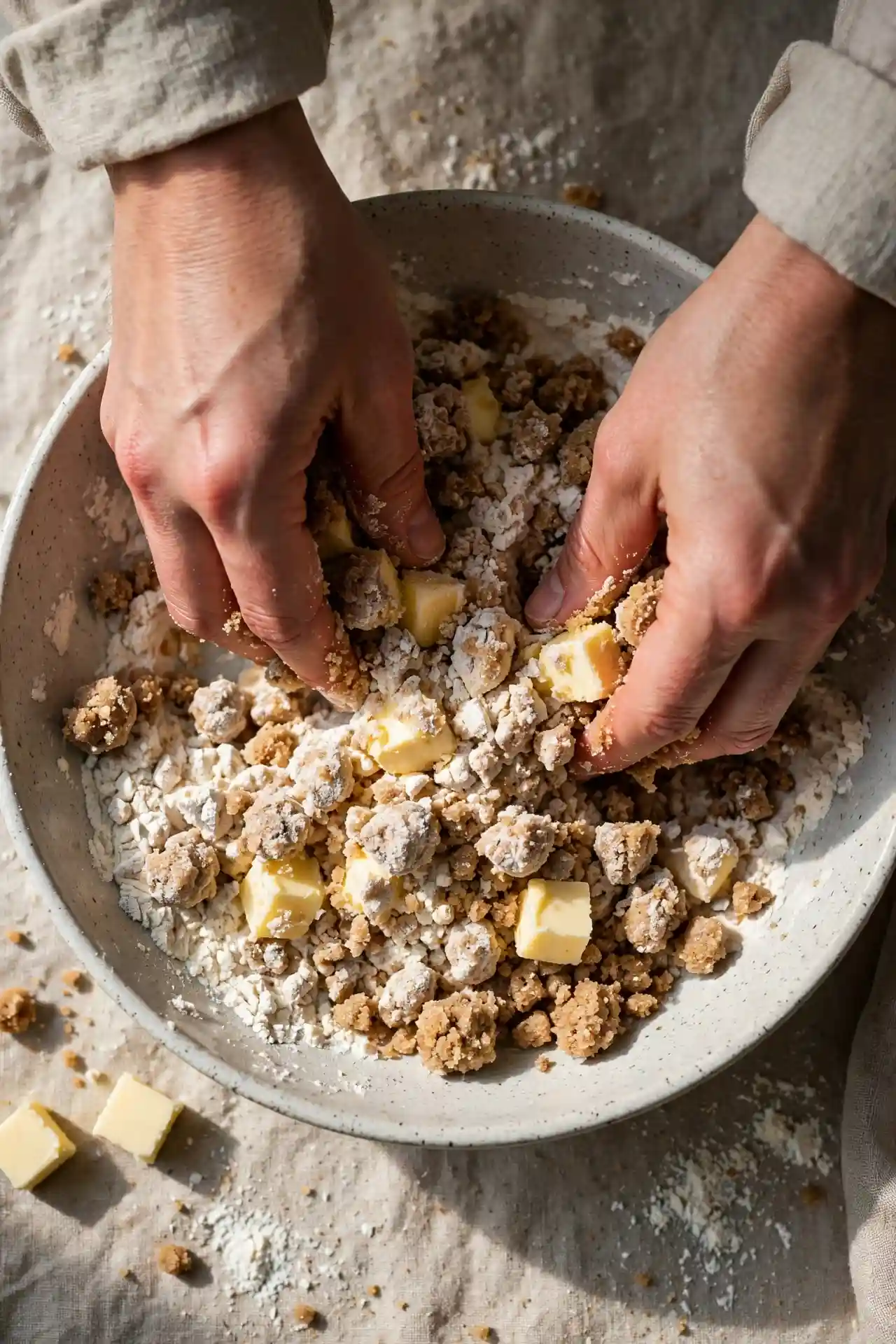
When you are ready to bake, combine the brown sugar, flour, cinnamon, and salt in a medium bowl. Add the cold butter cubes and use your fingertips to work the butter into the dry ingredients. Pinch and rub until the mixture resembles coarse, uneven crumbles ranging from pea-sized to small marble-sized chunks.
Why this works: Keeping the butter cold and the crumble sizes varied is what creates that irregular, crunchy crust. Overworked streusel turns sandy and bakes flat instead of craggy.
Step 5: Add the streusel and bake
Preheat your oven to 175°C (350°F). Remove the baking dish from the fridge and uncover it. Scatter the streusel evenly across the top of the soaked bread. Bake uncovered for 40 to 45 minutes until the streusel is deep golden brown and the custard is set at the center.
To check doneness: insert a thin knife into the center of the casserole. It should come out without liquid custard clinging to it. The internal temperature of the set custard should reach at least 71°C (160°F).
⚠️ Food Safety: Because this casserole contains eggs and dairy, it must reach an internal temperature of 71°C (160°F) before serving. Use an instant-read thermometer to check the center, not just the edges.

Step 6: Rest and serve
Remove the dish from the oven and let it sit for 10 minutes before serving. Dust with powdered sugar and serve with maple syrup on the side.
Why this works: The 10-minute rest lets the custard finish setting fully so each portion holds together when scooped. Cutting into it immediately causes the center to collapse.
Common Mistakes to Avoid
Using fresh, soft bread.
Fresh brioche is too moist and turns the casserole into a dense, wet mass. Day-old bread, or bread left uncovered on the counter for a few hours, absorbs custard properly. If your brioche is very fresh, cut it into cubes and leave them on a sheet pan at room temperature for 1 hour before assembling.
Not pressing the bread into the custard.
Just pouring the custard over and walking away leaves the top layer dry. Press every piece of bread down firmly after pouring so it all makes contact with the liquid.
Underbaking.
The edges of the casserole will look set and golden about 10 minutes before the center is actually cooked. Always check the center with a knife or thermometer rather than judging by the edges or the color of the streusel.
Skipping the rest.
Ten minutes feels like a long wait when the house smells like cinnamon and warm bread. Skip it, and the first scoop will pull liquid custard from the center. The rest is not optional.
Variations & Substitutions
Bread: Challah works as a direct substitute for brioche — it has a similar egg-enriched richness. French bread and sourdough both work but produce a slightly chewier, less pillowy interior. Avoid sandwich bread; it dissolves rather than absorbs.
Dairy-free version: Replace the whole milk with full-fat oat milk and the heavy cream with full-fat coconut cream. Use a plant-based butter for the streusel. The custard will be slightly less rich but will still set properly.
Streusel add-ins: Stir 50g (½ cup) of finely chopped pecans or walnuts into the streusel before adding the butter. They toast during baking and add a nutty crunch to each bite.
What to Serve With French Toast Casserole
Fresh fruit: Sliced strawberries or a simple berry compote cut through the richness. The tartness helps balance the sweet streusel.
Maple syrup: Serve warm on the side rather than poured over before plating, so people can control the sweetness themselves.
Crispy fried eggs: If this is a brunch spread rather than a standalone breakfast, fried eggs alongside give the meal some savory contrast.
Yogurt: A small bowl of plain full-fat yogurt on the side works like crème fraîche with something sweet and heavy.
Fresh-squeezed orange juice: The acidity wakes everything up on the palate without competing with the cinnamon and vanilla flavors.

Storage, Reheating & Make-Ahead
Fridge: Store leftovers covered tightly in the baking dish or transfer to an airtight container. Keeps well for up to 3 days. The streusel softens slightly by day two but the flavor holds.
Freezer: Cut the fully baked and cooled casserole into individual portions. Wrap each portion in plastic wrap, then place in a freezer bag. Freeze for up to 2 months. Thaw overnight in the fridge before reheating.
Reheat: Place individual portions on a baking sheet and reheat at 175°C (350°F) for 12 to 15 minutes until warmed through. Add a sheet of foil loosely over the top for the first 8 minutes to prevent the streusel from over-browning. Do not microwave directly from frozen.
Make-ahead: Assemble the entire casserole through Step 3 (before adding the streusel) and refrigerate up to 24 hours ahead. Make and refrigerate the streusel separately in a bowl. Add the cold streusel right before baking. This keeps the topping from getting wet and dense overnight.
Allergen & Dietary Information
Contains gluten. The streusel uses all-purpose flour and the bread contains gluten. For a gluten-free version, use a certified gluten-free brioche-style loaf and replace the flour in the streusel with a 1:1 gluten-free baking blend.
Contains dairy. Uses whole milk, heavy cream, and butter. See the Variations section for a dairy-free approach.
Contains eggs. Six whole eggs are used in the custard. There is no tested egg-free substitution for this recipe, as the eggs are structural.
Note: Cross-contamination risks vary by brand and ingredient source. Check all labels carefully if cooking for someone with a severe allergy.
Nutrition Information
Per serving (1 of 8 portions), based on exact ingredient quantities listed above.
| Nutrient | Per Serving |
|---|---|
| Calories | 490 kcal |
| Protein | 11 g |
| Total Carbohydrates | 52 g |
| Total Sugars | 28 g |
| Dietary Fiber | 1 g |
| Total Fat | 26 g |
| Saturated Fat | 14 g |
| Sodium | 360 mg |
| Cholesterol | 195 mg |
| Potassium | 160 mg |
| Calcium | 110 mg |
| Iron | 2 mg |
“Nutritional values are estimates only and may vary based on specific ingredients, brands, and portion sizes used. For precise dietary needs, consult a registered dietitian.”
Frequently Asked Questions
Can I make french toast casserole the night before?
Yes, and it is actually better that way. Assemble the bread and custard, cover the dish, and refrigerate overnight. Make the streusel separately and store it in a bowl in the fridge. Add the streusel cold right before baking the next morning.
What bread works best for french toast casserole?
Brioche is the best choice because its high egg and butter content helps it absorb custard without falling apart. Challah is a close second. Avoid soft sandwich bread — it absorbs too fast, breaks down completely, and produces a dense, wet texture after baking.
Why is my french toast casserole soggy in the middle?
The two most common reasons are underbaking and cutting into it too soon. Bake until a knife inserted into the center comes out without liquid custard, and the internal temperature reads at least 71°C (160°F). Then let the dish rest for a full 10 minutes before serving.
Do I have to soak it overnight, or can I bake it right away?
You can bake it after a minimum 4-hour soak. Overnight (8 hours) gives the bread more time to absorb the custard fully and produces a more even, custardy texture throughout. A shorter soak may leave the centers of some bread cubes slightly dry.
How do I know when french toast casserole is fully cooked?
The streusel will be a deep, even golden-brown and the edges will be set and slightly pulling away from the dish. Check the center with a thin knife — it should come out clean — or use an instant-read thermometer to confirm 71°C (160°F) at the thickest point.
Can I freeze french toast casserole?
Yes. Bake it fully, let it cool completely, then cut into individual portions. Wrap each piece in plastic wrap and freeze in a sealed bag for up to 2 months. Thaw overnight in the fridge and reheat in the oven at 175°C (350°F) for 12 to 15 minutes.
What can I put on top instead of powdered sugar?
A drizzle of warm maple syrup, a spoonful of fresh berry compote, or a small dollop of plain yogurt all work well. If you want something richer, a light cream cheese glaze made with 2 tbsp softened cream cheese, 3 tbsp powdered sugar, and 1 tbsp milk whisked together pours over beautifully.
Conclusion
French toast casserole solves the biggest problem with a cooked breakfast: timing. The soak happens while you sleep, the oven does the rest, and you get a dish that holds heat in the pan while people help themselves. The streusel is the detail that makes this version worth coming back to. That crunch against the soft, eggy interior is the contrast that keeps individual slices from tasting one-note. If you are making this for the first time, do not skip the overnight soak or the resting time after baking. Both are where the texture comes from.
French Toast Casserole — Recipe Card
French Toast Casserole With Brown Sugar Streusel
Ingredients
Method
- Grease a 9×13-inch baking dish. Arrange brioche cubes in the dish.
- Whisk eggs, milk, cream, sugar, vanilla, cinnamon, nutmeg, and salt together until smooth.
- Pour custard evenly over the bread. Press bread down with a spatula so all pieces contact the liquid. Cover and refrigerate at least 4 hours or overnight.
- When ready to bake, preheat oven to 175°C (350°F). Mix brown sugar, flour, cinnamon, and salt in a bowl. Add cold butter and rub in with fingertips until crumbly. Scatter over the soaked bread.
- Bake uncovered 40 to 45 minutes until the streusel is deep golden and a knife inserted in the center comes out without liquid custard. Internal temperature should reach 71°C (160°F).
- Rest 10 minutes. Dust with powdered sugar and serve with maple syrup.