Greek Salad Recipe: Crisp, Fresh, and Ready in 15 Minutes
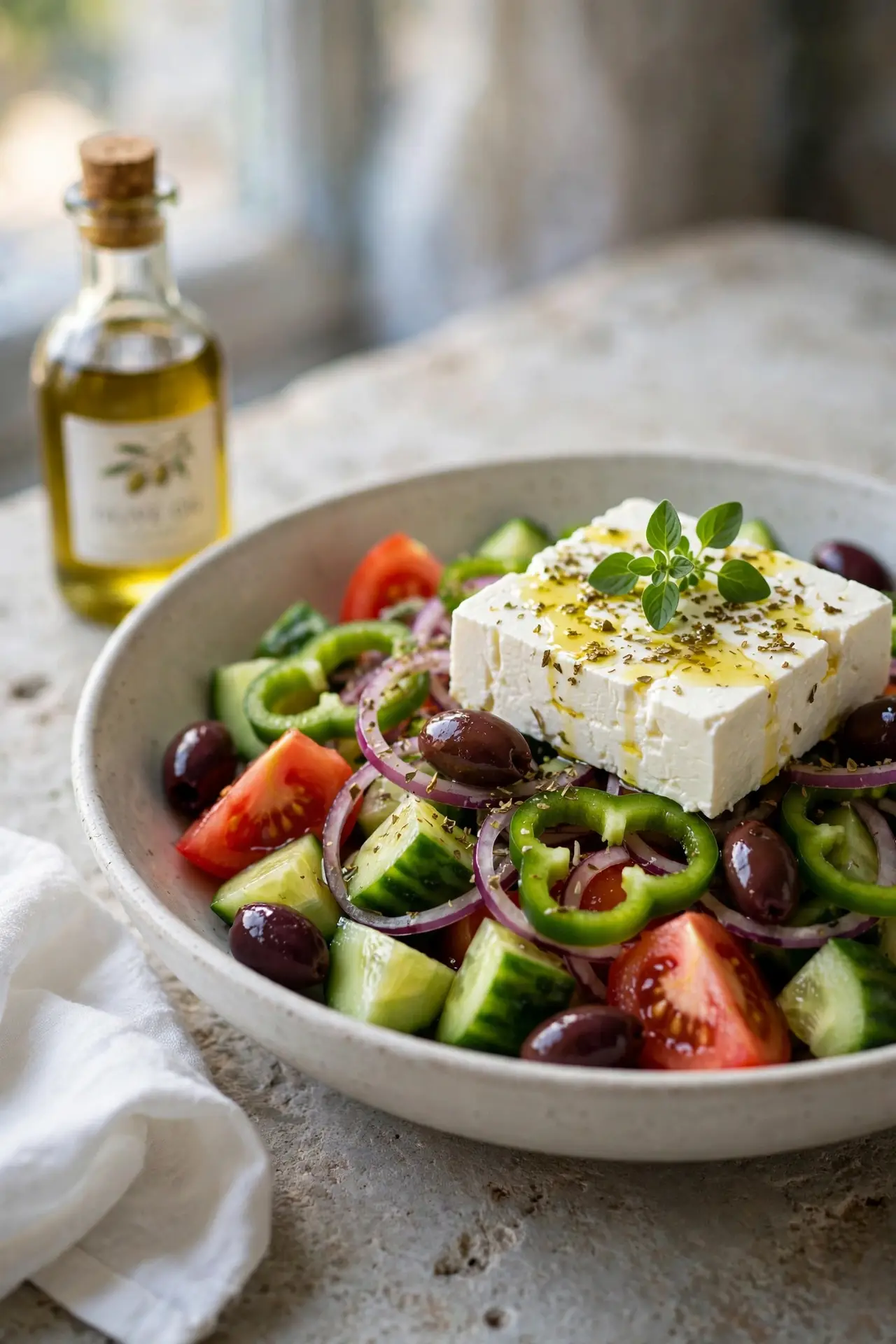
Order a Greek salad at a taverna in Athens and what arrives looks nothing like the shredded-lettuce version most people grew up eating. It is all chunky raw vegetables, no greens, with a thick block of feta sitting directly on top. There is no creamy dressing, no croutons. That is the real horiatiki, and this recipe is the straightforward version of it.
What makes this greek salad different from most home versions comes down to two things: how you cut the vegetables and how you handle the feta. Chunky pieces hold their texture against the dressing. A whole block of feta stays firm and creamy instead of dissolving into the bowl. Both make a noticeably bigger difference than they might seem.
The whole thing takes 15 minutes and requires no cooking.
Why You’ll Love This Greek Salad
- A whole feta block on top rather than pre-crumbled cheese, keeping the texture firm and giving you distinct bursts of salty creaminess
- No lettuce means the salad holds up at room temperature for two to three hours without wilting
- Three-ingredient dressing: extra virgin olive oil, red wine vinegar, and dried oregano
- Chunky vegetable cuts make this feel like a proper course, not a token side salad
- Scales from a bowl for two to a platter for ten with no method changes
Ingredients You’ll Need
For the Salad
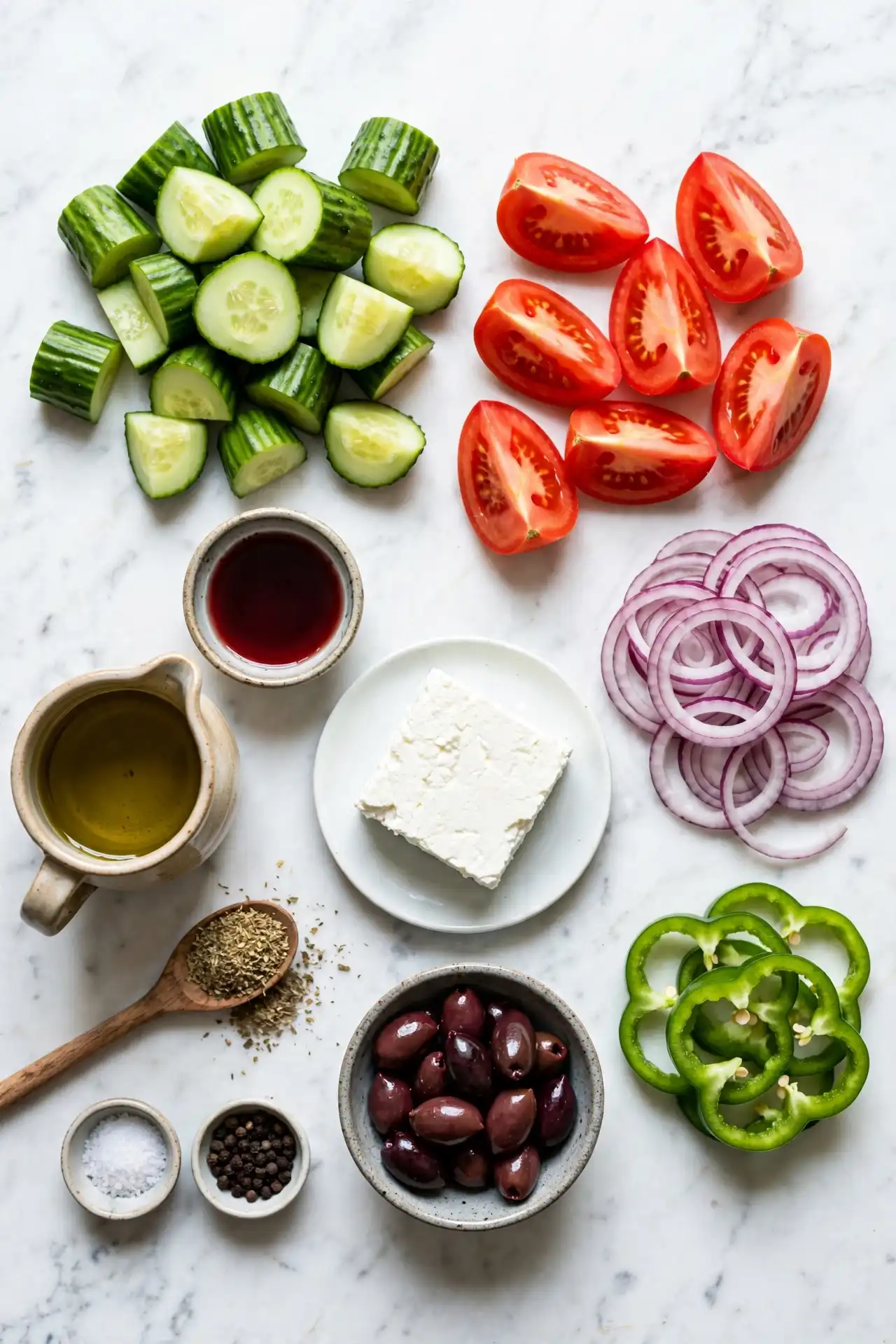
- 2 medium cucumbers (about 400g), cut into thick chunks or half-moons English or Persian cucumbers are ideal. If using large wax-coated cucumbers, peel fully before cutting.
- 4 medium ripe tomatoes (about 500g), cut into wedges Use tomatoes kept at room temperature, not straight from the fridge. Cold tomatoes have almost no flavor.
- 1 medium red onion, thinly sliced If you prefer a milder bite, soak the slices in cold water for 10 minutes before adding, then drain well.
- 1 green bell pepper, sliced into rings The slight bitterness of green pepper balances the salt of the olives and feta.
- 150g kalamata olives, whole or pitted Whole olives have more brine and a meatier texture than pre-pitted ones.
- 200g block feta cheese PDO feta from Greece, made from sheep’s milk or a sheep-goat blend, gives the most flavor and the creamiest result.
For the Dressing
- 4 tablespoons extra virgin olive oil A good-quality olive oil carries all the flavor in this dressing.
- 1.5 tablespoons red wine vinegar Adds brightness and mild sharpness without overpowering the vegetables.
- 1 teaspoon dried oregano, plus a pinch more for finishing Greek or Mediterranean oregano is noticeably more pungent than standard supermarket varieties.
- 1/2 teaspoon sea salt
- 1/4 teaspoon freshly ground black pepper
Recipe Timing
| Timing Element | Duration |
|---|---|
| Prep Time | 15 minutes |
| Cook Time | 0 minutes |
| Total Time | 15 minutes |
Servings: 4 | Difficulty: Easy | Cuisine: Greek, Mediterranean | Course: Salad, Side Dish
How to Make Greek Salad Step by Step
Step 1: Cut the cucumbers
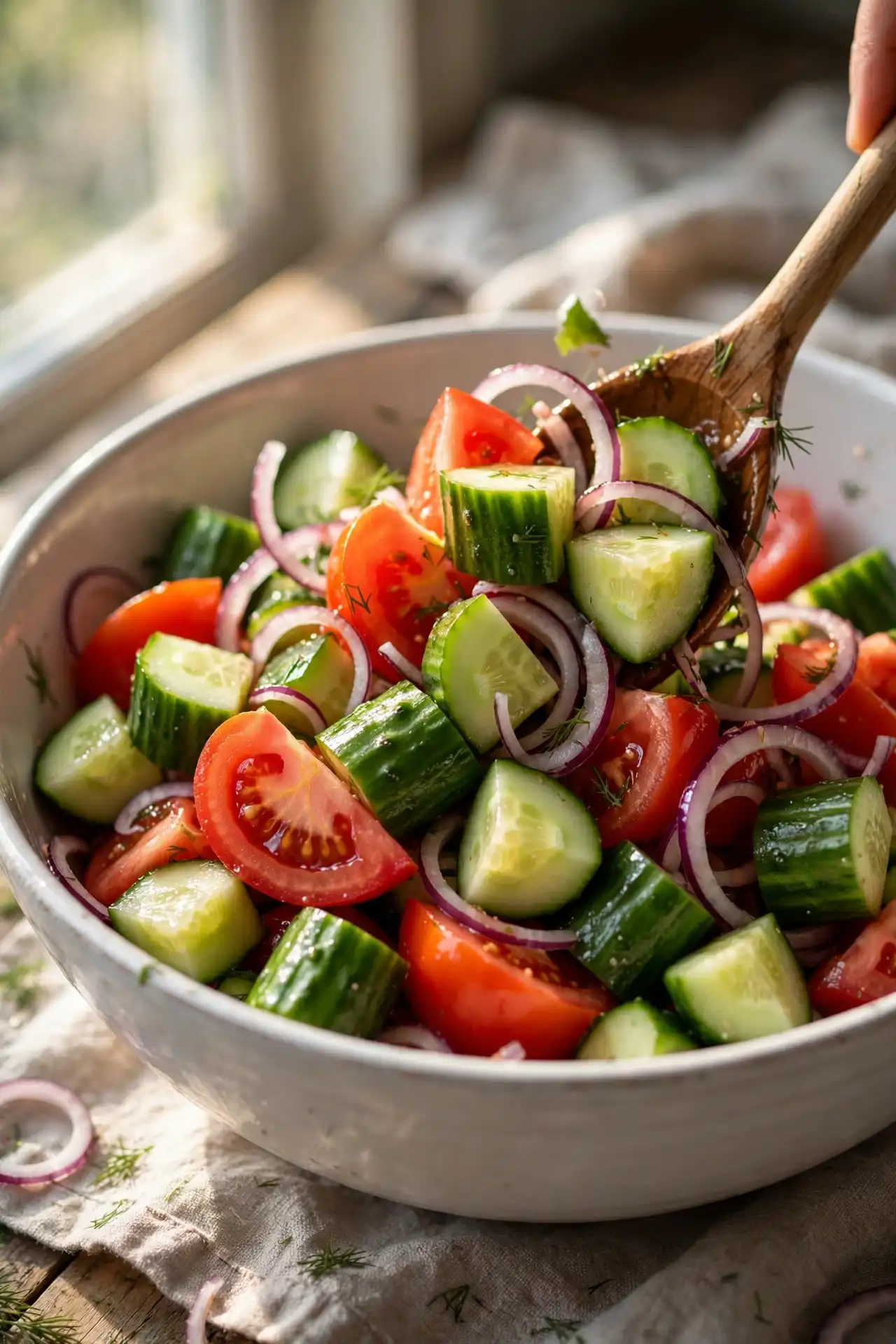
Slice the cucumbers into thick chunks or half-moons about 2cm wide. Do not cut them thin. Thin cucumber releases water quickly and goes limp within minutes of being dressed.
Why this works: Thick pieces hold their structure against the dressing and give you something with real bite. The texture difference between thin-sliced and chunky-cut cucumber in a greek salad is more noticeable than it sounds.
Step 2: Prepare the tomatoes and onion
Cut each tomato into four to six wedges depending on size. Slice the red onion as thinly as you can. If the onion is sharp, place the slices in cold water while you prep everything else, then drain before using.
Step 3: Slice the bell pepper
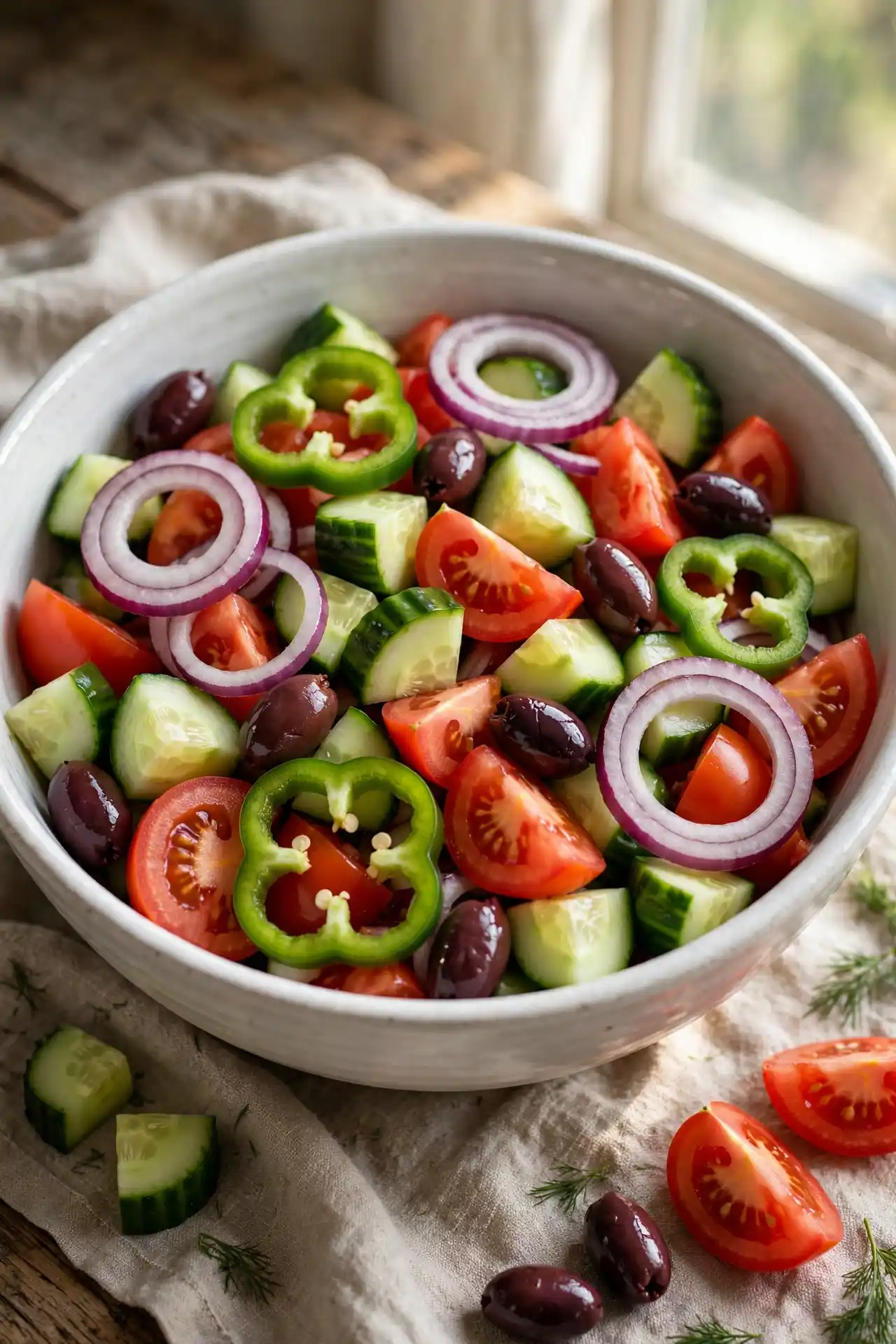
Cut the green bell pepper into rings about 5mm thick. Remove the seeds and the white membrane. The pepper adds a crisp, slightly bitter note that contrasts well with the rich feta and briny olives.
Step 4: Combine the vegetables
Add the cucumber, tomatoes, red onion, and bell pepper to a large serving bowl. Toss them lightly once or twice. You are bringing them together here, not dressing or seasoning anything yet.
Step 5: Add the olives
Scatter the kalamata olives over the vegetables. Whole olives have more brine left in them, which seasons the salad gradually as it sits. If using pitted olives, halving them gives more surface contact with the dressing.
Why this works: Adding the olives at this stage rather than tossing them in from the start stops the dark olive brine from staining the other vegetables and diluting the dressing before it hits the bowl.
Step 6: Make the dressing
Combine the olive oil, red wine vinegar, dried oregano, salt, and black pepper in a small bowl or jar. Whisk until combined. Taste and adjust salt if needed before adding it to the vegetables.
Why this works: Mixing the dressing separately lets you balance the oil-to-vinegar ratio before it hits the vegetables. Adding each ingredient directly onto the bowl is guesswork by comparison.
Step 7: Dress the salad
Pour the dressing over the vegetables and toss gently to coat. Transfer to your serving platter or bowl if you have not already done so.
Step 8: Place the feta and serve
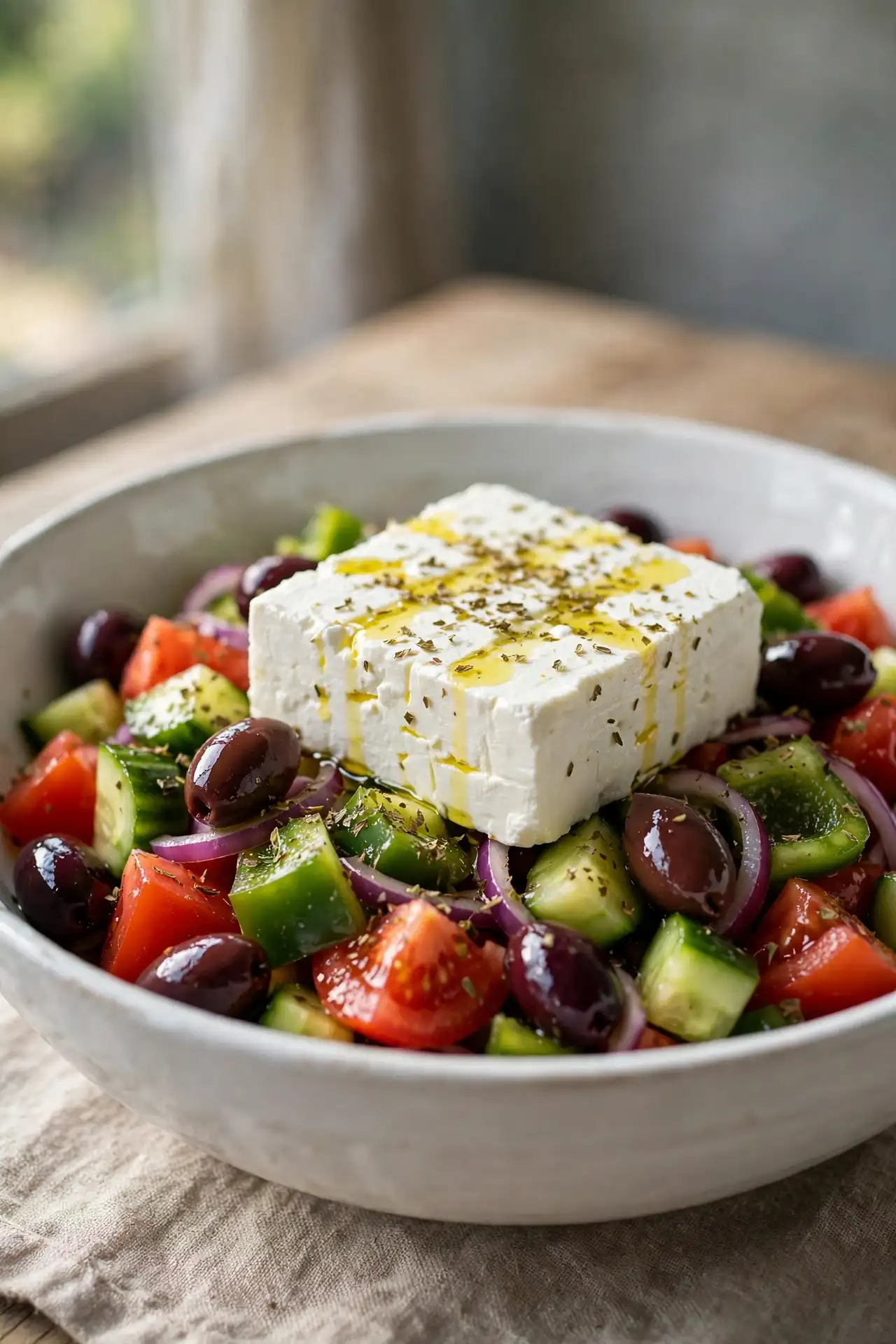
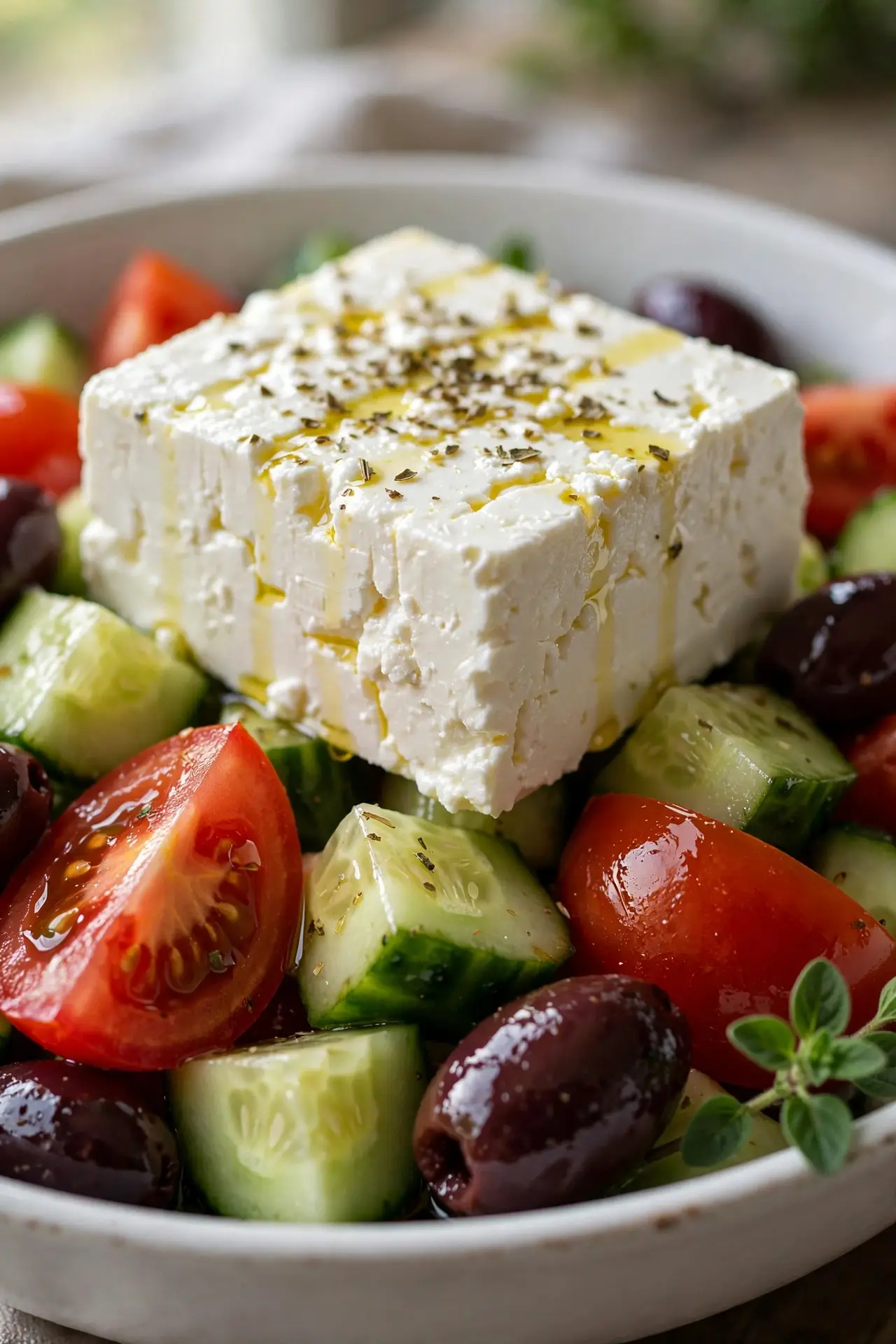
Lay the whole block of feta directly on top of the salad. Drizzle a small pour of extra olive oil over the feta, then add a pinch of dried oregano on top. Serve straight away.
Why this works: A feta block preserves the creamy interior and gives each person the satisfaction of breaking off their own piece. Pre-crumbled feta dissolves into the dressing within minutes and makes the bowl taste chalky.
Common Mistakes to Avoid
Using refrigerator-cold tomatoes Cold tomatoes have almost no flavor. Take them out at least 30 minutes before you start. The same tomato at room temperature tastes significantly better.
Crumbling the feta before serving Once crumbled, feta breaks down fast in the olive oil and vinegar. It becomes grainy and loses its creamy texture within about 10 minutes. Add it as a block and let people break it at the table.
Over-dressing the bowl This dressing is olive oil heavy, and too much makes the whole thing greasy. Pour the listed amount, taste a piece of cucumber, and stop there. You can add more at the table.
Buying low-quality or dried-out olives Pale, shriveled kalamata olives have no brine left and contribute almost nothing to the salad. Look for olives packed in brine and taste one before buying. They should be firm, glossy, and noticeably briny.
Variations and Substitutions
Lemon instead of red wine vinegar Swap the red wine vinegar for the same volume of fresh lemon juice. The result is brighter and slightly less sharp. Many Greek cooks prefer lemon in summer for a cleaner finish.
Add fresh herbs Fresh flat-leaf parsley or fresh mint can go in with the vegetables. Use them sparingly so they do not overwhelm the oregano in the dressing.
Cherry tomatoes in place of large tomatoes Halved cherry tomatoes work well when large ripe tomatoes are out of season. They tend to be sweeter and hold their shape longer after dressing goes on.
What to Serve With Greek Salad
Grilled chicken skewers. The acidity in the dressing cuts cleanly through the fat from the char.
Lamb kofta. Minced lamb is rich, and the bright dressing balances it.
Warm pita bread. Useful for scooping up the olive oil and oregano pooled at the bottom of the bowl.
Hummus and baba ganoush. Works well as part of a mezze spread where the greek salad adds freshness and crunch.
Baked white fish. A simple olive oil and lemon preparation on white fish sits alongside this without any competition.

Storage and Make-Ahead Tips
Fridge Store leftover greek salad in an airtight container for up to 2 days. The vegetables soften but remain edible. Keep the feta block separately if possible — it holds up better outside the dressing.
Make-ahead You can prep and combine all the vegetables up to 4 hours in advance. Refrigerate them undressed and uncovered. Add the dressing, olives, and feta no more than 15 minutes before serving.
Reheating This salad is served cold or at room temperature. Do not reheat it.
Freezer Greek salad does not freeze. The cucumbers and tomatoes release water when thawed and turn completely soft.
Allergen and Dietary Disclosure
This recipe contains dairy (feta cheese). To make a dairy-free version, omit the feta or substitute it with firm tofu marinated in olive oil, lemon juice, and a pinch of salt for at least 1 hour before using.
Nutrition Information
Per serving (recipe serves 4):
| Nutrient | Per Serving |
|---|---|
| Calories | 285 kcal |
| Protein | 8 g |
| Total Carbohydrates | 14 g |
| Dietary Fiber | 3 g |
| Total Sugars | 8 g |
| Total Fat | 23 g |
| Saturated Fat | 7 g |
| Sodium | 820 mg |
| Cholesterol | 33 mg |
| Potassium | 480 mg |
| Vitamin C | 35 mg |
| Calcium | 220 mg |
| Iron | 1.5 mg |
Nutritional values are estimates only and may vary based on specific ingredients, brands, and portion sizes used. For precise dietary needs, consult a registered dietitian.
Frequently Asked Questions
Does authentic Greek salad have lettuce? No. The traditional horiatiki is built entirely on chunky raw vegetables with no lettuce. The version with shredded greens is an American adaptation that became common in diners and Greek-American restaurants. A proper greek salad uses cucumbers, tomatoes, red onion, green bell pepper, olives, and a block of feta.
Can I make Greek salad the night before? You can prep the vegetables the night before and refrigerate them in an airtight container. Add the dressing, olives, and feta no more than 15 minutes before serving. If you dress it overnight, the tomatoes and cucumbers release water and the whole bowl becomes watery by morning.
Why does my Greek salad get watery? Two main causes: dressing it too far in advance, and using cold tomatoes straight from the fridge. Cold tomatoes release more moisture as they warm up in the bowl. Dress the greek salad no more than 15 minutes before you serve it.
What kind of feta is best for Greek salad? PDO feta from Greece, made from sheep’s milk or a sheep-goat blend, gives the most flavor and the creamiest texture. Danish-style feta is milder and softer, which makes it harder to serve as a block without it crumbling on its own.
Can I use a different vinegar in the dressing? Red wine vinegar is traditional. Fresh lemon juice works as a direct swap. White wine vinegar is also fine. Avoid balsamic, which changes the flavor significantly and bleeds dark color into the vegetables.
How long does Greek salad last in the fridge? Up to 2 days in an airtight container. After that, the cucumber loses its crunch and the tomatoes go too soft. Store the feta block separately if you expect leftovers — it holds up longer on its own.
Do I need to peel the cucumber? Not for English or Persian cucumbers. Their skin is thin and tender. For larger cucumbers with thick or waxy skin, peel fully or peel in alternating stripes for a mix of soft and firm texture in each bite.
Conclusion
A good greek salad takes 15 minutes and has three non-negotiable rules: room-temperature tomatoes, a whole block of feta placed on top rather than crumbled in, and a dressing mixed separately before pouring. Get those right and the rest takes care of itself. Leftovers keep well for a day and make a solid base for a grain bowl or a wrap the next morning.
Greek Salad Recipe Card
Greek Salad Recipe: Crisp, Fresh, and Ready in 15 Minutes
Ingredients
Method
- Cut cucumbers into thick chunks or half-moons about 2cm wide.
- Cut tomatoes into four to six wedges each. Slice red onion as thinly as possible. Soak onion slices in cold water for 10 minutes if you prefer a milder flavor, then drain.
- Cut bell pepper into rings about 5mm thick. Remove seeds and white membrane.
- Add cucumber, tomatoes, red onion, and bell pepper to a large serving bowl. Toss lightly to combine.
- Scatter kalamata olives over the vegetables.
- In a small bowl, whisk together olive oil, red wine vinegar, dried oregano, salt, and black pepper until combined. Taste and adjust salt if needed.
- Pour dressing over the salad. Toss gently to coat all the vegetables.
- Place the feta block on top of the salad. Drizzle a small amount of extra olive oil over the feta and add a pinch of dried oregano on top. Serve immediately.