Cabbage Soup: A Hearty, Simple Recipe Ready in 50 Minutes
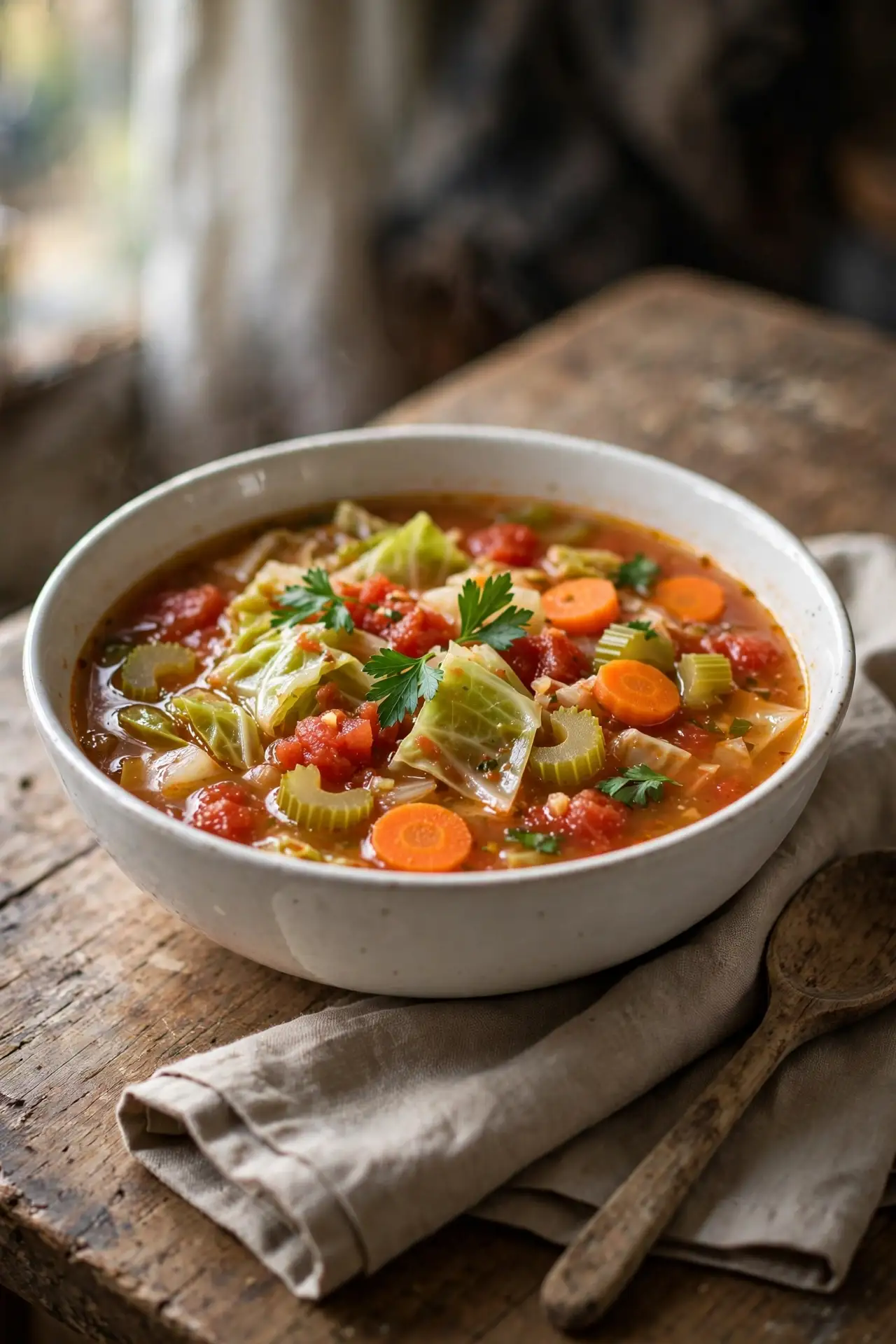
Cabbage soup is one of those meals that asks very little and returns a lot. The vegetables are inexpensive, the method is straightforward, and the whole pot is ready in 50 minutes. What makes this version worth making is a three-minute sauté of aromatics in olive oil and a short step where the tomato paste cooks in fat before any liquid goes in. Both take almost no extra effort and change the finished flavor completely.
A version of this passed through my kitchen every winter growing up: onions and garlic browned first, then everything else added by feel. I’ve built this recipe around the same logic, but with exact quantities and a few specific steps that guarantee a deeper, more satisfying result without any guesswork.
Why you’ll love this cabbage soup:
- Ready in 50 minutes from start to finish with one pot
- Uses half a head of green cabbage and staples most people already have
- The flavor improves noticeably on day two, making it reliable for meal prep
- Works as a light main course or a first course before a larger meal
- Scales up easily without changing anything about the method
Why You’ll Love This Cabbage Soup
Green cabbage is one of the most underestimated vegetables in any kitchen. It’s cheap, available year-round, and most people only know it as a boiled side dish or a diet staple. In soup, it becomes something genuinely different: it softens into silky, substantial pieces over a 20-minute simmer while the broth picks up its natural sweetness.
This cabbage soup uses no fancy technique. There’s no roasting, no blending, and no equipment beyond a large pot and a wooden spoon. What it does ask for is a proper sauté first and a patient simmer, and both are worth it.
Ingredients You’ll Need
For the soup base:
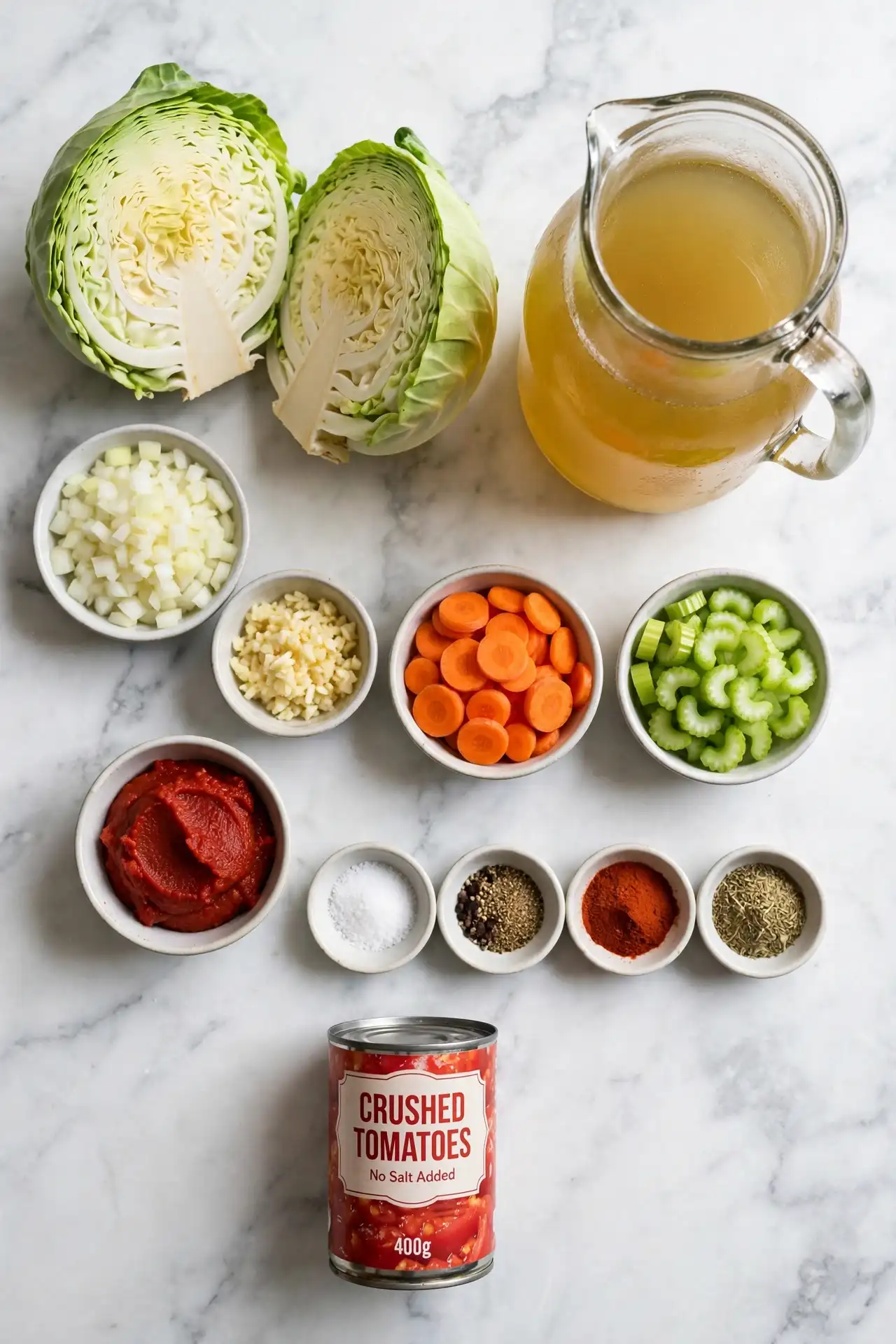
- 2 tbsp olive oil added first so the aromatics cook in fat rather than steam
- 1 large yellow onion, diced gives a sweeter, more mellow base than white onion
- 4 garlic cloves, minced fresh only, not jarred
- 3 medium carrots (about 250g / 9 oz), sliced into rounds
- 3 celery stalks, sliced
- 2 tbsp tomato paste cooked briefly in oil before the liquid goes in to concentrate and deepen the flavor
- 1 can (400g / 14 oz) crushed tomatoes
- 1.5 litres (6 cups) chicken broth or vegetable broth use halal-certified chicken broth if not going vegetarian
- 500ml (2 cups) water
For the cabbage and seasoning:
- 1 medium green cabbage (about 800g / 1.75 lbs), core removed and roughly chopped
- 1 tsp paprika
- 1 tsp dried oregano
- 1/2 tsp cumin
- 2 bay leaves
- 1 tsp salt, plus more to taste
- 1/2 tsp black pepper
- 1 tsp sugar cuts the acidity of the tomatoes without making the soup taste sweet
To finish:
- A handful of fresh flat-leaf parsley, roughly chopped
Recipe Timing
| Timing Element | Duration |
|---|---|
| Prep Time | 15 minutes |
| Cook Time | 35 minutes |
| Total Time | 50 minutes |
Servings: 6 | Difficulty: Easy | Cuisine: International / Comfort | Course: Soup, Main
How to Make Cabbage Soup, Step by Step
Step 1: Sauté the onion
Heat the olive oil in a large pot or Dutch oven over medium heat. Add the diced onion and cook for 5 minutes, stirring occasionally, until it turns fully translucent and the edges begin to soften.
Why this works: Building the base in oil rather than broth gives you a sweet, rounded foundation. Onion added directly to cold broth stays sharp and one-dimensional all the way through.
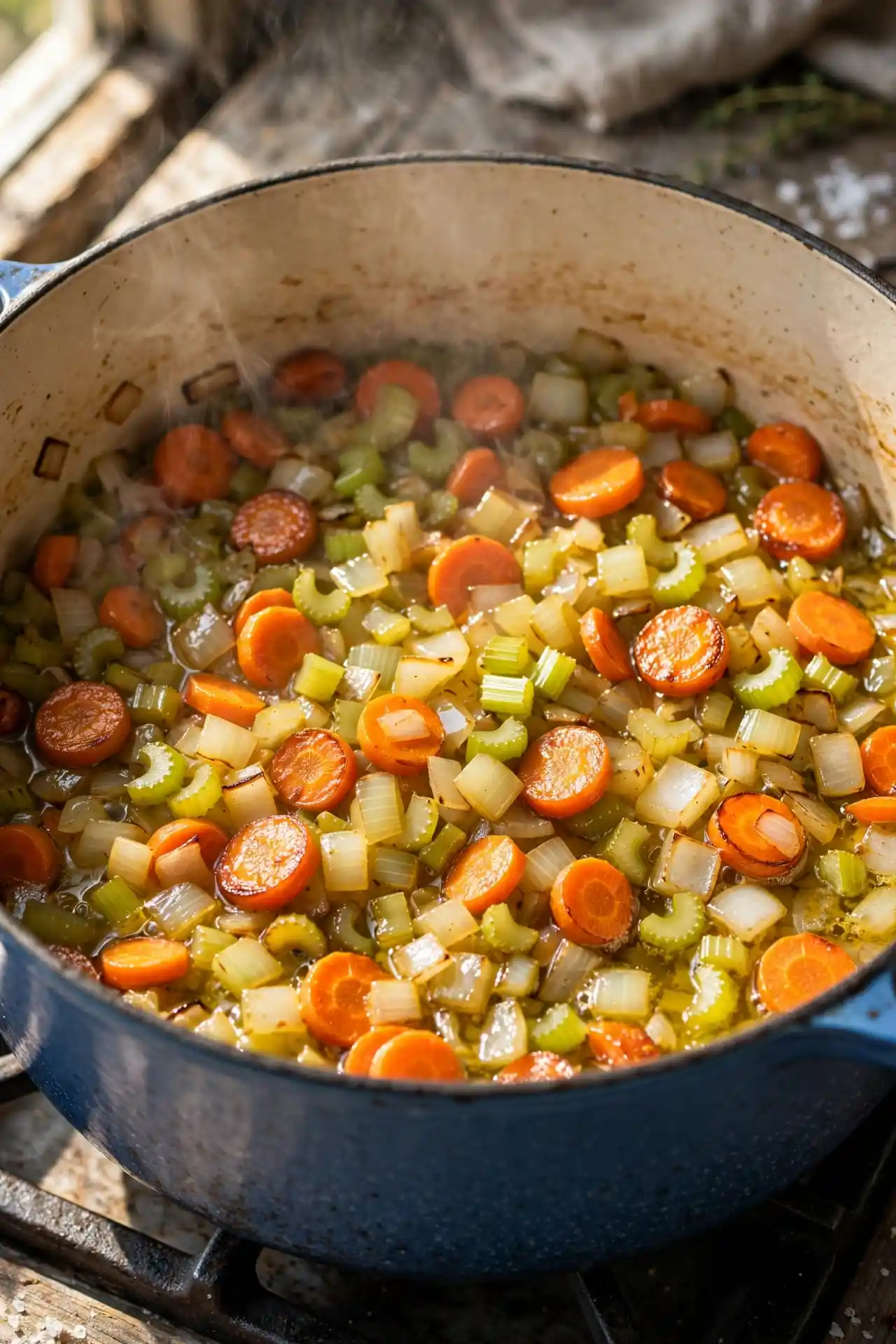
Step 2: Add garlic, carrots, and celery
Add the minced garlic, sliced carrots, and sliced celery to the pot. Cook for 3 minutes, stirring frequently, until the garlic is fragrant and the carrot edges begin to soften.
Step 3: Cook the tomato paste
Push the vegetables to the sides of the pot. Add the tomato paste directly to the bare bottom and cook for 90 seconds, stirring it across the surface, until it darkens from bright red to a deeper brick tone.
Why this works: Cooking tomato paste in fat removes the raw, slightly metallic quality it starts with and caramelizes its natural sugars. The whole soup benefits from this one step.
Step 4: Add liquids and spices
Pour in the crushed tomatoes, broth, and water. Add the paprika, dried oregano, cumin, bay leaves, salt, pepper, and sugar. Stir to combine and bring the pot to a full boil over medium-high heat, which takes about 5 to 6 minutes.
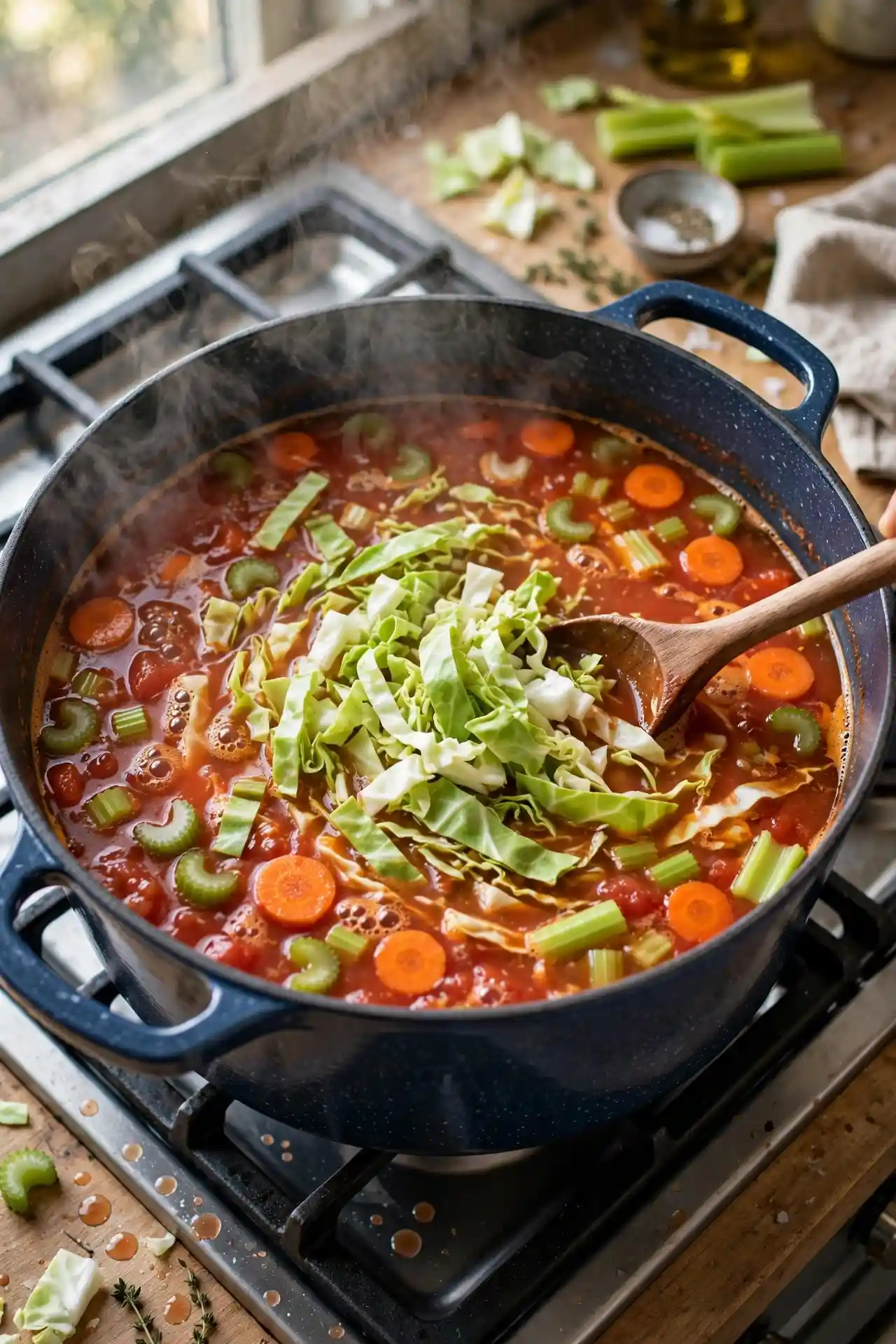
Step 5: Add the cabbage
Add the chopped cabbage to the boiling broth. It will look like far too much. Stir to submerge as much as possible, then reduce the heat to medium-low.
Why this works: Adding the cabbage to already-hot, already-seasoned broth means it absorbs flavor as it wilts rather than sitting in plain water as it softens.
Step 6: Simmer until tender
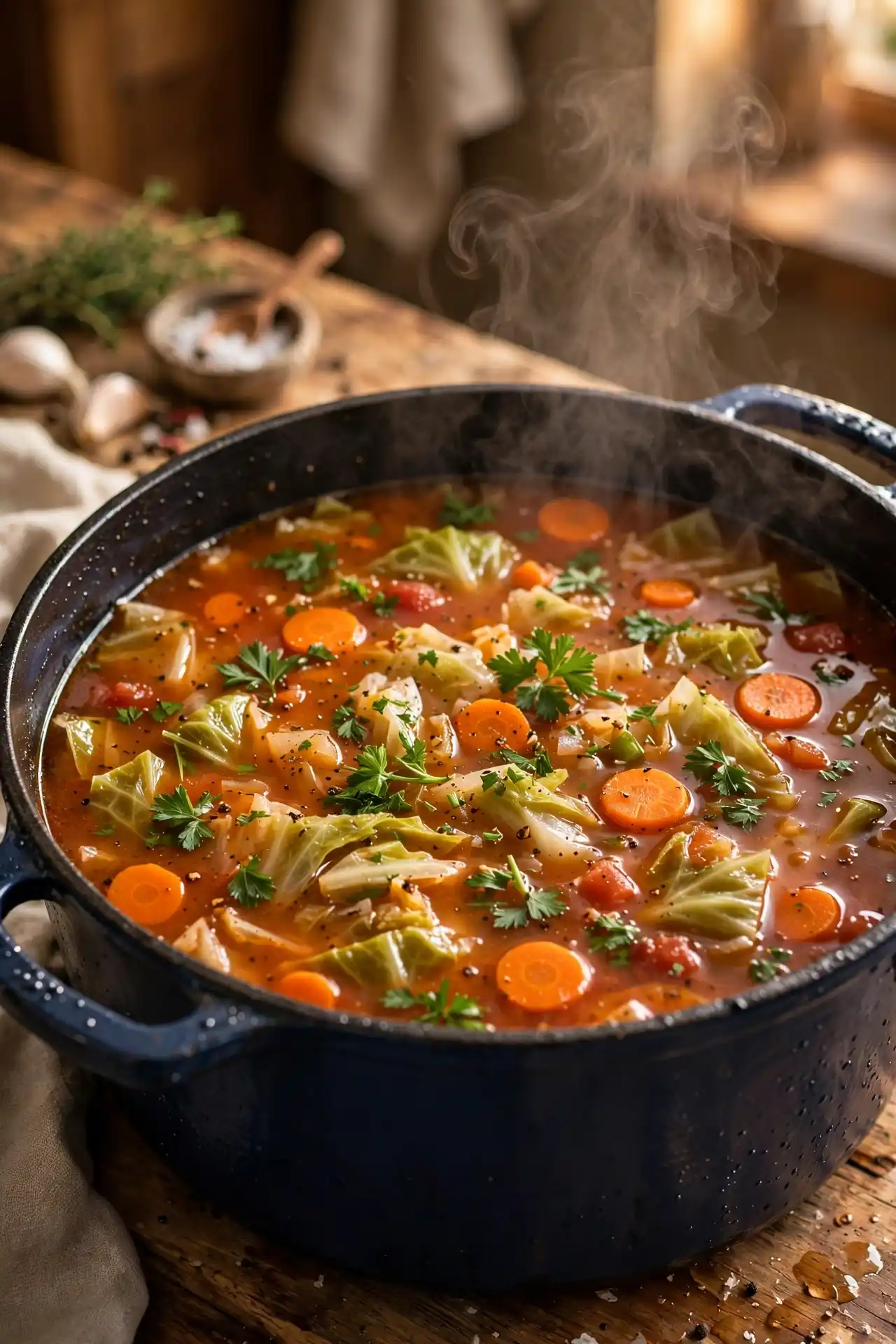
Simmer uncovered for 20 to 25 minutes until the cabbage is completely tender. Press a piece against the side of the pot with a spoon: it should give without any raw resistance. If it still has a slight bite at 20 minutes, cook 5 more minutes and check again.
According to USDA safe food handling guidelines, hot soups should be cooled to below 5°C (40°F) within 2 hours before refrigerating. Never leave a large pot of soup on the counter overnight to cool.
Step 7: Finish and serve
Remove the bay leaves. Taste the broth and adjust salt and pepper as needed. Stir in the chopped parsley just before ladling.
Why this works: Parsley added at the end stays bright green and keeps its fresh herbal quality intact, which provides contrast against the long-simmered broth.
Key Tips for Best Results
Cook the tomato paste in dry fat before adding liquid. Most soup recipes skip this and add tomato paste directly to the broth, where it dissolves without much impact. Ninety seconds in hot oil changes it completely: the sharp edges mellow, the sugars caramelize, and the finished cabbage soup develops a rounded depth that broth alone cannot give you.
Cut the cabbage in rough chunks, not thin strips. Thin shreds disappear into the broth by the 15-minute mark and become soft and indistinct. Aim for irregular pieces roughly 4 to 5 cm (about 1.5 to 2 inches) across. They hold their shape through a 25-minute simmer and give the soup actual body.
Taste the broth before adding extra salt. Store-bought broth already carries significant sodium. Depending on the brand, the recipe’s 1 tsp may be more than enough. Always taste at the 15-minute mark before adjusting.
Common Mistakes to Avoid
Adding cabbage before the broth comes to a boil: Cabbage that starts in cold or warm liquid cooks unevenly and tends to be both overcooked in some places and underdone in others by the time the soup is ready. Let the broth reach a rolling boil before adding it.
Replacing broth with water: The broth carries most of the flavor in this recipe. Water alone produces a flat, thin result that no amount of spice will fully fix. If you’ve run out of broth, dissolve 2 to 3 bouillon cubes in the water before adding it to the pot.
Leaving the soup to simmer past 25 minutes: Cabbage that overcooks develops a faintly sulphurous quality. Check it at 20 minutes. Once it’s fully tender and presses flat against a spoon without resistance, it’s done. Pull it off the heat.
Variations and Substitutions
Add white beans: Drain and rinse a 400g can of cannellini or white kidney beans and stir them in during the final 5 minutes. They add protein and make the soup filling enough to serve as a main without altering its character.
Add shredded cooked chicken: About 300g of shredded cooked chicken added at the same point works equally well.
Make it spicier: Add 1/4 to 1/2 tsp red chili flakes with the other spices in Step 4. Warm without being overpowering.
Use red cabbage: It works as a direct substitute but will turn the broth a murky purple-pink. The taste is slightly earthier. A tablespoon of white vinegar added to the pot during cooking helps the color stay brighter rather than turning muddy grey.
What to Serve With Cabbage Soup
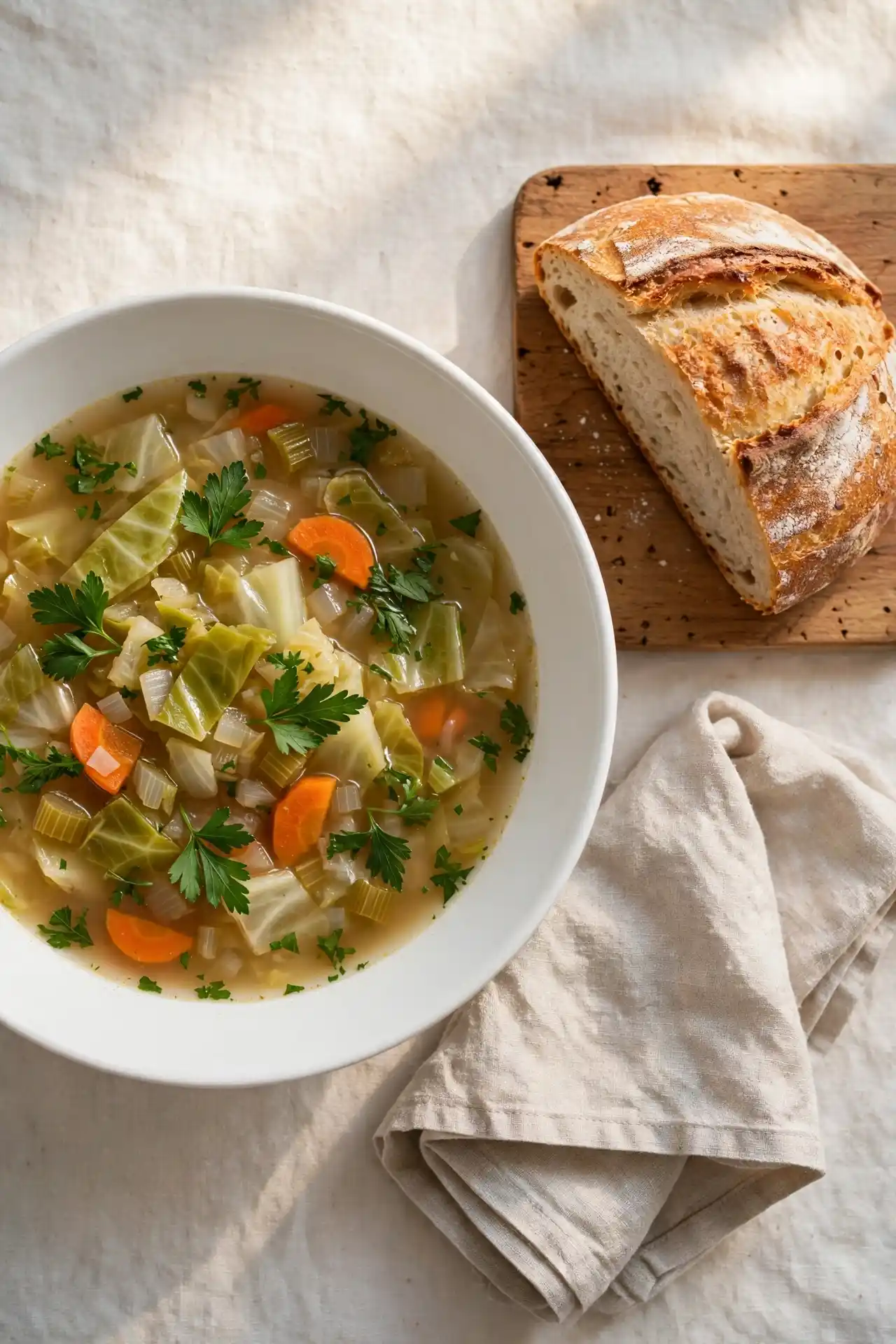
Crusty bread or flatbread: The broth is flavorful enough that mopping the bowl feels satisfying rather than wasteful. A thick slice of sourdough or a plain flatbread works.
Steamed rice: A small portion added directly to the bowl turns a lighter serving into a more complete meal.
Cucumber and tomato salad: The crunch and acidity of a simple salad contrast well against the warm, soft soup.
Lemon wedges on the table: A squeeze of fresh lemon into the bowl brightens the entire flavor profile. Worth putting a small plate of wedges out even if not everyone uses them.
Plain yogurt on the side: A spoonful stirred into the bowl adds a creamy texture to the broth and softens the spice slightly.
Storage, Reheating and Make-Ahead
Fridge: Store in an airtight container for up to 5 days. The flavor peaks between day two and day four as the spices continue to develop in the broth.
Freezer: Freeze in individual sealed containers or flat zip bags for up to 3 months. Thaw overnight in the fridge before reheating. The cabbage softens slightly more after freezing but holds an acceptable texture.
Reheat: On the stovetop over medium heat, stirring occasionally, until the soup reaches a full simmer (about 5 minutes). Add a splash of water or broth if it has thickened during storage. In the microwave, heat individual portions at full power for 2 to 3 minutes, stirring once halfway through.
Make-ahead: The full batch can be made up to 3 days ahead and refrigerated. Hold off on stirring in the fresh parsley until just before serving.
Allergen Information
This recipe contains no common allergens in its base form. If using store-bought broth or canned tomatoes, check the label for soy, gluten, or celery allergens, as these vary by brand.
To make this gluten-free, verify that every packaged ingredient (broth, canned tomatoes, individual spices) carries certified gluten-free labeling, since cross-contamination during manufacturing can vary.
Nutrition Information
Per serving (recipe makes 6 servings):
| Nutrient | Per Serving |
|---|---|
| Calories | 150 kcal |
| Protein | 4 g |
| Total Carbohydrates | 20 g |
| Dietary Fiber | 4 g |
| Total Sugars | 10 g |
| Total Fat | 5 g |
| Saturated Fat | 0.7 g |
| Sodium | 580 mg |
| Cholesterol | 0 mg |
| Potassium | 500 mg |
| Vitamin C | 50 mg |
| Calcium | 85 mg |
| Iron | 1.2 mg |
For a breakdown of the nutritional composition of green cabbage, see USDA FoodData Central.
Nutritional values are estimates only and may vary based on specific ingredients, brands, and portion sizes used. For precise dietary needs, consult a registered dietitian.
Frequently Asked Questions
Can I freeze cabbage soup, and does the cabbage go mushy after thawing?
It freezes well for up to 3 months. The cabbage will be slightly softer after thawing than it was fresh, but not unpleasantly mushy. If texture matters a lot to you, freeze just the broth and stir in freshly cooked cabbage when reheating.
My cabbage soup turned out bland. How do I fix it?
The most common cause is undersalting or using a very low-sodium broth without adjusting the seasoning. Taste at the 15-minute mark and add salt in small increments. A squeeze of lemon juice or a teaspoon of white wine vinegar added at the very end lifts the whole flavor without making the soup taste sour.
Can I use red cabbage instead of green?
You can. Red cabbage has a slightly earthier, more mineral flavor and will turn the broth a murky purple-pink during cooking. Adding a tablespoon of white vinegar to the pot helps the color hold brighter rather than turning grey.
What protein can I add to make this more filling?
A drained 400g can of white beans stirred in during the final 5 minutes is the simplest option. About 300g of shredded cooked chicken added at the same point works equally well and turns this into a proper main course.
Can I make cabbage soup in a slow cooker?
Yes, but sauté the onion, garlic, carrots, and celery in a pan first. Skipping that step produces a noticeably flat result. Transfer everything to the slow cooker with the remaining ingredients and cook on high for 4 hours or low for 7 to 8 hours. Add the cabbage in the final 2 hours only.
How long does cabbage soup keep in the fridge?
Up to 5 days in an airtight container. The flavor improves between day one and day two and stays good through day four.
Can I add potatoes to this?
Two medium potatoes, diced and added with the broth in Step 4, cook through fully by the time the cabbage is done. They absorb the broth well and thicken it slightly as a bonus.
Conclusion
Cabbage soup is practical, genuinely satisfying, and worth making in a full pot even when you’re cooking for two. The three things that actually matter here: sauté the aromatics properly before any liquid goes in, cook the tomato paste in fat for 90 seconds before adding the broth, and give the cabbage a full 20 to 25 minutes to soften. Do all three and the soup will be noticeably better than the kind made by throwing everything in at once. Make the full batch. Day two is better than day one.
Cabbage Soup Recipe Card
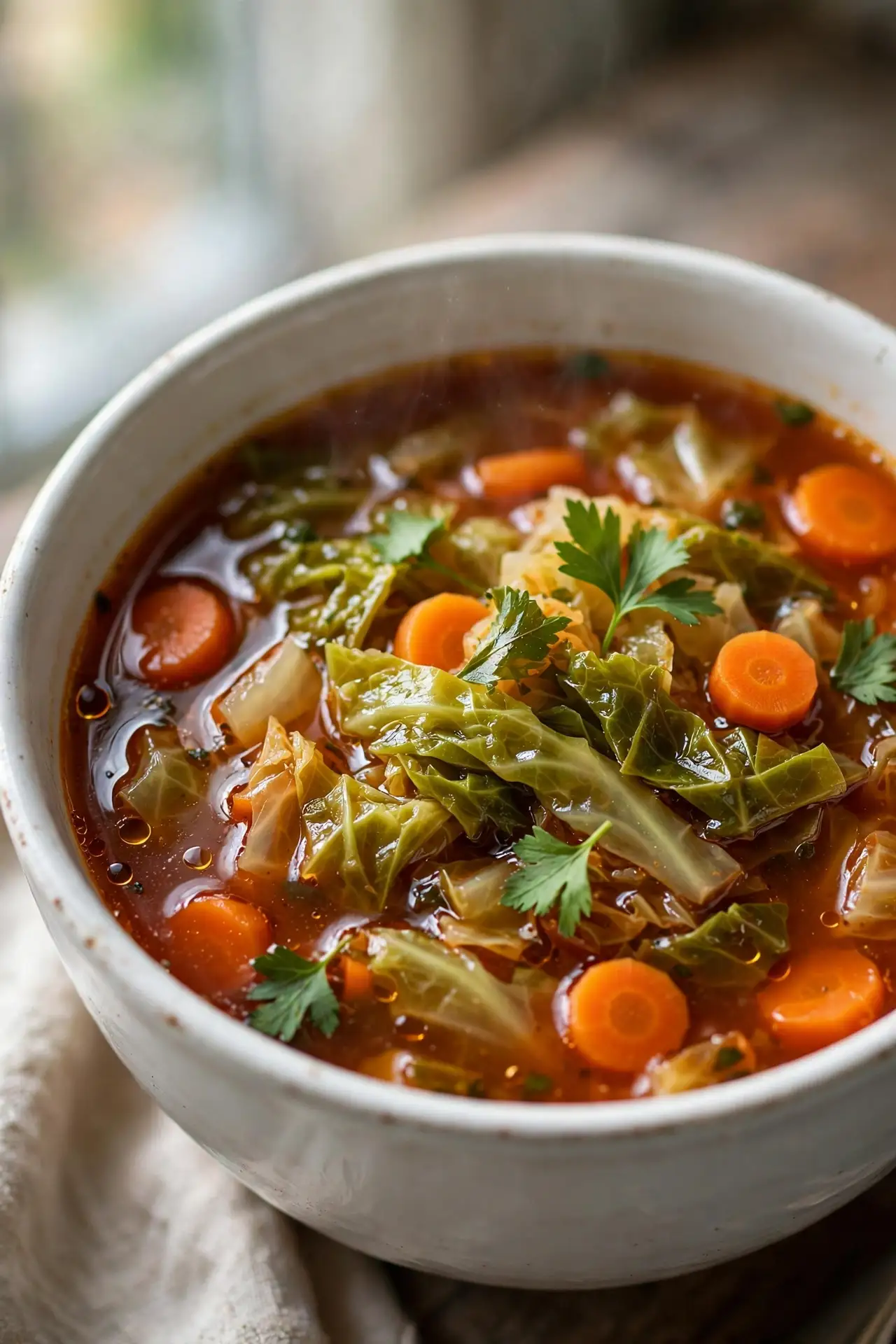
Cabbage Soup
Ingredients
Method
- Heat 2 tbsp olive oil in a large pot over medium heat. Add the diced onion and cook 5 minutes until translucent.
- Add minced garlic, sliced carrots, and celery. Cook 3 minutes, stirring frequently, until garlic is fragrant.
- Push vegetables to the sides. Add tomato paste to the base and cook 90 seconds, stirring, until it deepens in color to a dark brick-red.
- Pour in crushed tomatoes, broth, and water. Add paprika, oregano, cumin, bay leaves, salt, pepper, and sugar. Bring to a full boil over medium-high heat.
- Add the chopped cabbage and stir to submerge. Reduce heat to medium-low.
- Simmer uncovered 20 to 25 minutes until cabbage is fully tender and gives no resistance when pressed with a spoon.
- Remove bay leaves. Taste and adjust salt and pepper. Stir in fresh parsley just before serving.