Cornbread Recipe — Crispy Edges, Tender Crumb
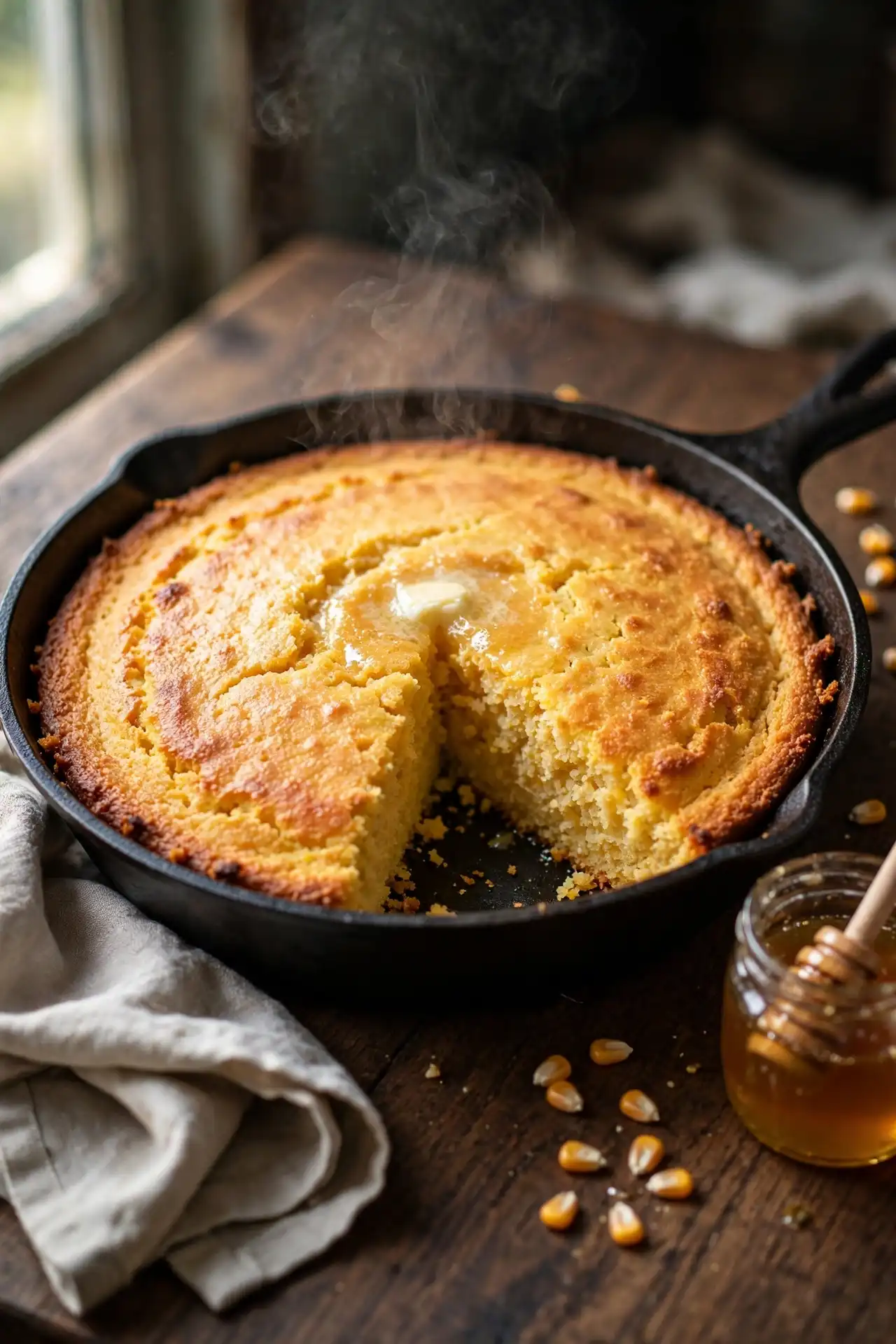
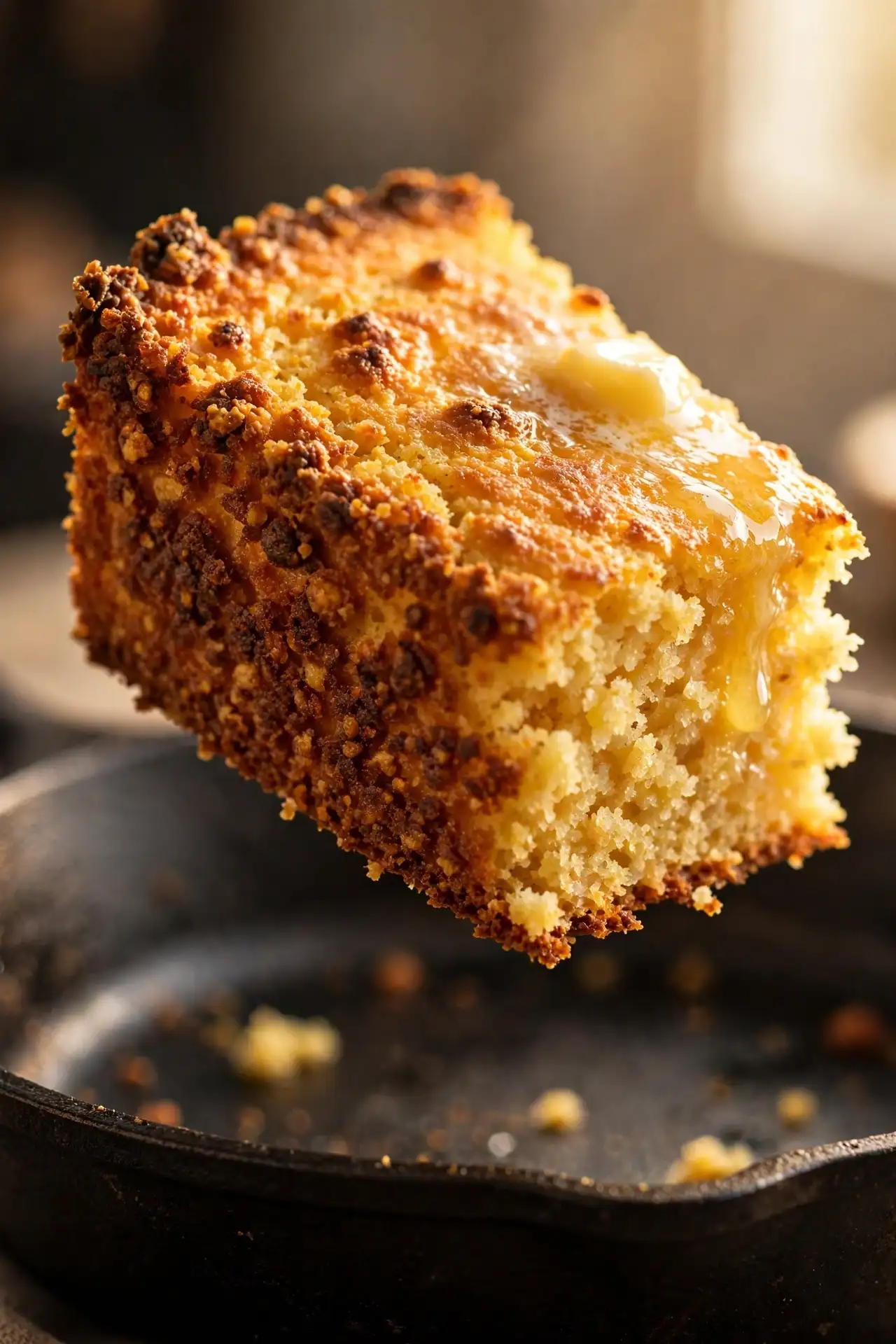
Cornbread that comes out of a hot skillet with crackling edges and a soft, buttery middle is one of the most satisfying things you can bake. This cornbread recipe skips the boxed mix entirely and gets there in about 30 minutes using ingredients you almost certainly already have.
The difference between dry, crumbly cornbread and the kind people ask for again comes down to two things: fat ratio and oven temperature. Get both right and the result speaks for itself.
Why You’ll Love This Cornbread Recipe
- The cast iron skillet creates a bottom crust that no baking pan can replicate
- You get a real crumb, not a cake-like sweetness, because the sugar is kept low and deliberate
- Buttermilk adds a mild tang and activates the leavening properly, giving you a light interior
- Everything goes into one bowl, so cleanup takes three minutes
- It works as a weeknight side dish, a soup companion, or the base for a next-day breakfast
Ingredients You’ll Need
For the Batter
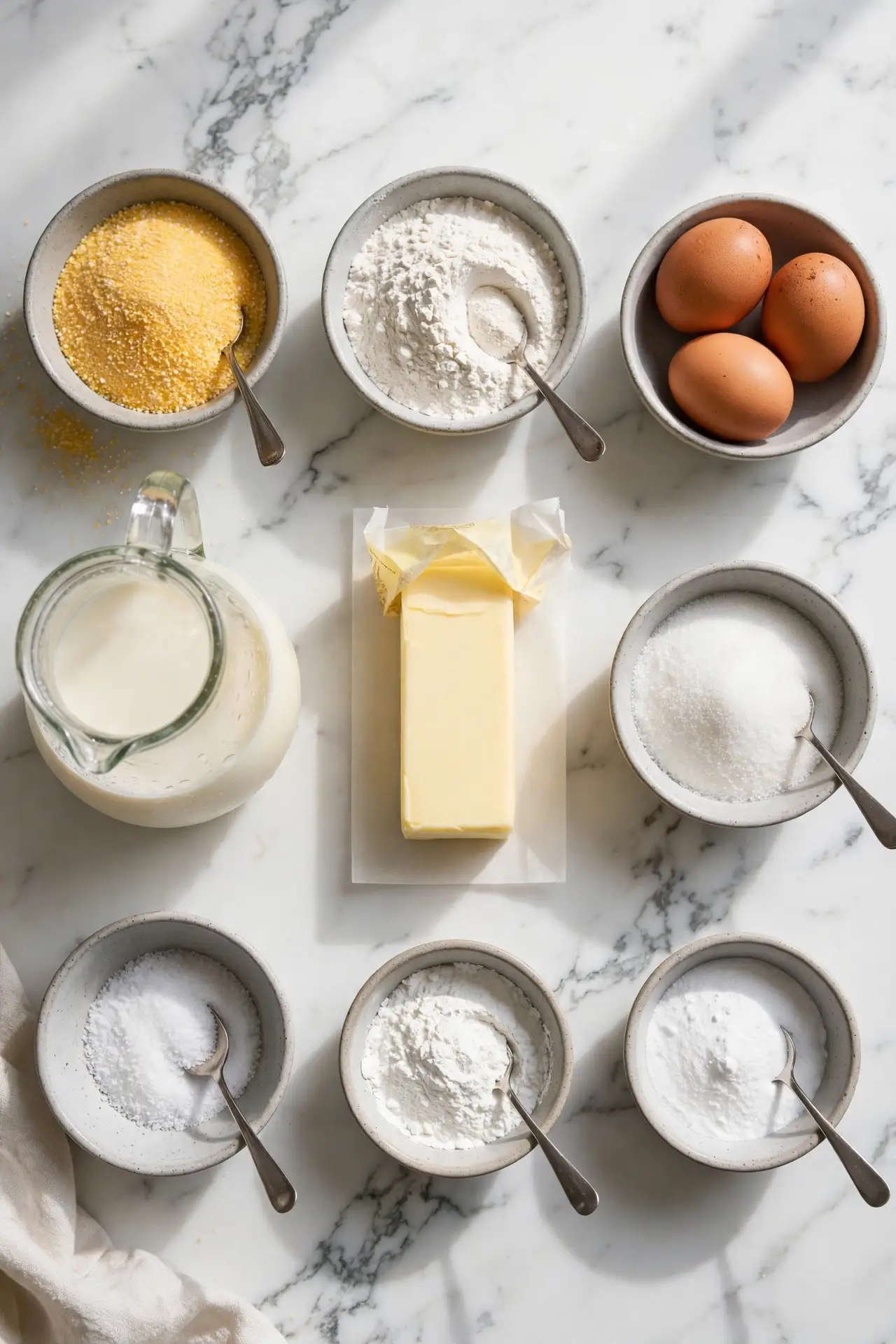
- 1 cup (150g) yellow cornmeal — coarse-ground gives better texture than fine; use fine if that’s what you have, but the crust won’t be as crunchy
- 1 cup (125g) all-purpose flour — balances the density of the cornmeal for a tender interior
- 1½ tsp baking powder — primary lift agent
- ½ tsp baking soda — reacts with the buttermilk for extra rise and light crumb
- 1 tsp fine salt
- 2 tbsp granulated sugar — keeps sweetness in the background without making this taste like cake
- 1 cup (240ml) full-fat buttermilk — the acidity tenderizes the crumb and activates the baking soda; see substitution note below
- 2 large eggs
- 60g unsalted butter, melted, plus 1 tbsp extra for the skillet — fat is what makes the edges crisp and the inside moist
- 1 tbsp neutral oil — combined with butter for a slightly higher smoke point
Buttermilk substitution: Stir 1 tablespoon of white vinegar into 1 cup of whole milk. Let it sit for 5 minutes until it curdles slightly. Use in place of buttermilk.
Recipe Timing
| Timing Element | Duration |
|---|---|
| Prep Time | 10 minutes |
| Cook Time | 20 minutes |
| Rest Time | 5 minutes |
| Total Time | 35 minutes |
Servings: 8 | Difficulty: Easy | Cuisine: American (Southern) | Course: Side Dish
How to Make Cornbread — Step by Step
Step 1: Preheat the oven and the skillet
Place a 10-inch (25cm) cast iron skillet in the oven and preheat to 220°C (425°F). The skillet needs to be screaming hot before the batter goes in. This is what creates the crispy bottom crust.
Why this works: A cold pan and cold batter produce steamed cornbread. A hot pan immediately sets the bottom, giving you that crackly, almost fried edge.
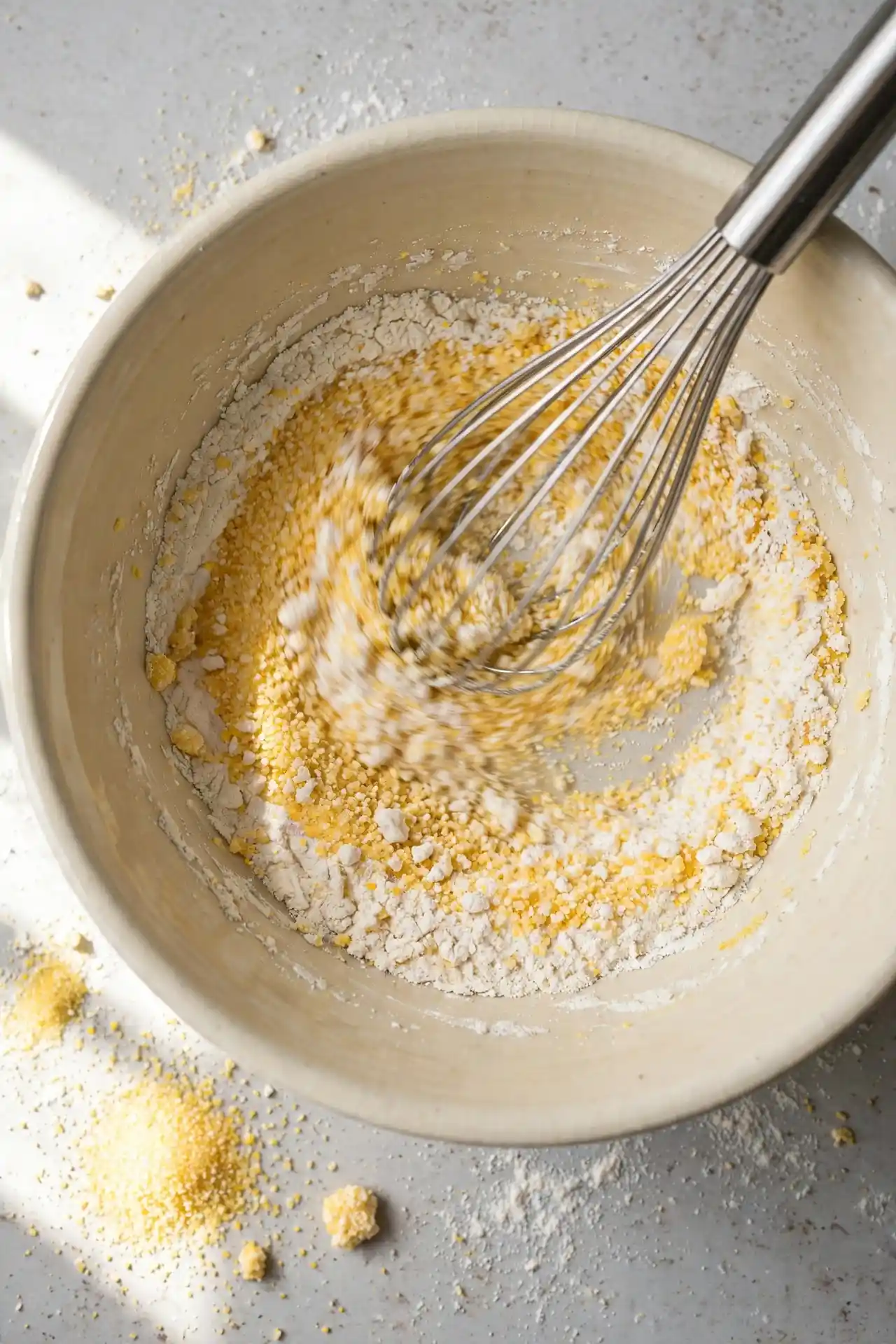
Step 2: Mix the dry ingredients
In a large mixing bowl, whisk together the cornmeal, flour, baking powder, baking soda, salt, and sugar until evenly combined. No lumps should remain.
Step 3: Mix the wet ingredients
In a separate jug or bowl, whisk together the buttermilk, eggs, and melted butter until smooth. The butter should be fully melted but not steaming hot. If it’s too hot, it can scramble the eggs.
⚠️ Food Safety: Use eggs at room temperature where possible. Cold eggs mixed into hot melted butter can cause the butter to seize into clumps, affecting the batter’s texture.
Step 4: Combine wet and dry
Pour the wet ingredients into the dry ingredients and fold together using a spatula until just combined. Stop as soon as no streaks of flour remain. The batter will look slightly lumpy.
Why this works: Overmixing develops gluten, which tightens the crumb and makes cornbread dense. A few lumps are fine and will bake out.
Step 5: Prepare the skillet and pour the batter
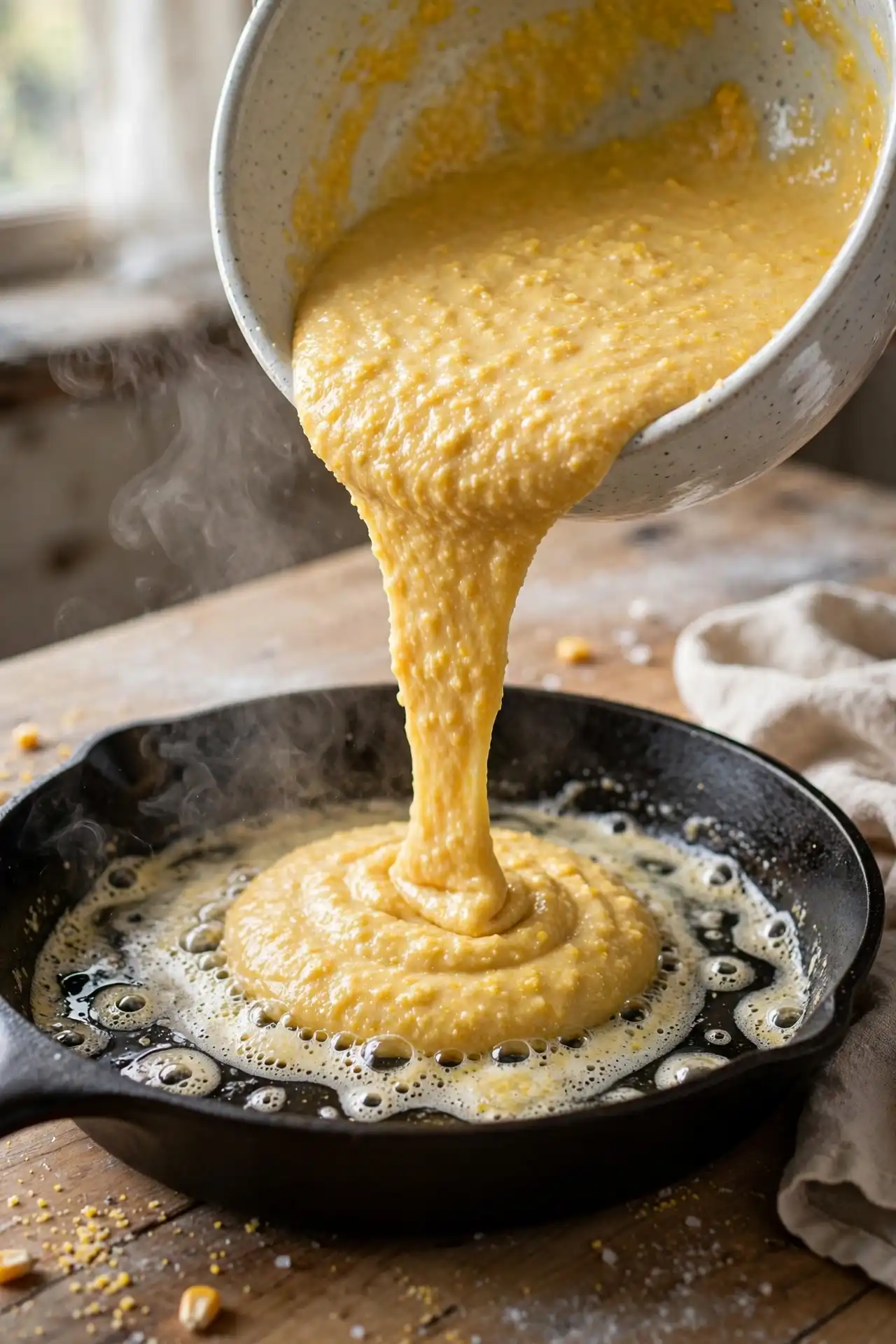
Use an oven mitt to carefully remove the hot skillet from the oven. Add 1 tablespoon of butter directly to the hot pan. It will melt and sizzle immediately. Swirl to coat the base and sides, then pour in the batter all at once. It should sizzle when it hits the pan.
Why this works: That sizzle means the batter is already beginning to set on contact. The butter coat prevents sticking and deepens the crust color.
Step 6: Bake
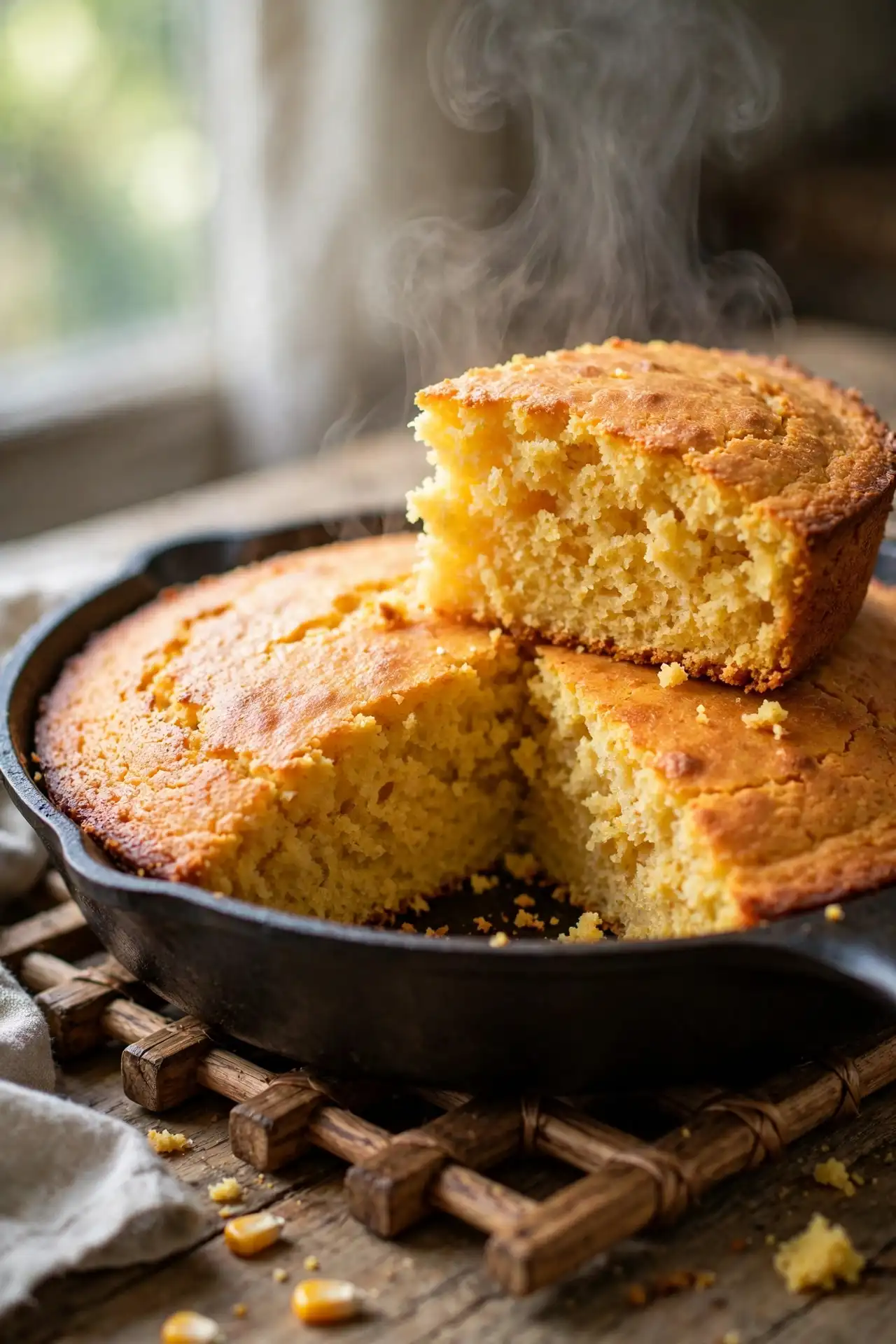
Place the skillet back in the oven. Bake for 18 to 20 minutes until the top is deep golden brown and a toothpick inserted into the center comes out clean. The edges will pull slightly away from the sides of the pan.
Step 7: Rest before slicing
Remove the skillet from the oven and let the cornbread rest for 5 minutes before cutting. This lets the interior set properly so it doesn’t collapse when sliced.
⚠️ Food Safety: The skillet handle will remain extremely hot for 15 to 20 minutes after leaving the oven. Keep an oven mitt on the handle and keep children away from the pan.
Common Mistakes to Avoid
Skipping the skillet preheat
Pouring batter into a cold pan is the most common reason cornbread comes out pale and soft on the bottom. The pan must be oven-hot before the batter goes in. There is no workaround for this step.
Overmixing the batter
Once wet and dry ingredients combine, the gluten activates. Thirty seconds of mixing is enough. If you stir until the batter is perfectly smooth, the finished bread will be noticeably tougher.
Pulling it too early
Light golden is not done. The top should be a deep amber-gold, and the toothpick must come out completely clean, not just mostly clean. An undercooked center will deflate within minutes of coming out of the oven.
Using low-fat buttermilk or skim milk
The fat content in full-fat buttermilk matters for texture. Low-fat alternatives produce a noticeably drier crumb. If you’re making your own substitute, use whole milk.
Variations and Substitutions
Cheddar and jalapeño cornbread: Fold in 80g of grated sharp cheddar and 1 finely diced fresh jalapeño (seeds removed for mild heat) at the end of Step 4. The cheese melts into pockets throughout the crumb. This works particularly well served alongside a bowl of bean soup.
Honey cornbread: Swap the 2 tablespoons of sugar for 3 tablespoons of honey, added to the wet ingredients. The honey deepens the color slightly and gives a more pronounced sweetness. Reduce the baking soda by a small pinch since honey is slightly acidic.
No buttermilk version: The vinegar-and-milk substitute listed in the ingredients works well. Yogurt thinned with 2 tablespoons of water to a pourable consistency is another solid option.
What to Serve With Cornbread
Lentil or bean soup: The dense, slightly sweet crumb holds up well when dunked. A bowl of spiced red lentil soup and a wedge of cornbread is a complete meal.
Grilled or roasted chicken: Cornbread works as the starch alongside roasted chicken thighs, especially when you use the pan drippings as a light gravy.
Scrambled eggs at breakfast: Day-old cornbread, toasted in butter, holds together better than bread toast and pairs well with eggs and a sliced tomato.
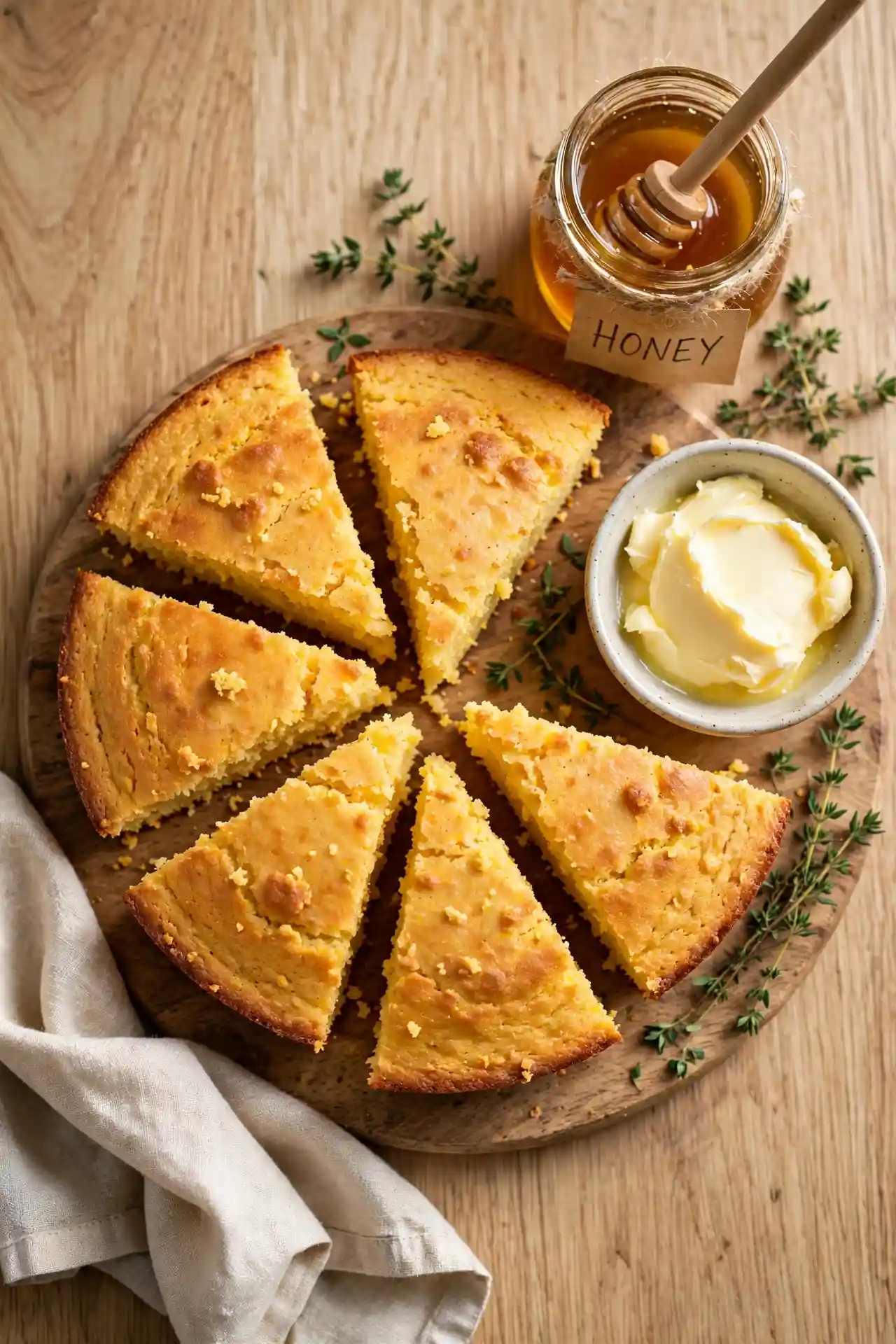
A drizzle of honey: Nothing else required. Serve warm wedges with good butter and a bottle of honey on the table.
Spiced chickpea stew: The slight sweetness in the cornbread balances the heat of a spiced tomato-based stew.
Storage, Reheating and Make-Ahead
Fridge: Wrap leftover cornbread tightly in plastic wrap or store in an airtight container. It keeps well for up to 3 days in the refrigerator. Beyond that, the crumb dries out noticeably.
Freezer: Wrap individual wedges in plastic wrap, then place in a zip-lock freezer bag. Cornbread freezes well for up to 2 months. Thaw overnight in the fridge or at room temperature for 1 hour before reheating.
Reheating: Wrap wedges in foil and warm in the oven at 160°C (320°F) for 10 minutes. This brings back the moisture without drying out the edges. A microwave works but leaves the edges rubbery.
Make-ahead: You can mix the dry ingredients up to 48 hours ahead and store them covered at room temperature. Mix the wet ingredients and combine on the day you bake. The batter itself should not be made ahead as the leavening starts working on contact with the buttermilk.
Allergen and Dietary Disclosure
Contains: Gluten (cornmeal and all-purpose flour), Dairy (buttermilk and butter), Eggs
To make this gluten-free, substitute the all-purpose flour with a certified gluten-free flour blend at a 1:1 ratio. Check that your cornmeal is processed in a gluten-free facility.
To make this dairy-free, use a plant-based butter substitute and replace buttermilk with unsweetened oat milk plus 1 tablespoon of apple cider vinegar.
This recipe uses eggs. There is no tested egg-free version of this specific cornbread.
Nutrition Information
Per serving (1 of 8 wedges)
| Nutrient | Per Serving |
|---|---|
| Calories | 235 kcal |
| Protein | 6 g |
| Total Carbohydrates | 31 g |
| Dietary Fiber | 1.5 g |
| Total Sugars | 5 g |
| Total Fat | 10 g |
| Saturated Fat | 5 g |
| Sodium | 330 mg |
| Cholesterol | 65 mg |
| Potassium | 130 mg |
| Calcium | 85 mg |
| Iron | 1.5 mg |
“Nutritional values are estimates only and may vary based on specific ingredients, brands, and portion sizes used. For precise dietary needs, consult a registered dietitian.”
Frequently Asked Questions
Why is my cornbread dry and crumbly?
The most common cause is too much cornmeal relative to flour, or overbaking by even a few minutes. Make sure your Total Time doesn’t exceed 20 minutes of baking, and always use full-fat buttermilk. The fat in the butter and buttermilk is what keeps the crumb moist.
Can I make this cornbread recipe without buttermilk?
Yes. Stir 1 tablespoon of white vinegar into 1 cup of whole milk and let it sit for 5 minutes. Use it in place of buttermilk at the same quantity. It won’t be identical but it works well.
Do I have to use a cast iron skillet?
No, but the crust will be different. A 9-inch square baking pan works. Preheat it the same way and coat it with butter before adding the batter. The bottom won’t get as crisp, but the interior texture will be the same.
How do I know when the cornbread is done?
The top should be a deep golden brown with edges that have pulled slightly away from the pan. Insert a toothpick into the center; it should come out clean with no wet batter attached. If the top is browning quickly but the center is still wet, reduce the temperature to 200°C (390°F) and bake another 3 to 4 minutes.
Can I make this cornbread ahead of time for a dinner party?
You can bake it up to a day ahead and reheat it. For best results, bake the day of and hold it warm (around 90°C / 195°F) in the oven for up to 30 minutes before serving. It holds well. The crust will soften slightly but the crumb stays good.
Is this cornbread recipe freezer-friendly?
Yes. Wrap individual wedges in plastic wrap, then seal in a freezer bag. They keep for up to 2 months. Thaw at room temperature for about an hour, then warm in the oven at 160°C (320°F) for 10 minutes wrapped in foil.
Can I reduce the butter for a lighter version?
You can reduce the melted butter by half (to 30g), but the crumb will be drier and the edges won’t brown as well. A better option is to keep the full butter amount and simply cut smaller portions.
Conclusion
A good cornbread recipe doesn’t need many ingredients, but it does need a hot pan and respect for the mixing step. Those two things separate cornbread with real character from the dry, pale versions you’ve probably had somewhere at some point. Make it once and you’ll understand why the hot-skillet step is non-negotiable.
Serve it warm, with real butter, the day you bake it. That’s when it’s best.
Cornbread Recipe — Recipe Card
Cornbread Recipe — Crispy Edges, Tender Crumb
Ingredients
Method
- Place a 10-inch cast iron skillet in the oven and preheat to 220°C (425°F).
- Whisk together cornmeal, flour, baking powder, baking soda, salt, and sugar in a large bowl.
- In a separate jug, whisk buttermilk, eggs, and melted butter until smooth.
- Pour the wet ingredients into the dry and fold together until just combined. Do not overmix.
- Remove the hot skillet from the oven using an oven mitt. Add 1 tablespoon of butter and swirl to coat. Pour in the batter — it should sizzle immediately.
- Bake for 18 to 20 minutes until the top is deep golden brown and a toothpick inserted in the center comes out clean.
- Rest 5 minutes before slicing and serving.