Classic Tuna Salad Recipe (Ready in 10 Minutes)
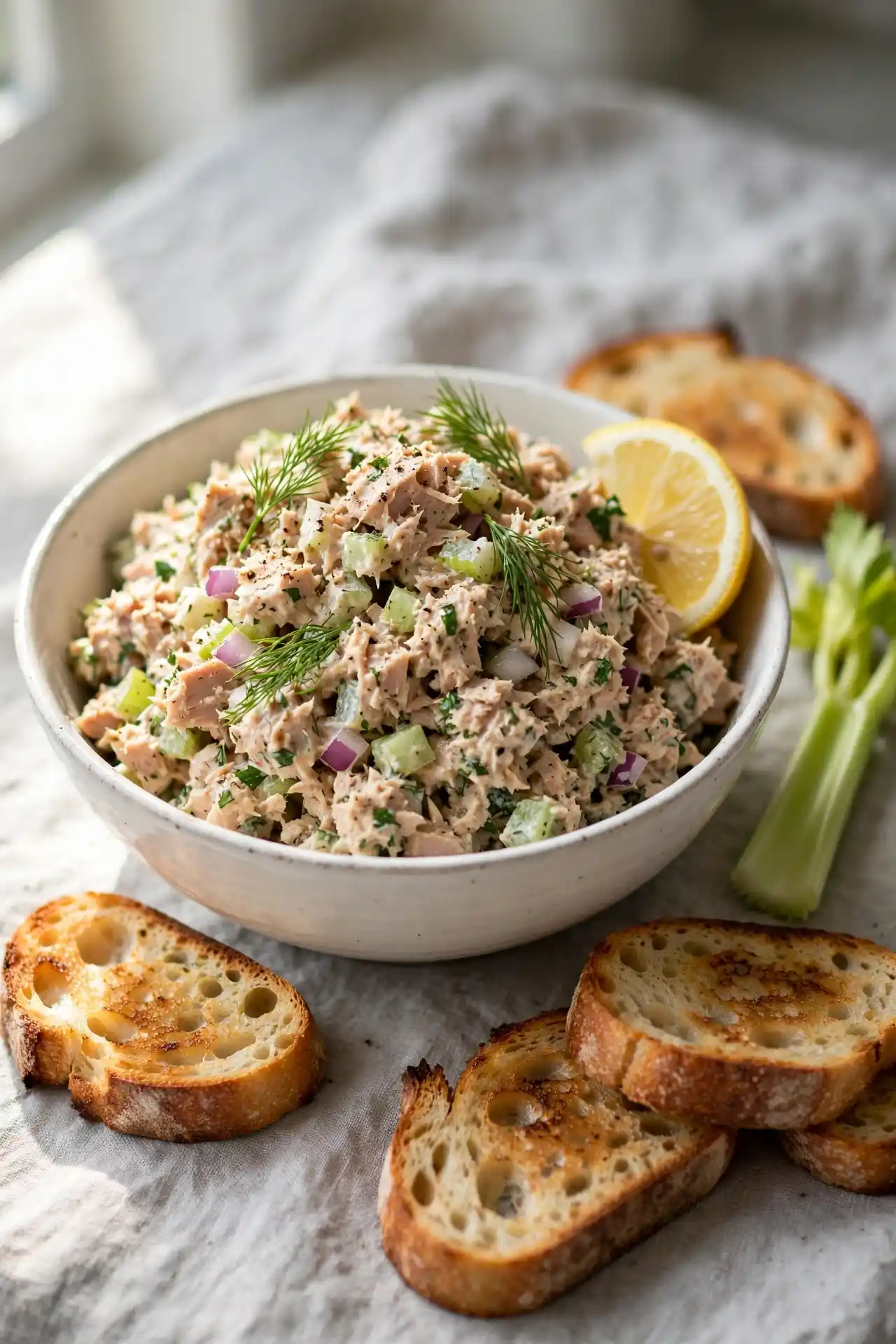
Most tuna salad ends up wet, heavy, or flat because of three skipped steps: thorough draining, proper acid balance, and taking a few seconds to taste the dressing before everything goes in. This version fixes all three. The result is creamy without being dense, bright from lemon and Dijon, and good enough to eat on its own with a fork.
My grandmother made a bowl of this every Sunday and kept it in the fridge through the week. She always drained the tuna over the sink for longer than felt necessary. She was right. That one habit is responsible for more good tuna salad than any ingredient swap.
Why You’ll Love This Tuna Salad
- Ready in 10 minutes with zero cooking
- Stays fresh in the fridge for 3 days, which makes it useful for actual meal prep
- Works in sandwiches, on crackers, in lettuce cups, or straight from the bowl
- Balanced flavor: tangy, slightly sharp, a little fresh — not just creamy
- One bowl and one fork to clean up
Ingredients You’ll Need
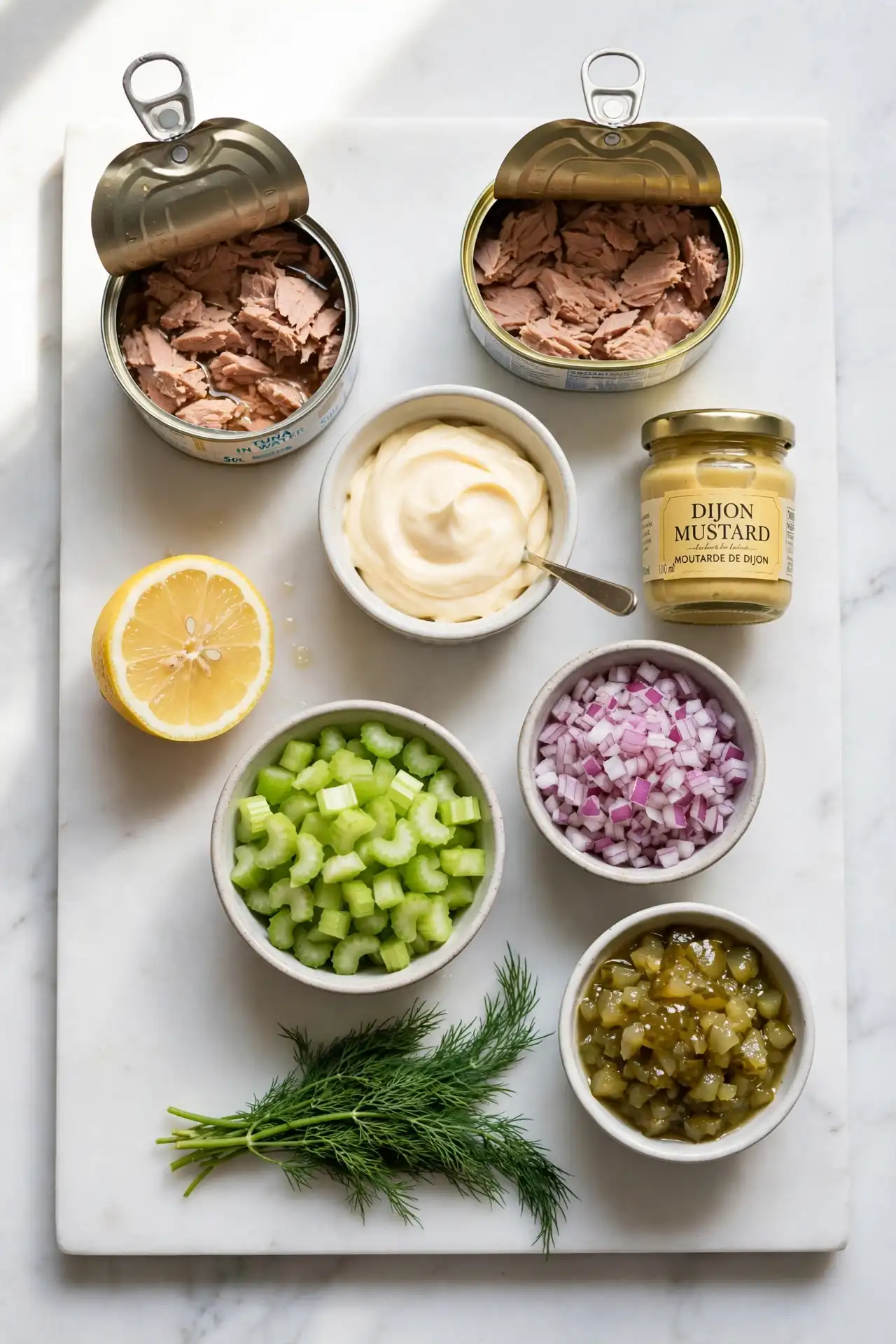
- 2 cans (5 oz / 140g each) tuna in water, well drained — water-packed tuna gives a cleaner flavor and lets the dressing take the lead rather than competing with oil
- 1/3 cup (75g) mayonnaise — full-fat works best; light mayo adds more water and thins the texture
- 2 tsp Dijon mustard — adds sharpness and depth; it doesn’t taste like mustard in the finished salad
- 1 tbsp fresh lemon juice — fresh only; bottled gives a flatter, slightly chemical note
- 2 stalks celery, finely diced — provides crunch without overpowering
- 2 tbsp red onion, very finely minced — mince it small so it distributes evenly without taking over a bite
- 2 tbsp sweet pickle relish — balances the acidity with a touch of sweetness
- 1/4 tsp black pepper, freshly ground
- 1/4 tsp salt, or to taste
- 1 tbsp fresh dill, chopped (optional but recommended)
Recipe Timing
| Timing Element | Duration |
|---|---|
| Prep Time | 10 minutes |
| Cook Time | 0 minutes |
| Total Time | 10 minutes |
Servings: 4 | Difficulty: Easy | Cuisine: American | Course: Lunch / Salad
How to Make Tuna Salad Step by Step
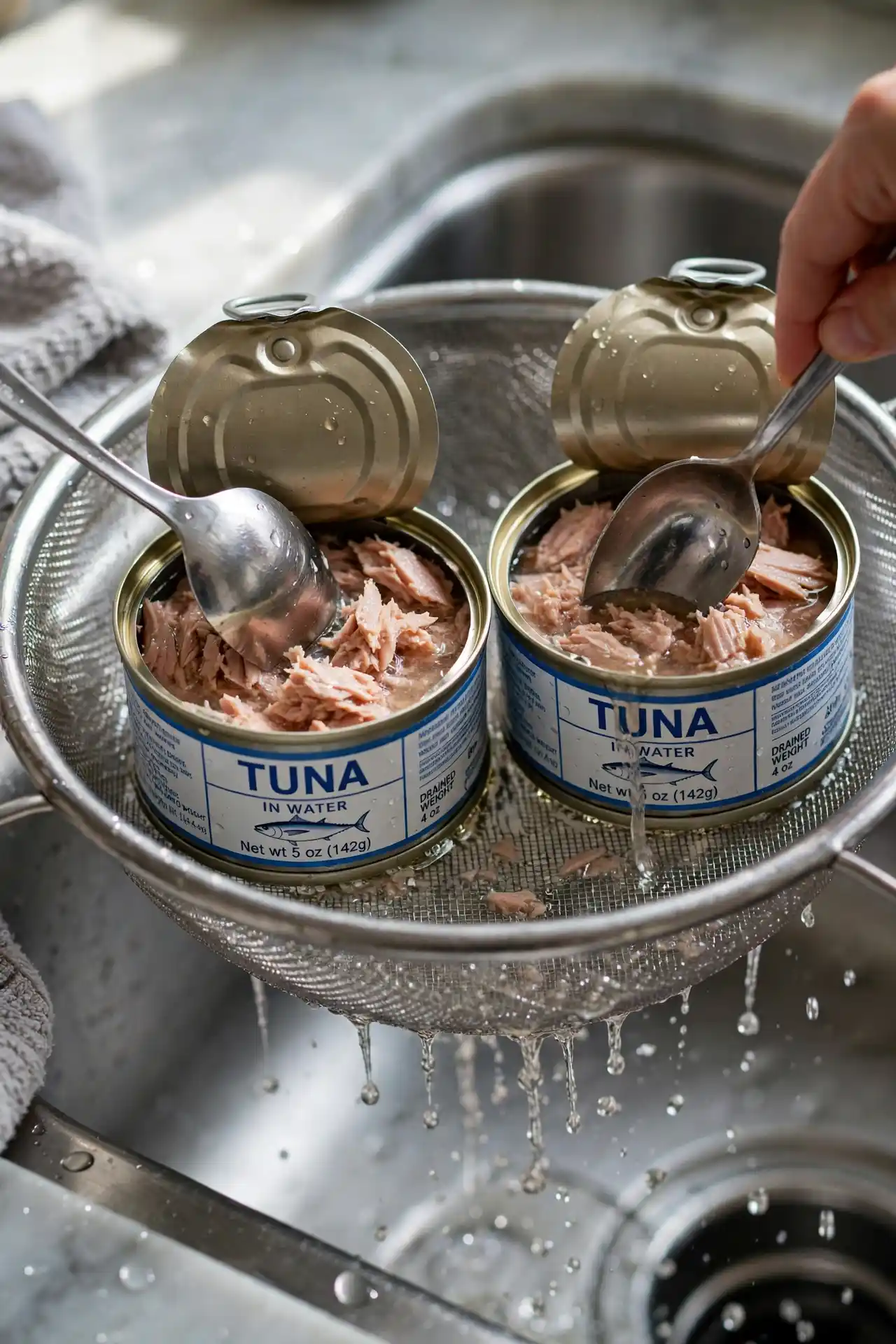
Step 1: Drain the tuna properly
Open both cans and press the lid firmly against the fish while tilting the can over the sink. Hold for 30 seconds. Then tip each can upside down over a fine-mesh sieve and press again. The tuna should feel almost dry.
Why this works: Excess liquid is the main reason tuna salad turns watery within an hour of mixing. The more moisture you remove now, the longer the texture holds after you add the dressing.
Step 2: Mix the dressing
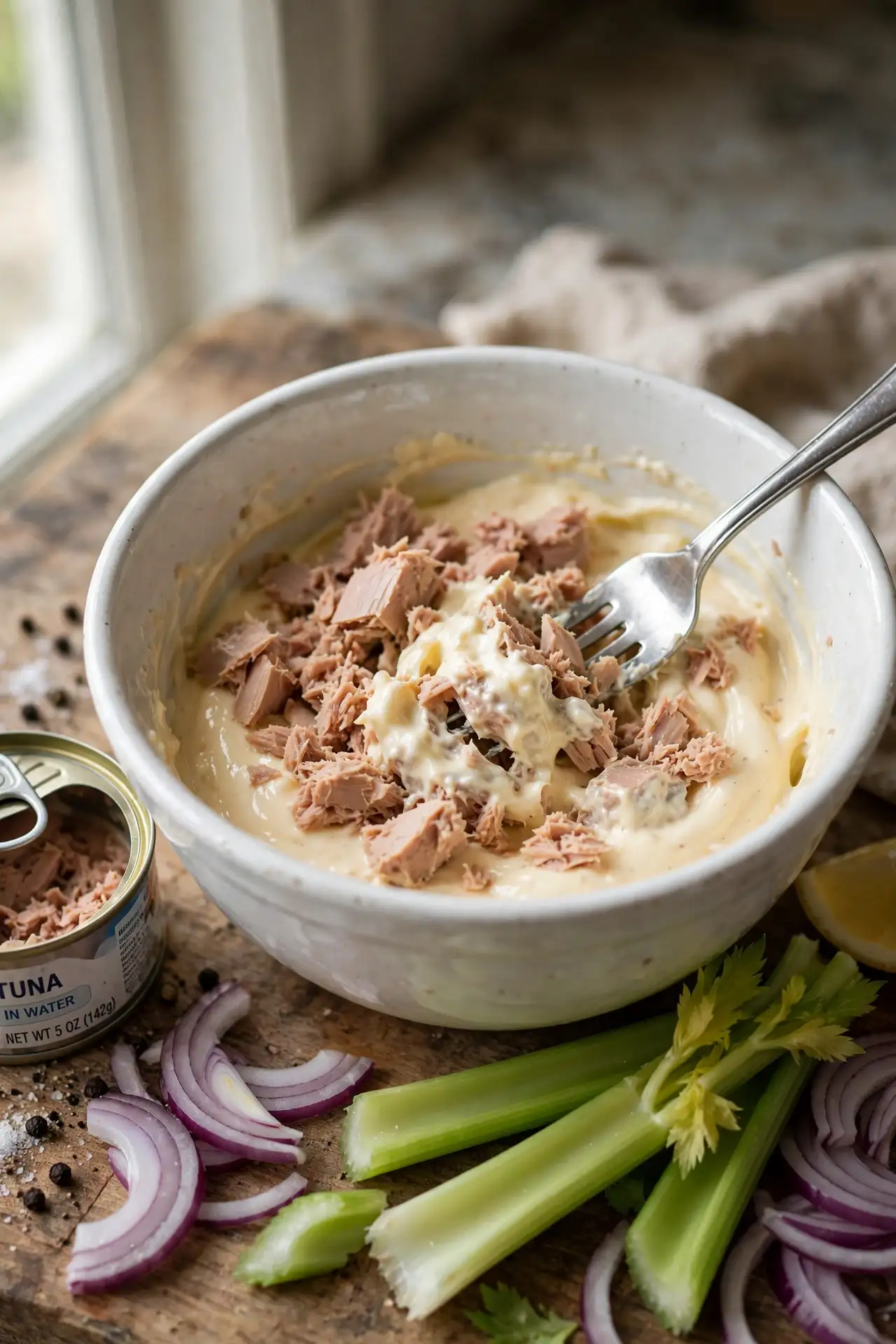
In a medium mixing bowl, whisk together the mayonnaise, Dijon mustard, lemon juice, salt, and pepper until fully smooth. Taste the dressing on its own before adding anything else. It should be tangy and slightly sharp.
Why this works: Tasting the dressing separately gives you real control. Once the tuna and vegetables go in, adjusting is much harder because the flavors get diluted and mixed.
Step 3: Fold in the tuna
Add the drained tuna to the dressing. Use a fork to flake it into the bowl while folding it in. Work gently. You want distinct flakes of fish coated in dressing, not a paste.
⚠️ Food Safety: Canned tuna is pre-cooked, but always use clean utensils. Wash your hands after handling the can lids, which have sharp edges. Keep the finished salad refrigerated and don’t leave it at room temperature for more than 2 hours.
Step 4: Add the vegetables
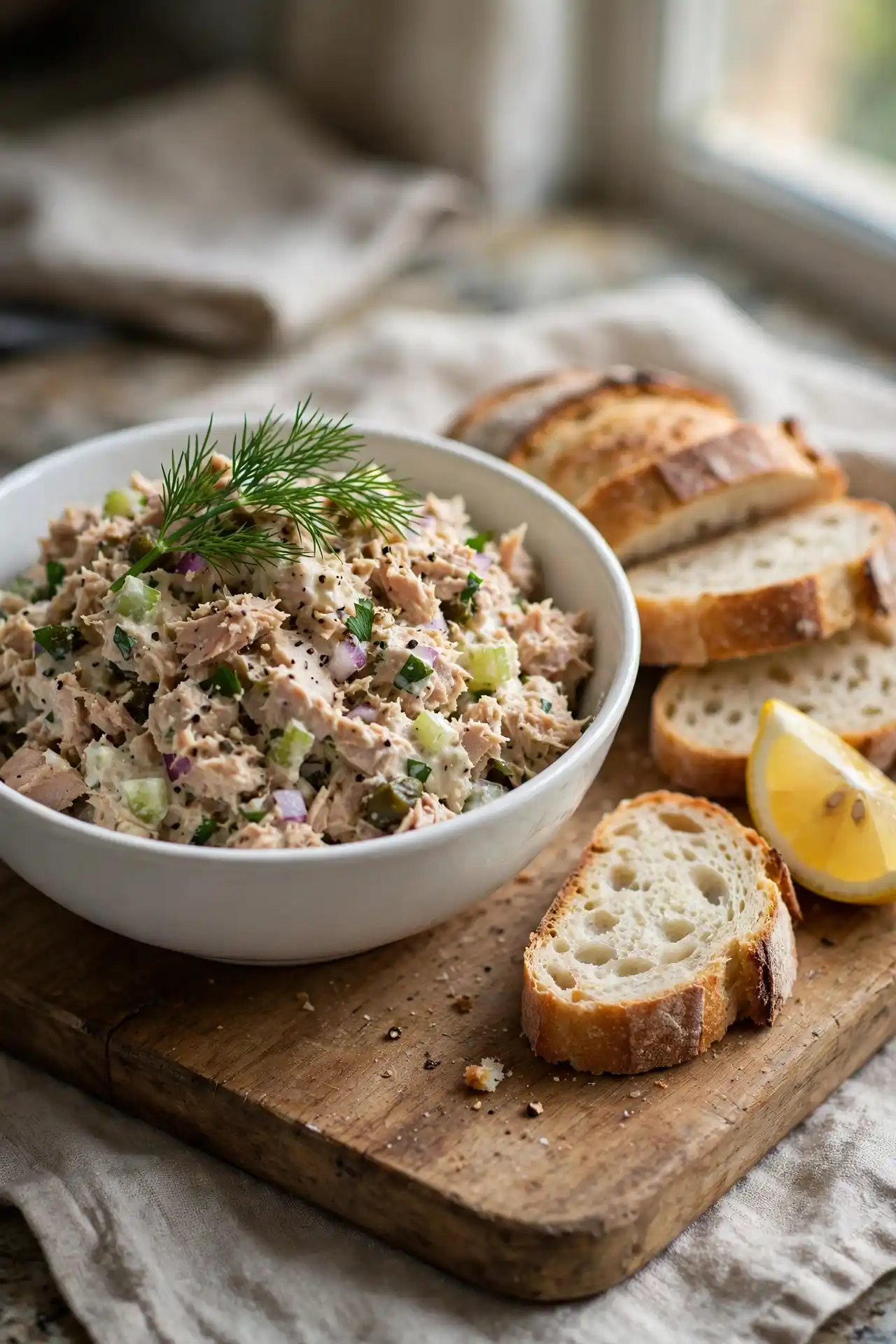
Add the celery, red onion, relish, and dill to the bowl. Fold everything together until combined. Don’t stir with a spoon; fold with the fork so the tuna doesn’t break down further.
Why this works: Folding keeps the texture varied. A spoon compresses everything into a uniform mass, which is what makes tuna salad feel heavy and paste-like rather than light and textured.
Step 5: Taste, adjust, and chill
Taste the mixture. If it needs brightness, add a few more drops of lemon juice. If it feels too thick, a teaspoon of water loosens it without thinning the flavor. Cover and refrigerate for 20 minutes before serving if you have the time.
Key Tips for Best Results
Use tuna in water, not oil. Oil-packed tuna adds a heavier base that competes with the mayo dressing. Water-packed gives you better control over the final texture and flavor.
Mince the onion very small — or soak it first. Raw red onion is sharp in a cold salad. If you mince it finely, it distributes without dominating. For a milder result, soak the minced onion in cold water for 5 minutes, then drain before adding it.
Don’t skip the acid. Lemon juice is doing structural work here, not just adding flavor. Without it, a mayo-based salad tastes flat and one-dimensional, regardless of how good the tuna is.
Common Mistakes to Avoid
Not draining thoroughly.
Why it happens: Most people give the can a quick squeeze and move on.
How to avoid it: Press and hold the lid for 30 full seconds over the sink, then drain through a sieve and press again. It takes one extra minute and makes a real difference.
Adding too much mayo.
Why it happens: More dressing seems like it should mean better flavor.
How to avoid it: Start with 1/3 cup for two cans of tuna. You can add more after tasting; you can’t remove it.
Mashing instead of flaking.
Why it happens: Stirring with a spoon compresses the fish naturally.
How to avoid it: Switch to a fork. Fold rather than stir. The texture of the finished salad depends on it.
Skipping the chill time.
Why it happens: The salad looks done as soon as it’s mixed.
How to avoid it: 20 minutes in the fridge lets the dressing settle into the fish. The texture tightens slightly and the flavors come together properly.
Variations and Substitutions
No mayo: Replace the mayonnaise with the same quantity of full-fat Greek yogurt. The result is tangier and lighter. Increase the Dijon to 1 tbsp to compensate for the reduced richness.
With hard-boiled eggs: Two finely chopped hard-boiled eggs add heft and a creamier bite. This works especially well if you want a more filling sandwich.
Dill relish instead of sweet: Swap the sweet pickle relish for dill relish or finely chopped dill pickles if you prefer a sharper, more savory profile.
What to Serve With Tuna Salad
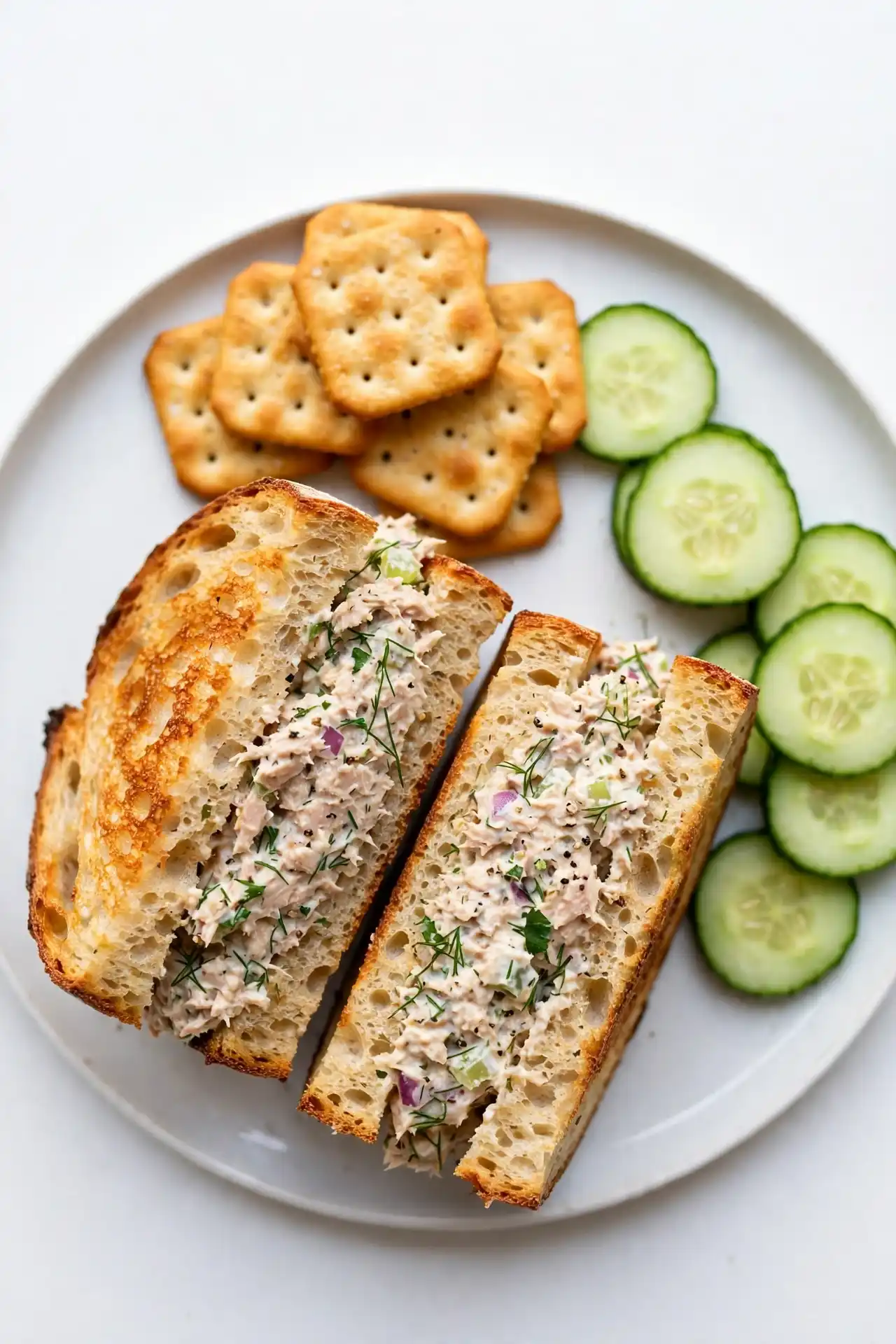
On toasted sourdough. Toast holds up to the creamy salad without going soggy immediately. Toast it fresh right before serving.
With whole-grain crackers. Pack the tuna salad separately and assemble on the spot so the crackers stay crisp. This is the most practical option for work lunches.
In romaine lettuce cups. A lighter choice that works as a starter or a fast protein-focused lunch. Two large romaine leaves hold a generous scoop.
Stuffed into a pita with sliced cucumber. The cucumber adds crunch and freshness. A small layer of lettuce inside the pita slows down moisture absorption from the salad.
As a dip with raw vegetables. Carrot sticks, cucumber rounds, and bell pepper strips work well.
Storage and Make-Ahead
Fridge: Store in an airtight glass or plastic container for up to 3 days. The flavor is usually better on day two. Stir before serving because some liquid may settle at the bottom.
Freezer: Tuna salad doesn’t freeze. Mayonnaise-based dressings break when frozen and thawed, leaving a greasy, separated mess that can’t be fixed by stirring.
Make-ahead: The celery and onion can be prepped up to 2 days ahead and stored separately. Mix the complete salad no earlier than the night before. If making it more than 24 hours in advance, store the drained tuna and dressing separately, then combine when ready.
Allergen and Dietary Disclosure
Contains fish (tuna). For a fish-free version, this recipe cannot be adapted — tuna is the central ingredient.
Contains eggs (from mayonnaise). To make this egg-free, substitute the mayo with a certified vegan mayonnaise using the same quantity.
Nutrition Information
Per serving (recipe makes 4 servings)
| Nutrient | Per Serving |
|---|---|
| Calories | 187 kcal |
| Protein | 13 g |
| Total Carbohydrates | 3 g |
| Dietary Fiber | 0 g |
| Total Sugars | 1 g |
| Total Fat | 14 g |
| Saturated Fat | 2 g |
| Sodium | 455 mg |
| Cholesterol | 33 mg |
| Potassium | 210 mg |
“Nutritional values are estimates only and may vary based on specific ingredients, brands, and portion sizes used. For precise dietary needs, consult a registered dietitian.”
Frequently Asked Questions
Why does my tuna salad get watery?
The tuna wasn’t drained long enough. Canned tuna holds more liquid than it looks like. Press and hold the lid over the sink for a full 30 seconds, then tip the tuna into a fine-mesh sieve and press again. Skipping one of those steps is usually enough to cause the watery texture.
Can I make tuna salad the night before?
Yes, and it often tastes better the next day. Store it covered in the fridge and stir before serving. The texture firms up slightly overnight, which makes it easier to spread or scoop.
What type of canned tuna is best?
Chunk light tuna in water is the most common choice and works well here. Solid white albacore has a firmer texture and a milder flavor. Either works, though albacore holds its shape better for people who prefer more distinct flakes in their tuna salad.
Can I make this without mayo?
Yes. Full-fat Greek yogurt is the most reliable swap, used in the same quantity. The result is tangier and less rich. A 50/50 mix of mayo and yogurt is a middle-ground option if you want some creaminess without the full calorie load.
How long does tuna salad last in the fridge?
3 days in an airtight container. After that, the texture breaks down and the onion becomes overpowering. If you notice any sour smell or visible separation, discard it.
Can you freeze tuna salad?
No. Mayo-based mixtures don’t survive freezing. The emulsion breaks during thawing and the result is greasy and watery with no way to recover the texture.
What can I add for more flavor?
1 tbsp rinsed capers add brine and depth. A pinch of smoked paprika gives it a slightly different character. Old Bay seasoning works if you want something more assertive. Add small amounts and taste as you go.
Conclusion
Tuna salad is the kind of recipe that looks simple until you’ve eaten a bad version of it. The difference between something you’ll actually want to eat and something you’re just eating for protein usually comes down to two things: draining the tuna until it’s genuinely dry and adding enough lemon juice to keep the mayo from flattening everything. Get both of those right and the rest takes care of itself.
Tuna Salad Recipe Card
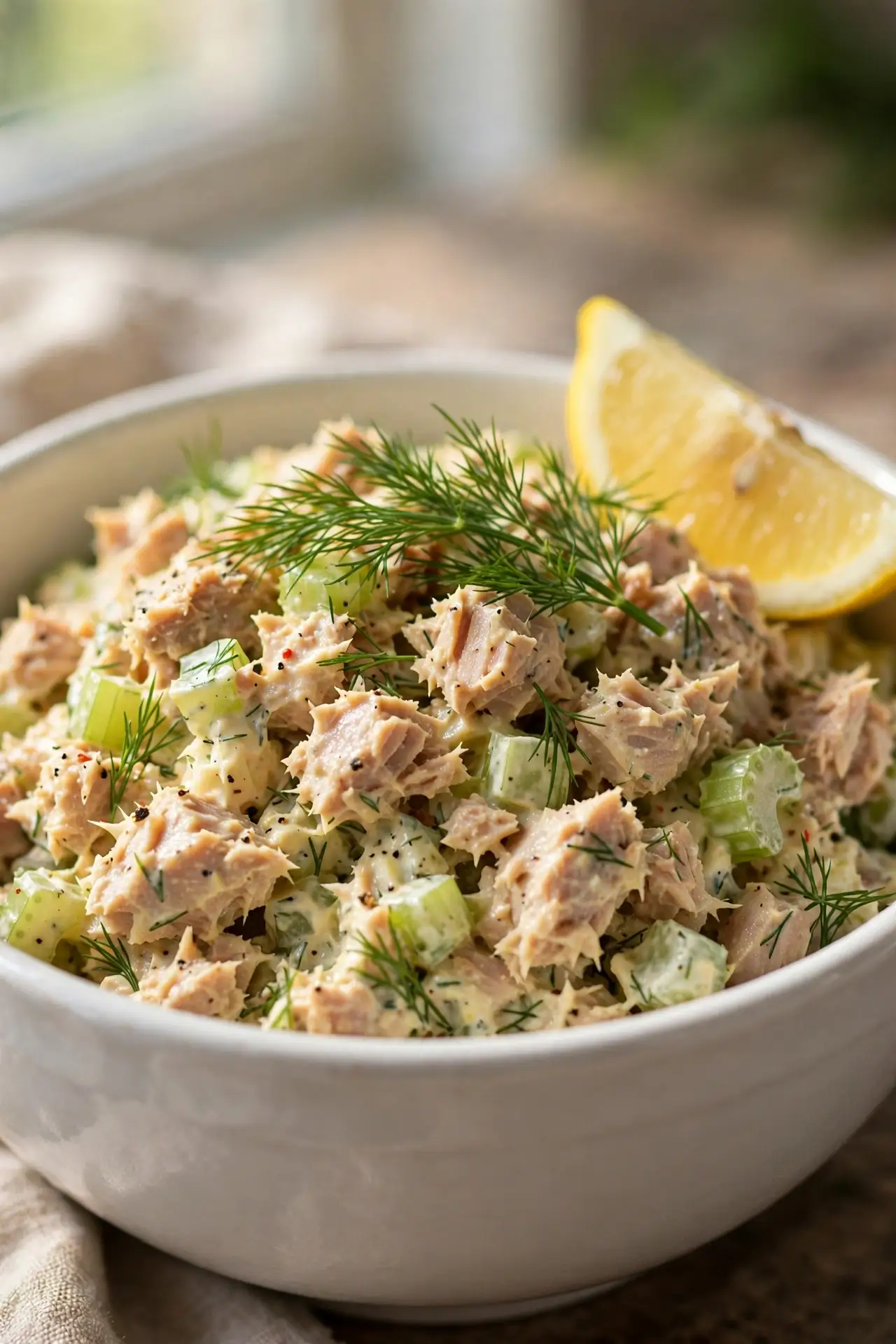
Classic Tuna Salad Recipe
Ingredients
Method
- Open both tuna cans and press the lid firmly against the fish over the sink for 30 seconds. Drain through a fine-mesh sieve and press again until the tuna feels dry.
- In a medium mixing bowl, whisk together the mayonnaise, Dijon mustard, lemon juice, salt, and pepper until smooth. Taste and adjust before adding anything else.
- Add the drained tuna. Use a fork to flake it into the dressing while folding — not stirring.
- Add the celery, red onion, relish, and dill. Fold until evenly combined.
- Taste and adjust lemon juice or salt as needed. Refrigerate for 20 minutes before serving if time allows.