Creamy Butternut Squash Soup, Roasted from Scratch
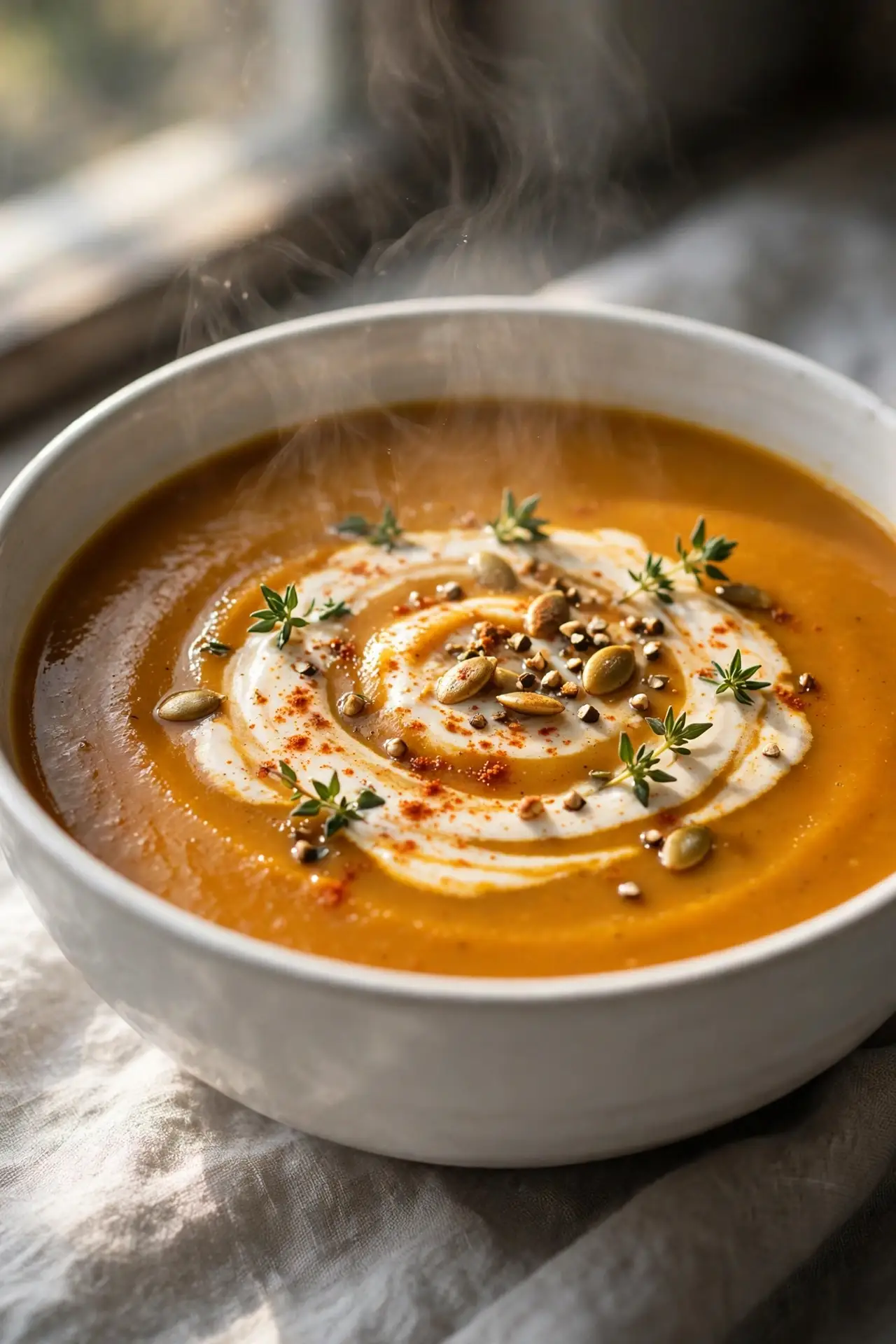
Roasting the squash first is what actually makes butternut squash soup worth making at home. Skip that step and you end up with something that tastes like blended vegetable broth. Roast it and the squash’s natural sugars concentrate, the edges caramelize, and you get a depth of flavor that nothing else can replicate.
This butternut squash soup recipe starts the squash in a 200°C (400°F) oven for 25 minutes before anything else happens. While it roasts, you build a spiced onion and garlic base in the pot. By the time the squash comes out, the base is ready. Everything goes in together, simmers briefly, then blends into a smooth, amber soup with warmth from cumin, cinnamon, and nutmeg that supports the squash without overpowering it.
Why You’ll Love This Butternut Squash Soup
- Roasting creates a flavor in the squash that simmering in liquid simply cannot produce
- One pot after the baking sheet, so cleanup is minimal
- The spice blend (cumin, cinnamon, nutmeg, ginger) is warm without tipping heavy or sweet
- It tastes noticeably better the following day as the spices deepen
- The cream is optional: blended roasted squash and stock already produce a thick, smooth result
Ingredients You’ll Need
For the Soup
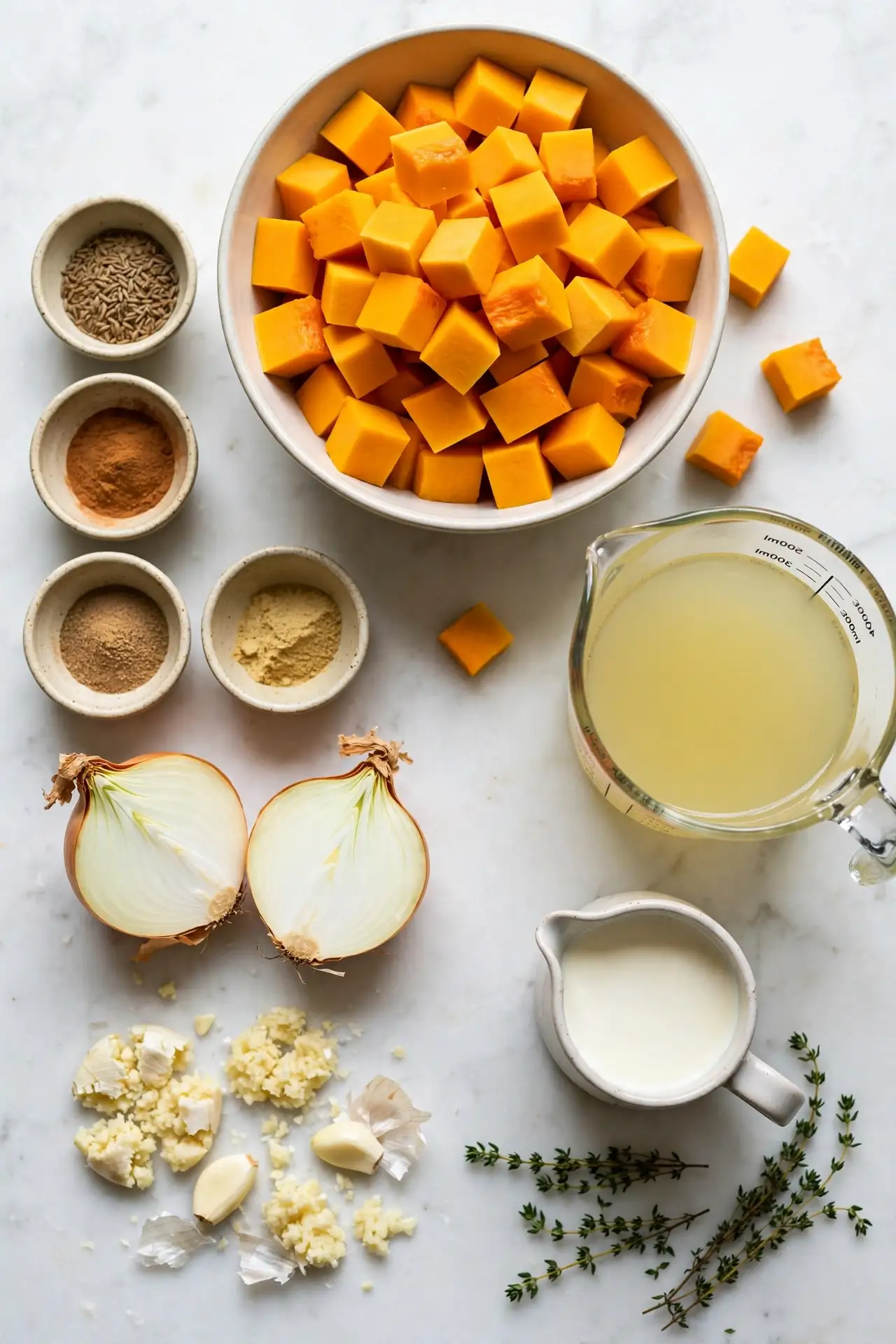
- 1 large butternut squash (about 1.2 kg / 2.5 lbs), peeled, seeded, and cut into 3 cm (1-inch) cubes
- 3 tablespoons olive oil, divided (2 for roasting, 1 for the pot)
- 1 medium yellow onion, roughly chopped
- 4 garlic cloves, smashed and peeled
- 1 tablespoon unsalted butter
- 1 teaspoon ground cumin — bloomed in fat, it turns nutty rather than dusty
- ½ teaspoon ground cinnamon — adds warmth without sweetness
- ¼ teaspoon ground nutmeg — use sparingly; too much tastes medicinal
- ½ teaspoon ground ginger, or 1 teaspoon freshly grated — lifts the flavor without adding acidity
- 4 cups (1 litre) low-sodium vegetable stock
- ½ cup (120 ml) heavy cream, plus extra to garnish — stir in after blending, not before
- 1 teaspoon brown sugar or maple syrup (optional) — balances any bitterness from the stock
- Salt and freshly ground black pepper to taste
- Small squeeze of fresh lemon juice to finish (optional)
For Garnish
- 2 tablespoons pepitas (pumpkin seeds), toasted in a dry pan until they pop
- Small drizzle of heavy cream
- Fresh thyme leaves
- Pinch of smoked paprika
Recipe Timing
| Timing Element | Duration |
|---|---|
| Prep Time | 20 minutes |
| Cook Time | 35 minutes |
| Total Time | 55 minutes |
Servings: 4 | Difficulty: Easy | Cuisine: Western | Course: Soup / Starter
How to Make Butternut Squash Soup: Step by Step
Step 1: Preheat and prep the squash
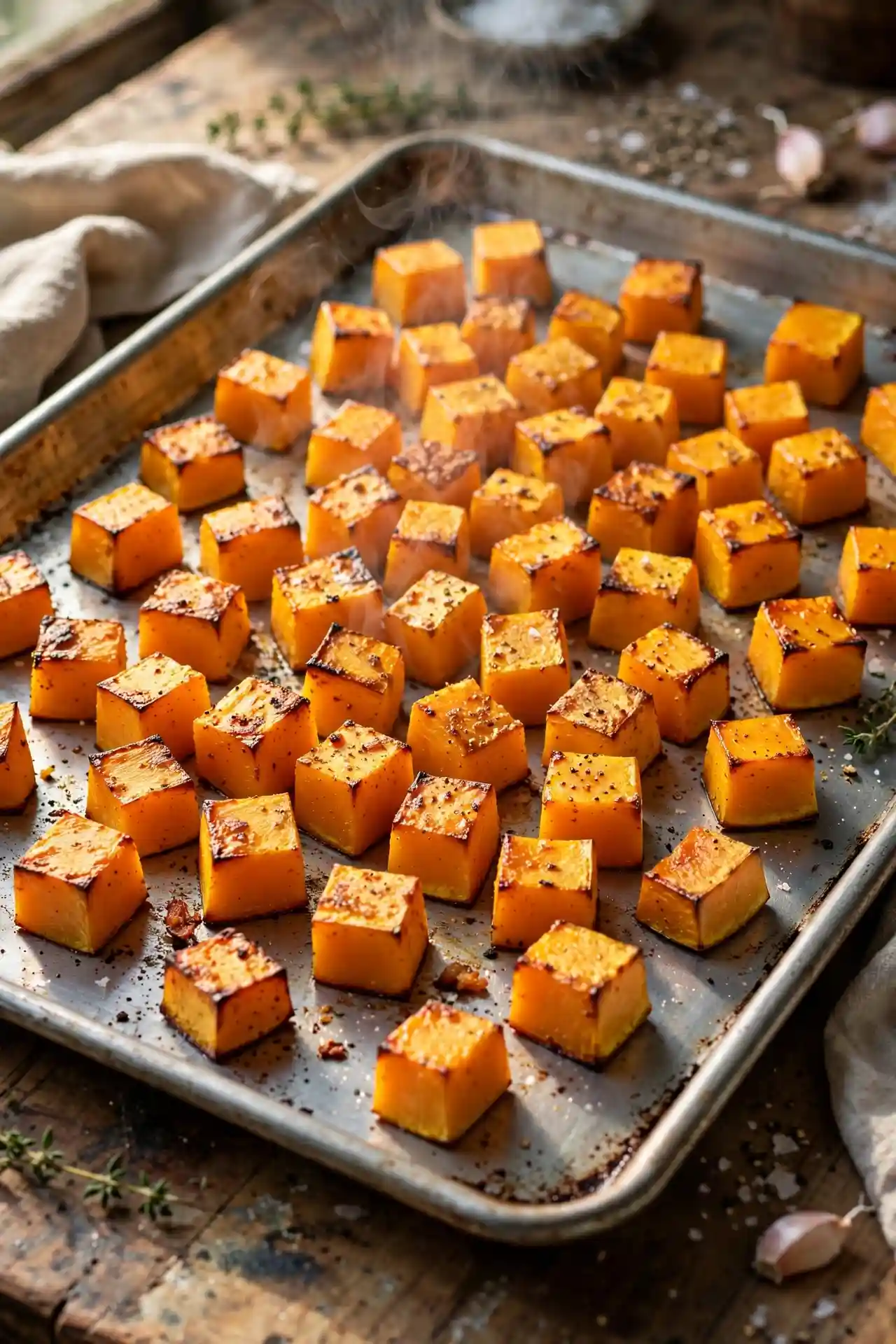
Preheat your oven to 200°C (400°F). Spread the cubed squash in a single layer on a large baking sheet. Drizzle with 2 tablespoons of olive oil, season with ½ teaspoon of salt and a few grinds of black pepper, and toss until every piece is coated.
Step 2: Roast until the edges are golden
Roast for 25 to 30 minutes, turning once at the halfway point, until the edges are golden and a fork slides into the center of a cube without resistance. The squash should look slightly caramelized, not just soft. Pull it from the oven.
Why this works: A single layer on a hot sheet pan allows moisture to escape so the squash surface browns rather than steams. Crowding the pan traps moisture and produces pale, flat-tasting squash with no caramelization.
Step 3: Soften the onion
Heat 1 tablespoon of olive oil and the butter in a large pot or Dutch oven over medium heat. Add the onion and cook for 7 to 8 minutes, stirring occasionally, until soft, translucent, and lightly golden at the edges. Do not rush this.
Why this works: Slow-cooked onion turns sweet and mellow. Rushing it over high heat makes it slightly bitter, and that bitterness carries through into the finished soup.
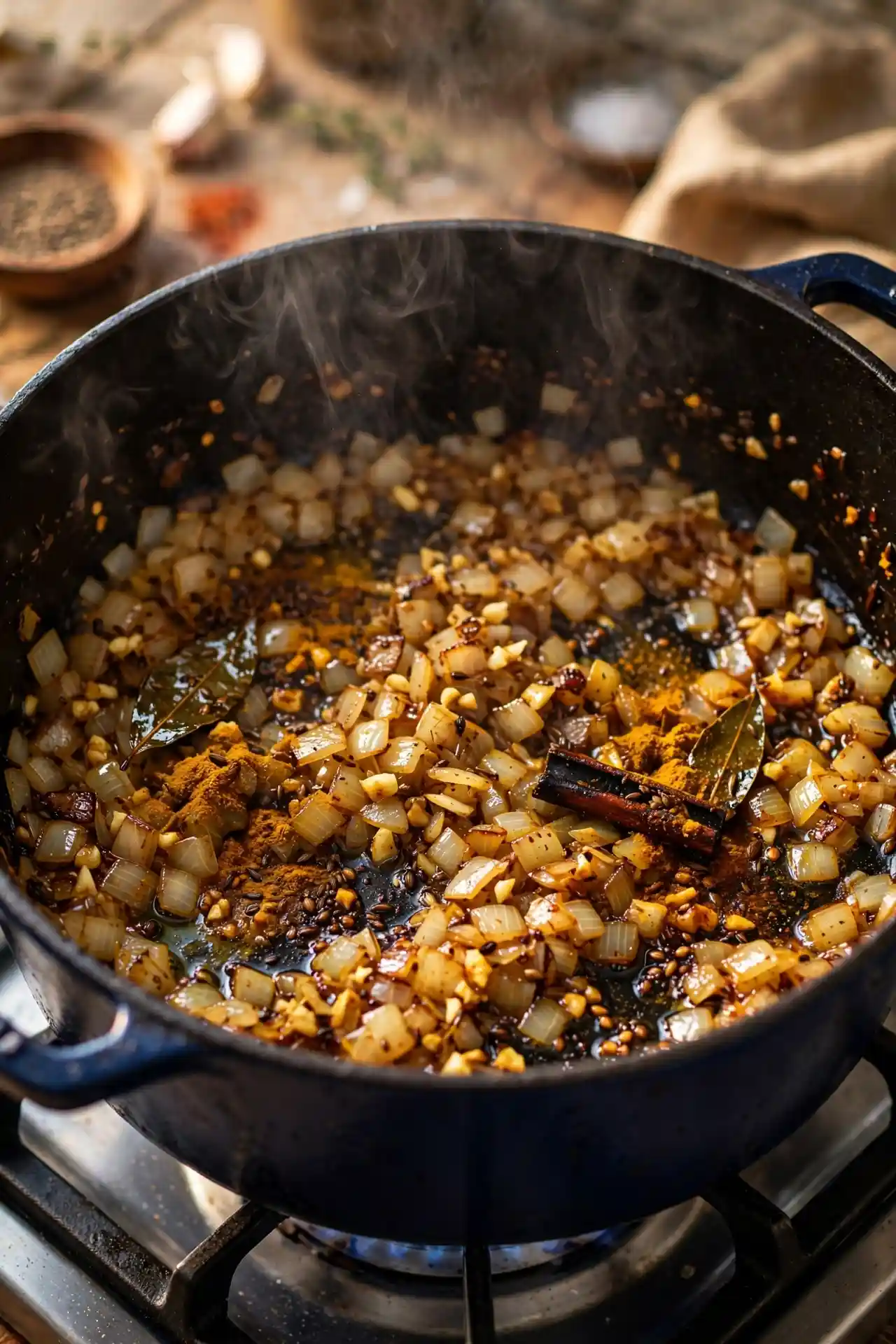
Step 4: Add garlic and bloom the spices
Add the garlic and cook for 1 minute until fragrant. Add the cumin, cinnamon, nutmeg, and ginger. Stir constantly for 30 to 45 seconds until the spices darken slightly and smell toasted and aromatic.
Why this works: Heating dry spices in fat releases fat-soluble flavor compounds. Without this step, the spices taste flat and powdery rather than warm and developed in the finished soup.
Step 5: Add roasted squash and stock
Transfer the roasted squash into the pot. Pour in the vegetable stock and stir to combine. Bring to a gentle boil over medium-high heat, then reduce to a low simmer and cook for 10 minutes to let the flavors come together.
⚠️ Food Safety: Keep the heat at a steady low simmer before blending. Vigorously boiling soup splatters when the blender is introduced and can cause burns.
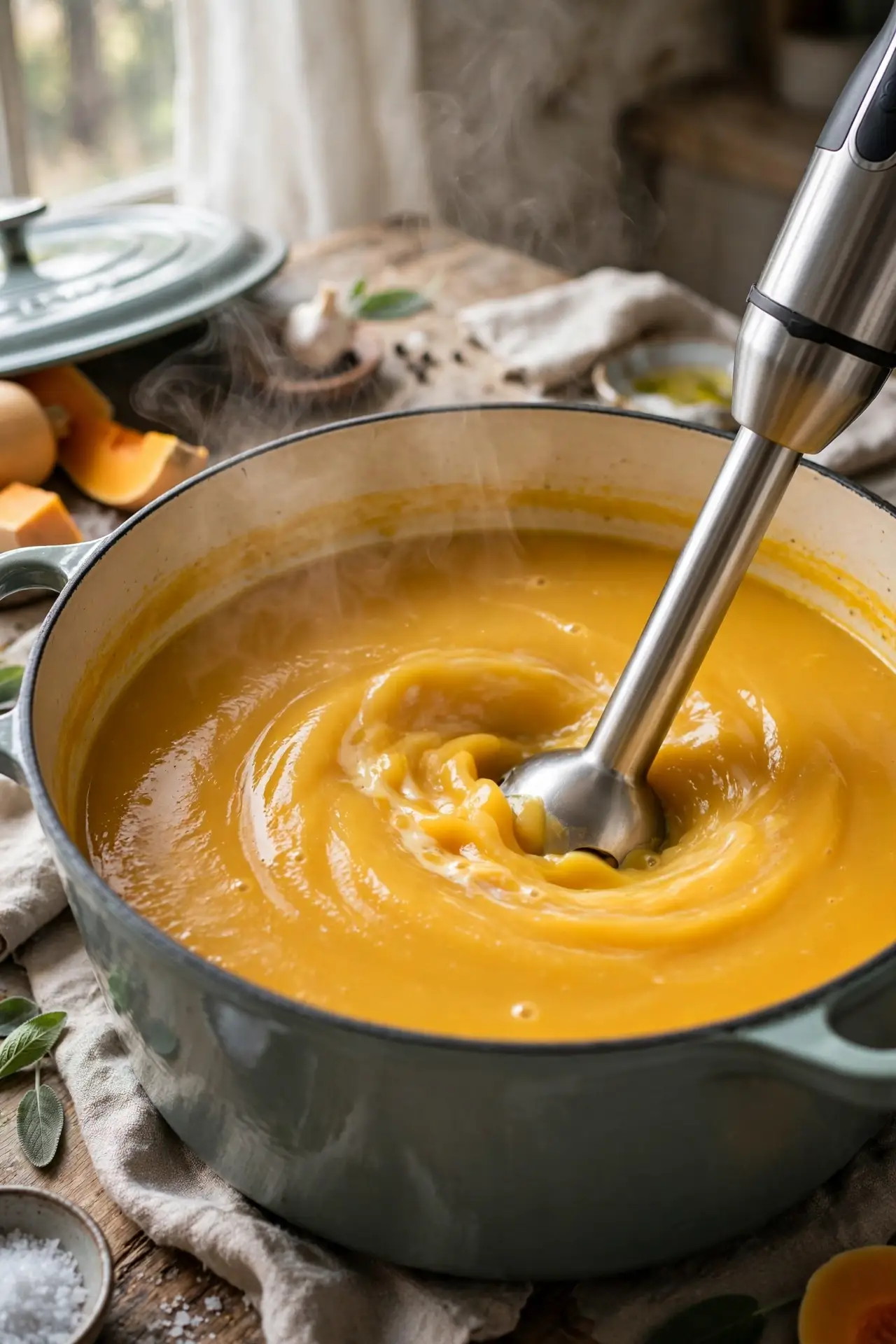
Step 6: Blend until completely smooth
Remove the pot from heat. Use an immersion blender to blend directly in the pot for 1 to 2 minutes until no chunks remain and the texture is completely smooth. If using a countertop blender, transfer in batches, filling it no more than halfway each time.
⚠️ Food Safety: Hot liquid expands rapidly when blended. When using a countertop blender, fill it halfway at most, hold the lid firmly with a folded kitchen towel, and start at the lowest speed before increasing. Never seal the lid tightly with hot soup inside.
Why this works: An immersion blender is faster and safer for hot soup. A countertop blender gives a slightly silkier texture but requires careful handling to prevent steam pressure from forcing the lid off.
Step 7: Stir in cream and adjust seasoning
Return the pot to medium-low heat. Stir in the heavy cream and the brown sugar or maple syrup if using. Taste and adjust with salt, pepper, and a small squeeze of lemon juice if the soup tastes flat or one-dimensional. Heat through for 2 to 3 minutes without bringing it back to a boil.
Why this works: Boiling after adding cream causes it to split and curdle. Medium-low heat keeps the soup smooth and glossy.
Step 8: Ladle and garnish
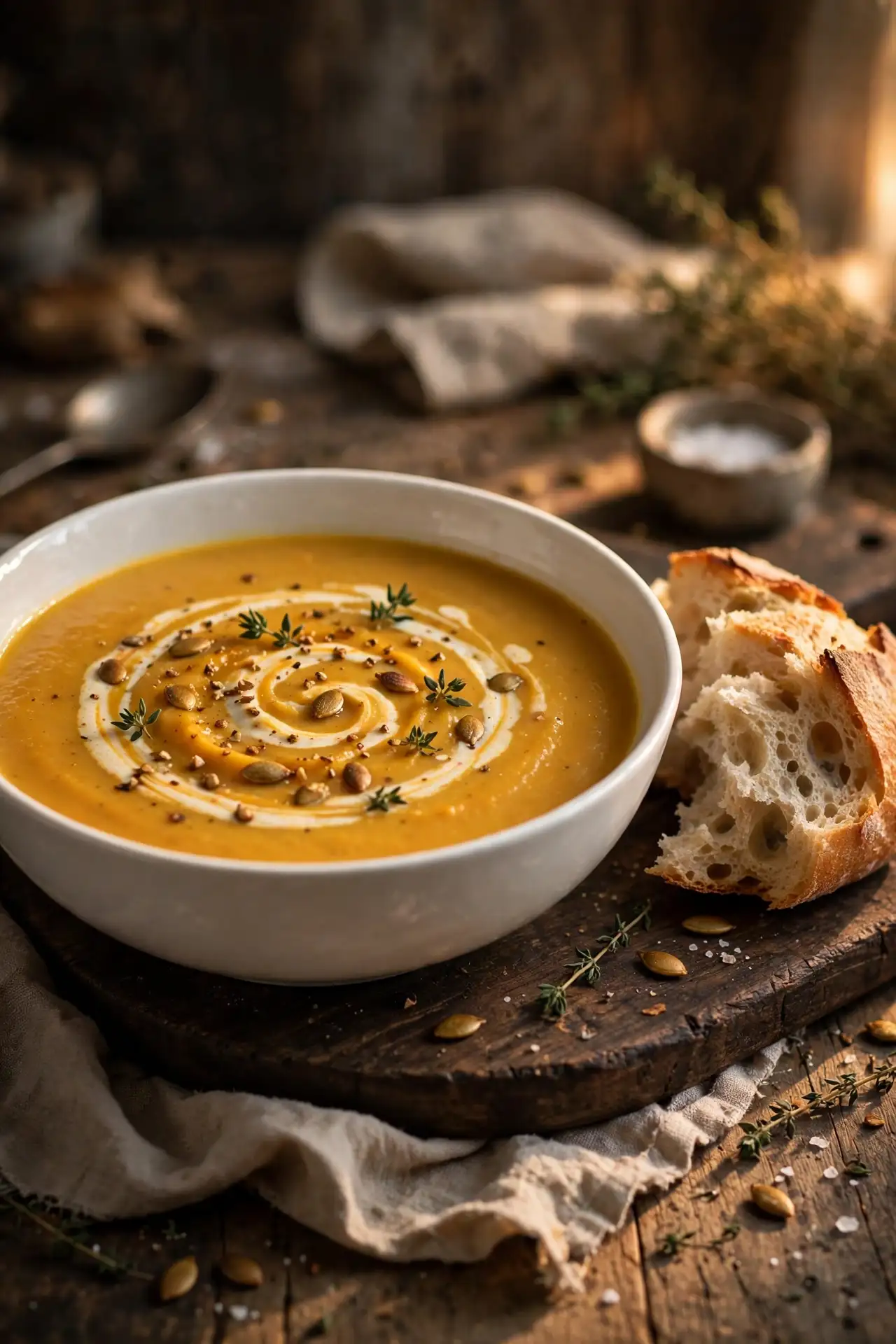
Ladle into bowls. Add a small swirl of cream, scatter toasted pepitas, finish with a few fresh thyme leaves and a pinch of smoked paprika.
Key Tips for Best Results
Pick a ripe squash, not a large one. Look for a squash with matte skin. Shiny skin means it was harvested early and the flesh will be watery and bland regardless of how long you roast it. The squash should feel heavier than it looks relative to its size.
Use warm stock, not cold from the fridge. Adding cold stock to a hot spiced base slows the process and muddies the flavors at the moment they should be combining. Warm it briefly first, or at minimum leave it at room temperature while you prep.
Common Mistakes to Avoid
Crowding the roasting pan
Why it happens: Using a pan that is too small or piling the squash in overlapping layers.
How to avoid it: Use two baking sheets if the squash doesn’t fit in a single layer. Crowded squash steams rather than roasts, and you lose all the caramelization that gives this soup its character.
Filling the blender too full
Why it happens: Impatience, or not realizing that hot liquid expands under the blades.
How to avoid it: Fill the blender halfway at most, hold the lid firmly with a folded towel, and start at the lowest speed. An immersion blender eliminates this risk entirely.
Adding cream to a hard boil
Why it happens: Going straight back to high heat after blending before remembering to lower it.
How to avoid it: Reduce to medium-low first. A hard boil causes the cream to curdle into fine white specks that you cannot blend out or fix.
Leaving all the seasoning until the end
Why it happens: Treating salt as a finishing step rather than a layering one.
How to avoid it: Season the squash before roasting, taste after simmering, and adjust again after the cream goes in. The lemon juice at the finish lifts everything and is worth doing even if the soup already tastes good.
Variations and Substitutions
This butternut squash soup adapts well without losing what makes it worth making.
Dairy-free. Replace the butter with olive oil and swap the heavy cream for an equal quantity of full-fat coconut cream. The coconut flavor is mild when paired with roasted squash and warm spices, but it is present.
Without any cream. Skip it entirely. The blended squash and stock produce a naturally thick, smooth soup on their own. Add an extra half cup of stock if the texture becomes too dense after blending.
With heat. Add ¼ to ½ teaspoon of cayenne or one small deseeded red chili cooked alongside the onion in Step 3. The heat offsets the sweetness of the squash without changing the character of the dish.
With roasted red pepper. Add one large roasted red pepper (jarred works well) when you add the squash in Step 5. It deepens the color and adds a mild smoky note at the edges.
What to Serve With Butternut Squash Soup
This butternut squash soup is rich and smooth enough to serve as a full meal with the right accompaniments.
Crusty bread. The kind with a proper crust that you tear, not slice. The soup is filling on its own; good bread makes it a complete meal.
Warm flatbread or naan. A simple flatbread keeps things lighter and works especially well if you’re serving the soup as a starter before a larger meal.
A bitter green salad. Rocket or frisée cuts through the cream and the warm spices. A lemon vinaigrette is all you need.
Grilled halloumi. A few slices alongside add protein and a salty contrast against the sweet, spiced squash.
Spiced roasted chickpeas. Scatter them directly into the bowl instead of or alongside pepitas. They add crunch and protein without any dairy.
Storage, Reheating and Make-Ahead
Fridge: Store cooled soup in an airtight container for up to 4 days. The flavor improves overnight as the spices continue to settle into the base.
Freezer: This butternut squash soup freezes well. For the cleanest result, freeze before adding the cream and stir it in fresh when reheating. Use freezer-safe containers with space left for expansion. Keeps for up to 3 months. Thaw overnight in the fridge.
Reheating: Reheat gently on the stovetop over medium-low heat, stirring occasionally, until it reaches 75°C (165°F) throughout. If reheating from frozen without thawing, use low heat and allow 20 to 25 minutes. Add a splash of stock or water if the soup has thickened in the fridge. Stir the cream in after reheating, not before.
Make-ahead: Roast the squash up to 2 days in advance and refrigerate. The spiced onion and garlic base keeps separately for 2 days. When ready, combine, simmer, and blend fresh.
Allergen and Dietary Notes
Contains dairy (butter and heavy cream). To make this dairy-free, replace the butter with olive oil and substitute the heavy cream with full-fat coconut cream or plain unsweetened oat cream in the same quantity.
For a fully plant-based version, both substitutions work together without changing the cooking method.
Nutrition Information
Per serving (1 of 4)
| Nutrient | Per Serving |
|---|---|
| Calories | 320 kcal |
| Protein | 4 g |
| Total Carbohydrates | 33 g |
| Dietary Fiber | 5 g |
| Total Sugars | 9 g |
| Total Fat | 20 g |
| Saturated Fat | 9 g |
| Sodium | 490 mg |
| Cholesterol | 45 mg |
| Potassium | 690 mg |
| Vitamin C | 36 mg |
| Calcium | 85 mg |
| Iron | 1.5 mg |
Nutritional values are estimates only and may vary based on specific ingredients, brands, and portion sizes used. For precise dietary needs, consult a registered dietitian.
Frequently Asked Questions
Should I roast the butternut squash before making the soup?
Yes, and the difference is significant. Raw squash cooked directly in stock goes soft but stays pale in flavor. Roasting drives off surface moisture, concentrates the natural sugars, and builds a caramelized depth that stays in the soup through blending. This butternut squash soup is specifically designed around that step.
How do I make butternut squash soup thicker without flour?
The main tool is blend time. The longer you run the immersion blender, the more starch from the squash incorporates and the thicker the soup becomes. If it’s still too thin after blending, simmer it uncovered for 5 to 10 minutes to reduce. Avoid flour or cornstarch as thickeners since they make the texture feel heavy rather than naturally smooth.
Can you freeze butternut squash soup?
Yes. Freeze without the cream for the cleanest result. Cream can separate slightly after freezing and thawing, so stir it in fresh when reheating. The soup keeps in the freezer for up to 3 months in a sealed, freezer-safe container.
What spices work best in butternut squash soup?
Cumin, cinnamon, nutmeg, and ginger are the four this recipe uses. Together they cover warm, earthy, and slightly bright notes without pulling the soup in a single direction. Smoked paprika, ground coriander, and turmeric are each worth trying if you want to experiment without changing the base.
Can I use pre-cut butternut squash from the store?
Yes. Pre-cut supermarket squash works the same way as cutting your own. Make sure the pieces are roughly similar in size so they roast evenly, and pat them dry if they look wet from the packaging. Surface moisture is what prevents caramelization.
How long does butternut squash soup last in the fridge?
Up to 4 days in a sealed container. The flavor is noticeably better on day two. Reheat only what you need rather than warming the whole batch each time.
Can I make butternut squash soup without cream?
Yes. The blended roasted squash and stock create a naturally thick, smooth texture on their own. The soup is slightly less rich but still satisfying. Full-fat coconut cream is the most effective substitution if you want that creamy texture without dairy.
Conclusion
Butternut squash soup is one of those recipes where doing one thing properly carries the whole dish. Roast the squash, let it get some color, and everything that follows builds on that foundation. The spices, the stock, the cream — they all work with what the oven already did. If you’re making this ahead, hold the cream until you reheat it, then season one more time with a pinch of salt and a squeeze of lemon before serving. Most people skip that final adjustment. It’s the step that actually finishes the soup.
Butternut Squash Soup: Recipe Card
Creamy Butternut Squash Soup, Roasted from Scratch
Ingredients
Method
- Preheat oven to 200°C (400°F). Spread the cubed squash on a large baking sheet in a single layer. Drizzle with 2 tablespoons olive oil, season with ½ teaspoon salt and black pepper, and toss to coat evenly.
- Roast for 25 to 30 minutes, turning once halfway, until the edges are golden and a fork slides in without resistance.
- Heat the remaining 1 tablespoon olive oil and the butter in a large pot over medium heat. Cook the onion for 7 to 8 minutes until soft and lightly golden at the edges.
- Add the garlic and cook 1 minute. Add cumin, cinnamon, nutmeg, and ginger. Stir constantly for 30 to 45 seconds until the spices darken slightly and smell toasted.
- Transfer the roasted squash into the pot. Pour in the vegetable stock and stir to combine. Bring to a gentle boil, reduce to a low simmer, and cook for 10 minutes.
- Remove from heat. Blend with an immersion blender until completely smooth, 1 to 2 minutes. If using a countertop blender, fill it halfway at most, hold the lid with a folded kitchen towel, and start on low speed.
- Return to medium-low heat. Stir in the heavy cream and optional brown sugar. Taste and adjust with salt, pepper, and a squeeze of lemon juice. Heat through for 2 to 3 minutes without boiling.
- Ladle into bowls. Garnish with a swirl of cream, toasted pepitas, fresh thyme leaves, and a pinch of smoked paprika.