Butter Chicken Recipe (Restaurant-Style at Home)
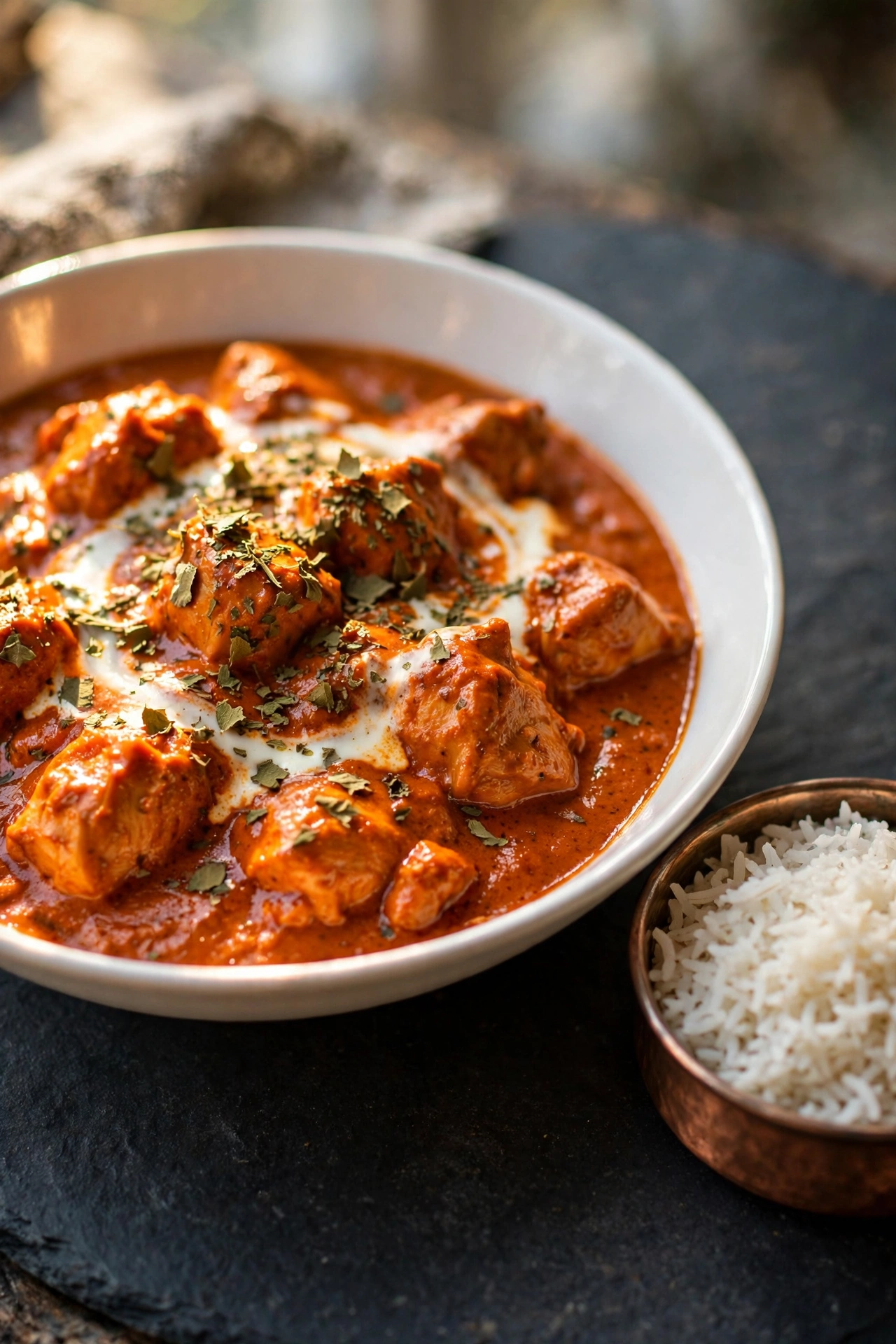
Butter chicken started as a rescue dish. At Moti Mahal restaurant in Delhi during the 1950s, leftover tandoori chicken was simmered in a sauce of tomatoes, butter, and cream to keep it usable the next day. That practical decision became murgh makhani, now one of the most ordered curries served at Indian restaurants globally.
This recipe gives you that same result without a tandoor. You get charred, spice-coated chicken pieces in a sauce built from slow-cooked tomatoes, bloomed ground spices, butter, and cream. Two steps do most of the work: the bhuna reduction, where the tomatoes cook down until oil separates at the edges, and the kasuri methi finish, where dried fenugreek leaves go in crushed at the very end. Skip either one and the sauce will be noticeably flat.
The whole process takes about 85 minutes, including a minimum 30-minute marinate. Marinate overnight and you’ll spend even less active time the next day.
Why You’ll Love This Butter Chicken:
- Kashmiri red chili powder gives you restaurant-level color without making the dish spicy
- Kasuri methi (dried fenugreek leaves) provides the aromatic restaurant depth most home recipes skip
- Chicken thighs stay moist through high-heat searing and long simmering, where breast does not
- The makhani sauce can be made 3 days ahead, making weeknight assembly fast
- Freezes for up to 3 months and reheats without separating
Why You’ll Love This Butter Chicken
Most home versions fall short in one specific place: the sauce. It either tastes like spiced tomato soup or comes out thin and watery, lacking the body you get at a good Indian restaurant. The depth comes from two stages most home recipes undercut.
The first is the onion cook. Golden, not just translucent. Twelve to fifteen minutes over medium heat, until the sugars caramelize and the sharp raw edge is completely gone.
The second is the bhuna. After the tomatoes go in, the sauce cooks uncovered until it darkens and the oil visibly separates around the edges of the pan. That separation signals that excess water has cooked off and flavors are concentrated. Stopping short of it is why most home butter chicken tastes like it is missing something.
Ingredients You’ll Need
For the Chicken Marinade
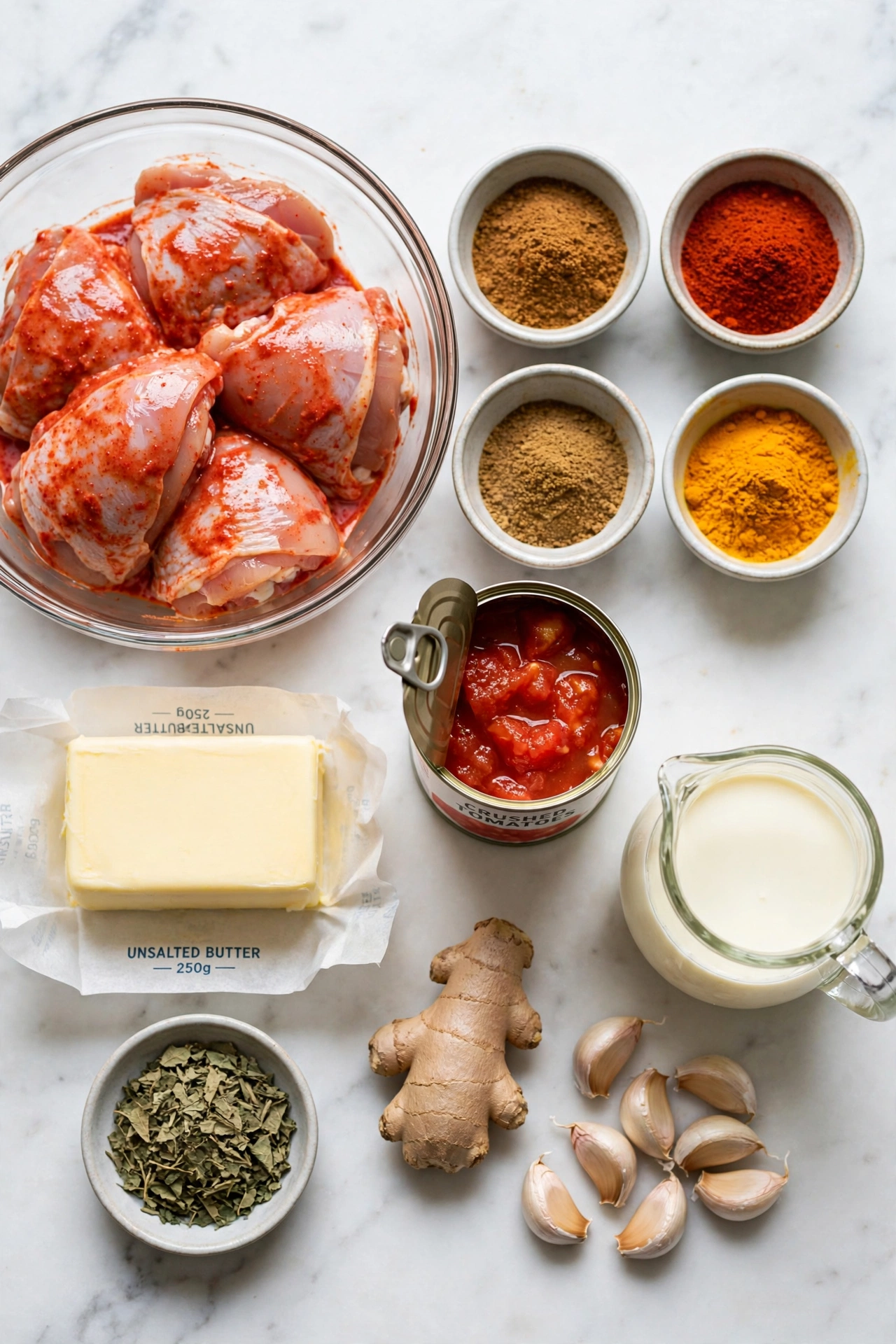
- 750g (1.65 lb) boneless chicken thighs, cut into 5cm (2-inch) pieces — Thighs stay moist at high searing temperatures; breast dries out quickly
- 3/4 cup (180g) full-fat plain yogurt — Full-fat only; low-fat yogurt breaks during cooking and turns the sauce grainy
- 2 tbsp lemon juice, freshly squeezed — Acid begins breaking down surface proteins before the chicken even hits the pan
- 1.5 tsp Kashmiri red chili powder — Mild heat but intense red color; not interchangeable with regular chili powder
- 1 tsp garam masala
- 1 tsp ground cumin
- 1 tsp ground coriander
- 1 tsp fine salt
- 1 tbsp neutral oil (sunflower or canola)
For the Makhani Sauce
- 2 tbsp unsalted butter, plus 1 extra tbsp to finish — Unsalted lets you control the final salt level precisely
- 1 tbsp neutral oil — Raises the smoke point of the butter so the onions cook without burning
- 1 large onion (about 200g / 7 oz), finely diced
- 6 garlic cloves, minced
- 1-inch piece fresh ginger, grated (about 1.5 tsp)
- 2 tsp Kashmiri red chili powder
- 1.5 tsp garam masala
- 1 tsp ground coriander
- 1 tsp ground cumin
- 1/2 tsp ground turmeric
- 400g (14 oz) canned crushed tomatoes
- 1 tbsp tomato paste — Concentrates tomato flavor and deepens the final sauce color
- 1 tsp fine salt, plus more to taste
- 1/2 cup (120ml) heavy cream — Full-fat coconut cream (from a can, not carton coconut milk) works as a dairy-free substitute
- 1 tbsp kasuri methi (dried fenugreek leaves), crushed between your palms before adding
- 1 tsp sugar
Recipe Timing
| Timing Element | Duration |
|---|---|
| Prep Time | 20 minutes |
| Marinate Time | 30 minutes minimum (ideally 4 hours or overnight) |
| Cook Time | 35 minutes |
| Total Time | 85 minutes |
Total verified: 20 + 30 + 35 = 85 minutes.
Servings: 4 | Difficulty: Medium | Cuisine: Indian | Course: Main
How to Make Butter Chicken: Step by Step
Step 1: Marinate the chicken
In a large bowl, combine the yogurt, lemon juice, Kashmiri red chili powder, garam masala, ground cumin, ground coriander, salt, and neutral oil. Add the chicken pieces and toss until every piece is evenly coated.
⚠️ Food Safety: Always marinate raw chicken in the refrigerator, not at room temperature. Cover the bowl with plastic wrap before refrigerating.
Refrigerate for at least 30 minutes. For noticeably more tender and flavorful chicken, marinate for 4 hours or overnight. Do not exceed 12 hours; beyond that, the lemon juice breaks down the surface proteins too aggressively and you will get a mushy texture on the exterior.
Why this works: Yogurt contains lactic acid and enzymes that gently soften surface proteins in the chicken, improving texture and helping the spices adhere through the high-heat sear.
Step 2: Sear the chicken
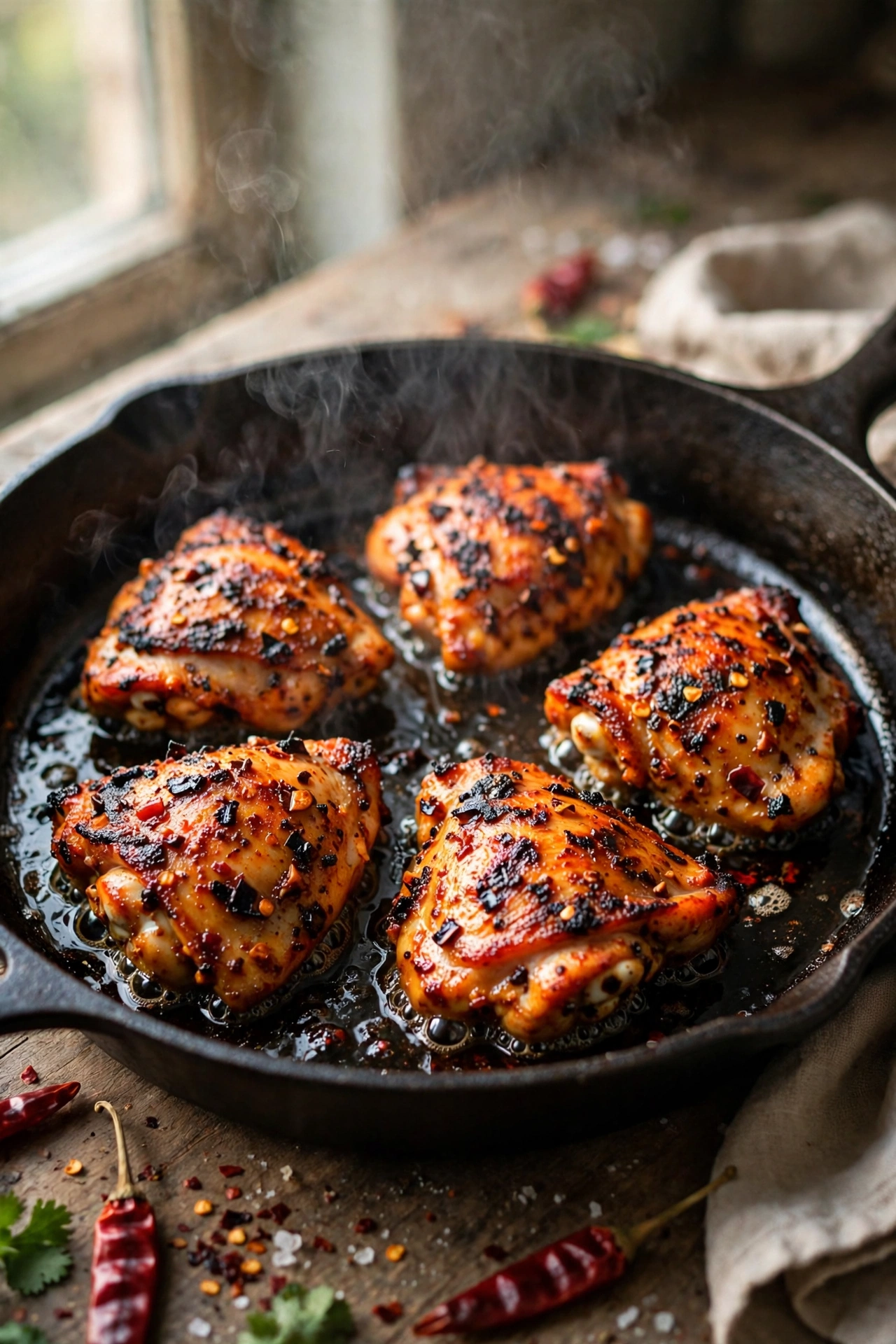
Heat a large cast iron or heavy-bottomed skillet over high heat. Add a thin film of neutral oil and let it become very hot before adding any chicken.
⚠️ Food Safety: Cook chicken until the internal temperature reaches 74°C (165°F). No pink should remain in the center.
Cook the chicken in a single layer for 4 to 5 minutes per side, until the exterior is charred in spots and reads 74°C (165°F) on a meat thermometer. Work in two batches if needed; crowding the pan causes steaming instead of searing and you lose the char. Set the cooked chicken aside on a plate and reserve any resting juices.
Step 3: Cook the onions
In a wide, heavy saucepan, melt 2 tbsp butter with 1 tbsp neutral oil over medium heat. Add the diced onion and cook, stirring occasionally, for 12 to 15 minutes.
The onions are ready when they turn a pale gold and smell sweet. Translucent is not golden. This is the step most people rush, and the sauce shows it.
Add the minced garlic and grated ginger. Cook for 2 minutes, stirring, until the raw smell is completely gone.
Step 4: Bloom the spices
Add the Kashmiri red chili powder, garam masala, ground coriander, ground cumin, and turmeric directly to the onion mixture. Stir constantly for 60 to 90 seconds.
Why this works: Blooming ground spices in fat activates fat-soluble flavor compounds that do not dissolve in water. This step is what gives the sauce a rounded, deep character instead of a flat, powdery one.
The mixture will thicken and darken noticeably. If it sticks to the pan, add 2 to 3 tablespoons of water to loosen it and continue stirring.
Step 5: Build and reduce the tomato sauce
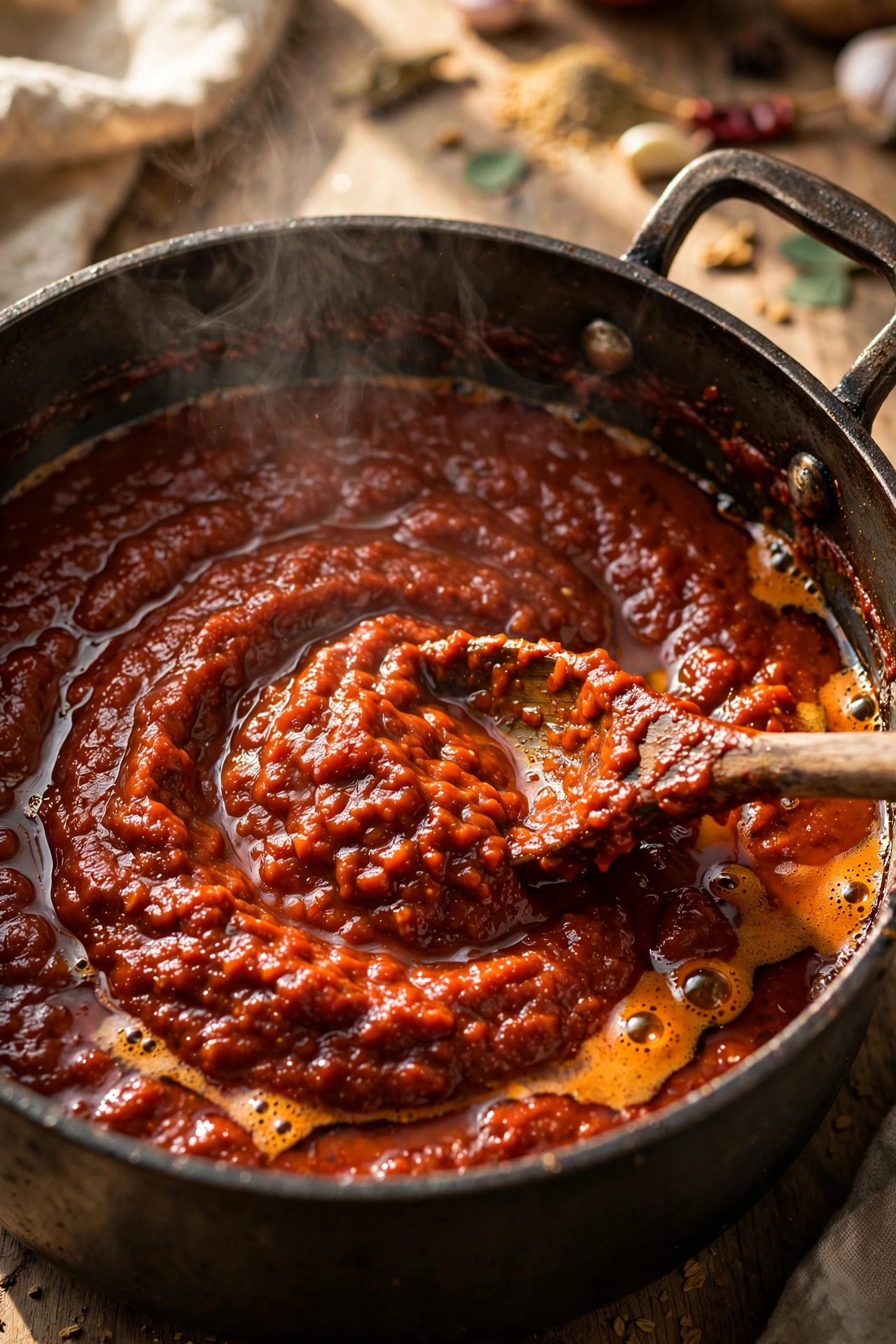
Add the crushed tomatoes and tomato paste. Stir to combine and bring to a simmer over medium heat. Cook uncovered for 15 to 18 minutes, stirring every few minutes.
The sauce is ready to blend when it has darkened significantly and you see oil clearly separating around the edges of the pan.
Why this works: This is the bhuna stage, the step that concentrates tomato flavor and drives off excess water. The oil separation is confirmation that the sauce is fully developed. Stopping short of it is the single most common reason butter chicken at home tastes thin and one-dimensional.
Step 6: Blend the sauce
Take the pan off heat. Using an immersion blender, blend the sauce directly in the pan until completely smooth. Alternatively, transfer to a countertop blender.
If using a countertop blender: let the sauce cool for at least 5 minutes. Fill the jug no more than halfway. Hold the lid down firmly with a folded kitchen towel before blending. Start on low speed. Return the blended sauce to the pan over low heat.
Step 7: Finish with cream and kasuri methi
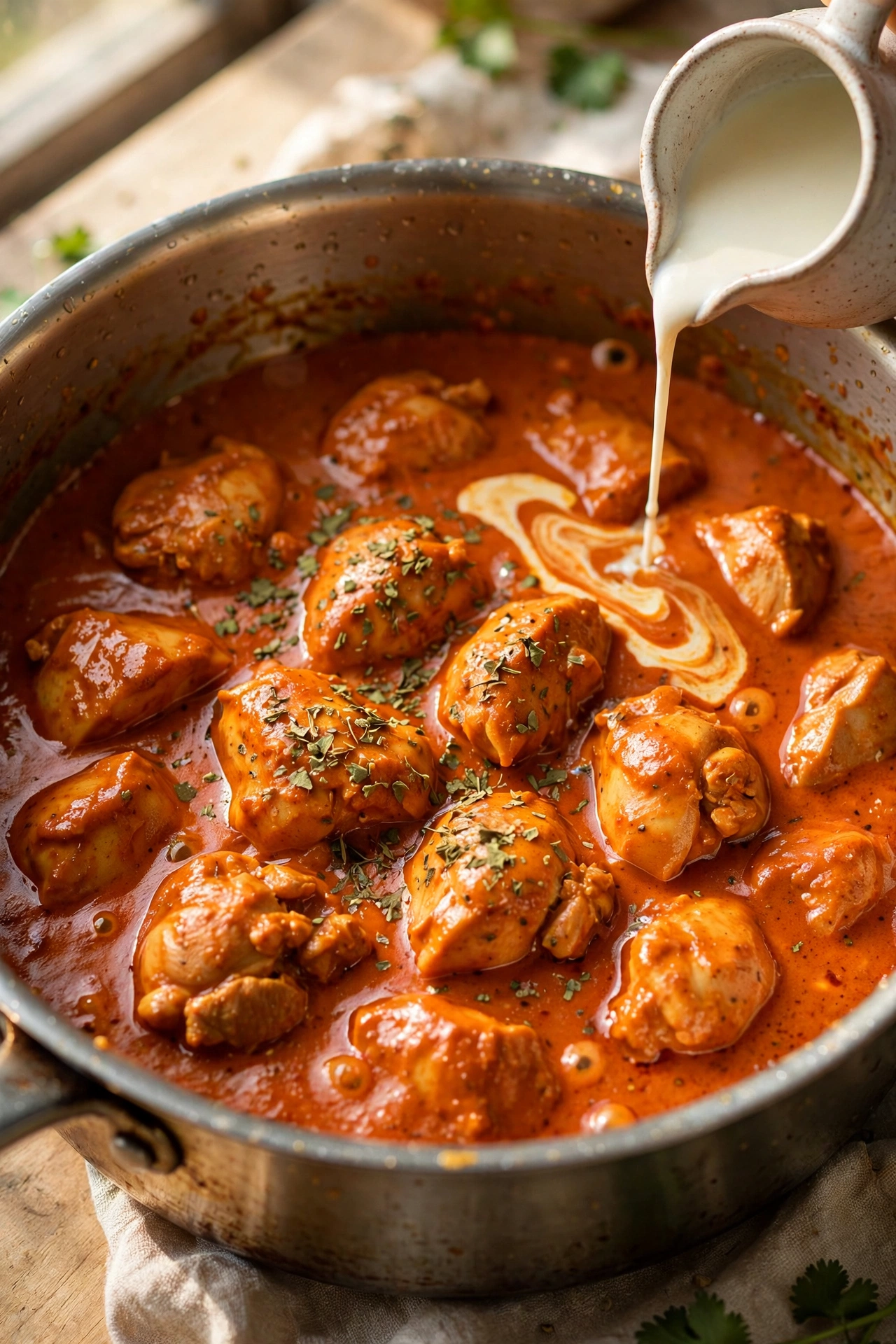
Pour in the heavy cream and stir until fully incorporated. Add the remaining 1 tbsp butter and the sugar. Simmer on low for 5 minutes.
Crush the kasuri methi between your palms over the pan and stir it in. Taste and adjust salt.
Add the seared chicken pieces along with any resting juices from the plate. Simmer on low for 5 more minutes until the chicken is heated through and the sauce has thickened slightly around it.
Why this works: The resting juices carry concentrated flavor from the sear. Adding them back recovers what would otherwise go to waste, and the final simmer allows the chicken to absorb the makhani rather than just sitting in it.
Common Mistakes to Avoid
1. Pulling the tomato sauce off heat too early
Most people stop once the tomatoes look incorporated and hot. The bhuna reduction takes a full 15 to 18 minutes uncovered, and you need visible oil separation before you blend. A sauce that looks done at 8 minutes is not done. The result will be watery and flat no matter how many spices went in.
2. Using low-fat yogurt in the marinade
Low-fat yogurt has a different protein structure and higher water content than full-fat. It breaks under the high heat of the sear, releasing liquid and making the sauce grainy when the chicken goes back into it. Full-fat plain yogurt only.
3. Blending hot sauce without precautions
Hot liquid expands rapidly in a blender. Filling it too full or going straight to high speed causes the lid to blow off. Let the sauce cool for 5 minutes off heat, fill the jug no more than halfway, hold the lid down firmly with a folded towel, and start at low speed.
4. Adding kasuri methi with the other spices
Dried fenugreek leaves are aromatic and fragile. Bloom them at the same time as the other spices and the essential oils cook off, leaving almost no flavor behind. Kasuri methi goes in after the cream, crushed between your palms right before it enters the pan.
Variations and Substitutions
Dairy-free butter chicken
Replace the heavy cream with full-fat coconut cream from a can (not coconut milk, which is too thin and will break the sauce). Substitute the dairy butter with a plant-based alternative or an additional tablespoon of neutral oil. Replace the yogurt in the marinade with a full-fat coconut yogurt. The finished dish has a mild coconut undertone but holds together well and keeps the same sauce body.
Bone-in chicken
Bone-in thighs or drumsticks work in this recipe. Increase the searing time to 6 to 7 minutes per side and extend the final simmer in Step 7 to 12 to 15 minutes to ensure the meat reaches 74°C (165°F) throughout. Use a thermometer to check near the bone, where it takes the longest.
What to Serve With Butter Chicken
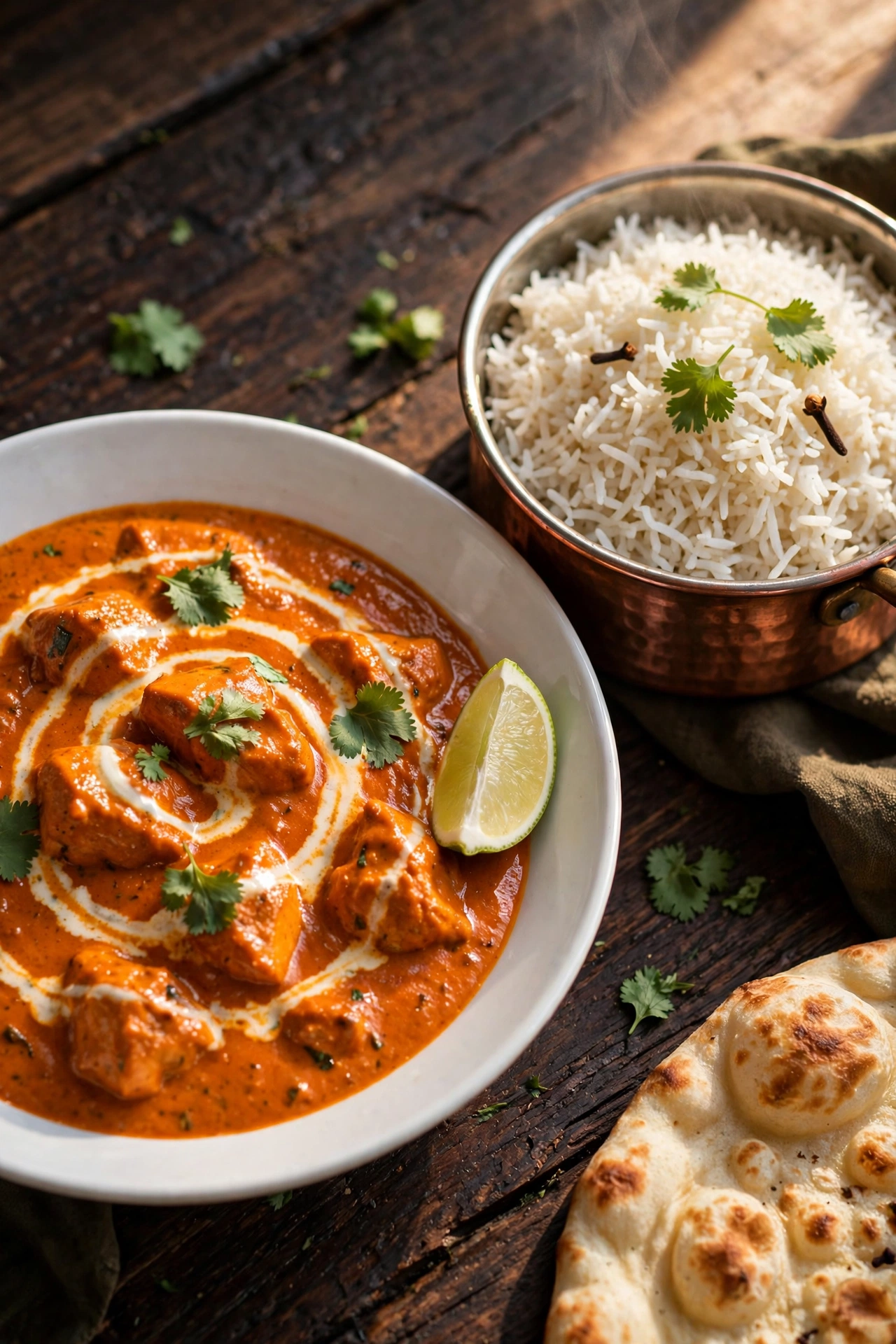
Basmati rice. Long-grain basmati absorbs the makhani sauce without turning mushy. Cook at a 1:1.5 rice-to-water ratio for separate, fluffy grains.
Naan. Warm naan is traditional and practical for scooping up sauce. Store-bought warmed in a dry pan works well on a weeknight.
Jeera rice. Toast one teaspoon of whole cumin seeds in butter before adding rice and water. The earthy base pairs cleanly with the sweetness of the makhani.
Cucumber raita. Grated cucumber in plain yogurt with salt and ground cumin cools the palate between bites, particularly useful if you pushed the chili level up.
Yellow dal. A simple bowl of yellow lentil dal alongside butter chicken rounds out the meal into a proper spread without significant extra effort.
Storage, Reheating and Make-Ahead
Fridge: Store in an airtight container for up to 3 days. The sauce thickens as it cools and returns to its original consistency when reheated.
Freezer: Freeze in portion-sized airtight containers or freezer bags for up to 3 months. Thaw overnight in the refrigerator before reheating. Do not refreeze once thawed.
Reheat: Warm gently in a saucepan over low heat, stirring in 2 to 3 tablespoons of water or chicken stock to restore the sauce. Do not boil; boiling causes the cream to separate. In a microwave: use medium power in 60-second intervals, stirring between each one.
Make-ahead: The makhani sauce can be made up to 3 days ahead and refrigerated, or frozen for up to 3 months. Sear the chicken fresh the day you plan to serve and add it to the reheated sauce. Make-ahead butter chicken sauce is often even better on day two, once the spices have had time to settle.
Allergen Information
Contains dairy: yogurt (marinade), butter, and heavy cream (sauce).
To make this recipe dairy-free: substitute full-fat coconut cream for the heavy cream, a plant-based butter for the dairy butter, and a full-fat coconut yogurt for the plain yogurt in the marinade.
This information is provided to help with dietary planning. For a confirmed allergy, verify all ingredient labels individually, as formulations vary by brand. For a clinical diagnosis or medical dietary advice, consult a qualified healthcare provider.
Nutrition Information
Per serving, based on 4 servings:
| Nutrient | Per Serving |
|---|---|
| Calories | 425 kcal |
| Protein | 36g |
| Total Carbohydrates | 13g |
| Dietary Fiber | 2g |
| Total Sugars | 7g |
| Total Fat | 26g |
| Saturated Fat | 13g |
| Sodium | 720mg |
| Cholesterol | 165mg |
| Potassium | 640mg |
| Vitamin C | 9mg |
| Calcium | 85mg |
| Iron | 2.5mg |
Nutritional values are estimates only and may vary based on specific ingredients, brands, and portion sizes used. For precise dietary needs, consult a registered dietitian.
Frequently Asked Questions
Can I make butter chicken without heavy cream?
Yes. Full-fat coconut cream (from a can, not a carton) is the most reliable substitute; it keeps the sauce rich and smooth with only a mild background note. Cashew cream, made by soaking raw cashews for 4 hours and blending them smooth with a small amount of water, also works and adds a neutral richness. Avoid any low-fat dairy alternatives; they break easily in a hot sauce and turn the texture thin and grainy.
What’s the difference between butter chicken and chicken tikka masala?
Butter chicken (murgh makhani) was developed in Delhi in the 1950s using leftover tandoori chicken cooked in a mild tomato, butter, and cream sauce. It is slightly sweet, very smooth, and rich from the dairy. Chicken tikka masala, which has stronger roots in British-Indian cooking, typically uses a heavier tomato base with more acidity and a spicier flavor profile. The textures differ too: makhani sauce is blended smooth and creamy, while tikka masala tends to be chunkier and more robust. According to Serious Eats, the technical overlap between the two dishes is significant, but the fat balance and sauce sweetness separate them clearly.
Should I use chicken thighs or breast?
Chicken thighs are the better choice. They have more intramuscular fat, which keeps them moist through the high-heat sear and the long simmer in sauce. Breast can work but is less forgiving: 3 to 4 minutes per side on the sear at most, or it will be dry by the time it goes back into the sauce for the final simmer.
How long should I marinate the chicken?
Thirty minutes is the floor. Four hours gives noticeably more flavor and a more tender result. Overnight is the sweet spot for butter chicken marinade, up to 12 hours, and what most restaurant kitchens do. Beyond 12 hours, the lemon juice in the marinade starts breaking down the surface proteins too aggressively, producing a slightly mushy exterior on the cooked chicken.
Why does my butter chicken taste bland?
Three specific things cover most cases. The onions were not cooked long enough (they need to reach pale gold, not just soft). The bhuna reduction was cut short (15 to 18 minutes uncovered until oil separates is not optional). The kasuri methi was skipped, added too early, or not crushed before adding. If the sauce still tastes flat after checking all three, a small pinch of additional garam masala and a salt adjustment stirred in at the end almost always fixes it. See the FDA’s safe food handling guidelines if you have questions about marinating raw chicken safely.
Can I freeze butter chicken?
Yes, for up to 3 months. After thawing and reheating, the cream sauce may look slightly grainy initially but comes back together when warmed gently on low heat with a splash of water stirred in. Reheat slowly; high heat will break the sauce.
How do I get that orange-red color in the sauce?
Kashmiri red chili powder is the specific ingredient that does it. It is a mild, paprika-adjacent chili that gives an intense orange-red color with very little heat. You need it in both the marinade and the sauce, as written in this recipe. Regular chili powder is not a substitute for color; it is significantly hotter and will shift the flavor profile considerably.
Conclusion
The effort in butter chicken is mostly front-loaded. The 15-minute onion cook and the 18-minute bhuna reduction are where the flavor is actually built, not added later with extra spices. Once those two stages are done properly, the rest of the recipe moves quickly. Keep back a small pinch of kasuri methi and crush it in right before you serve; added at the last moment rather than 5 minutes earlier, the difference in aroma is real. Make the makhani sauce a day ahead when you can. The spices settle and the sauce tastes noticeably more cohesive the next day.
Butter Chicken — Recipe Card
Butter Chicken (Restaurant-Style at Home)
Ingredients
Method
- Combine yogurt, lemon juice, Kashmiri red chili powder, garam masala, cumin, coriander, salt, and oil in a large bowl. Add chicken and coat thoroughly. Cover and refrigerate for at least 30 minutes.
- Heat a cast iron or heavy skillet over high heat with a thin film of oil. Sear chicken in a single layer, 4 to 5 minutes per side, until charred in spots and the internal temperature reaches 74°C (165°F). Work in batches. Set aside with resting juices.
- Melt 2 tbsp butter with 1 tbsp oil in a wide saucepan over medium heat. Cook diced onion for 12 to 15 minutes until golden. Add garlic and ginger; cook 2 minutes.
- Add all ground spices. Stir constantly for 60 to 90 seconds until the mixture darkens and smells fragrant.
- Add crushed tomatoes and tomato paste. Simmer uncovered 15 to 18 minutes, stirring occasionally, until the sauce darkens and oil separates visibly at the edges.
- Blend until smooth with an immersion blender (or countertop blender, cooled slightly). Return to low heat.
- Stir in heavy cream, remaining 1 tbsp butter, and sugar. Simmer 5 minutes on low. Crush kasuri methi between palms and add. Taste for salt.
- Add seared chicken and resting juices. Simmer 5 minutes on low. Serve hot.