Chicken Parmesan Recipe: Crispy Crust, Melty Cheese, 45 Minutes
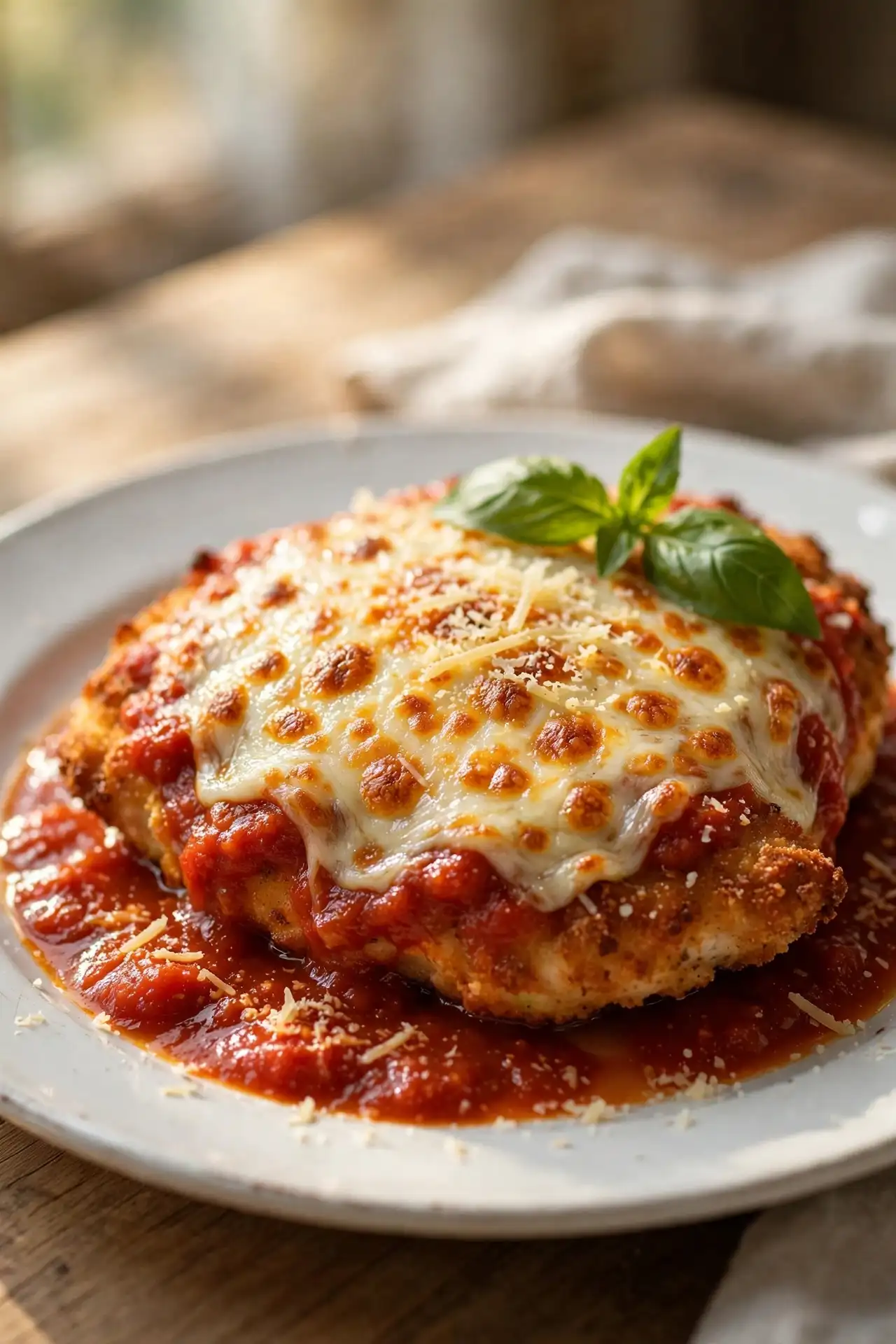
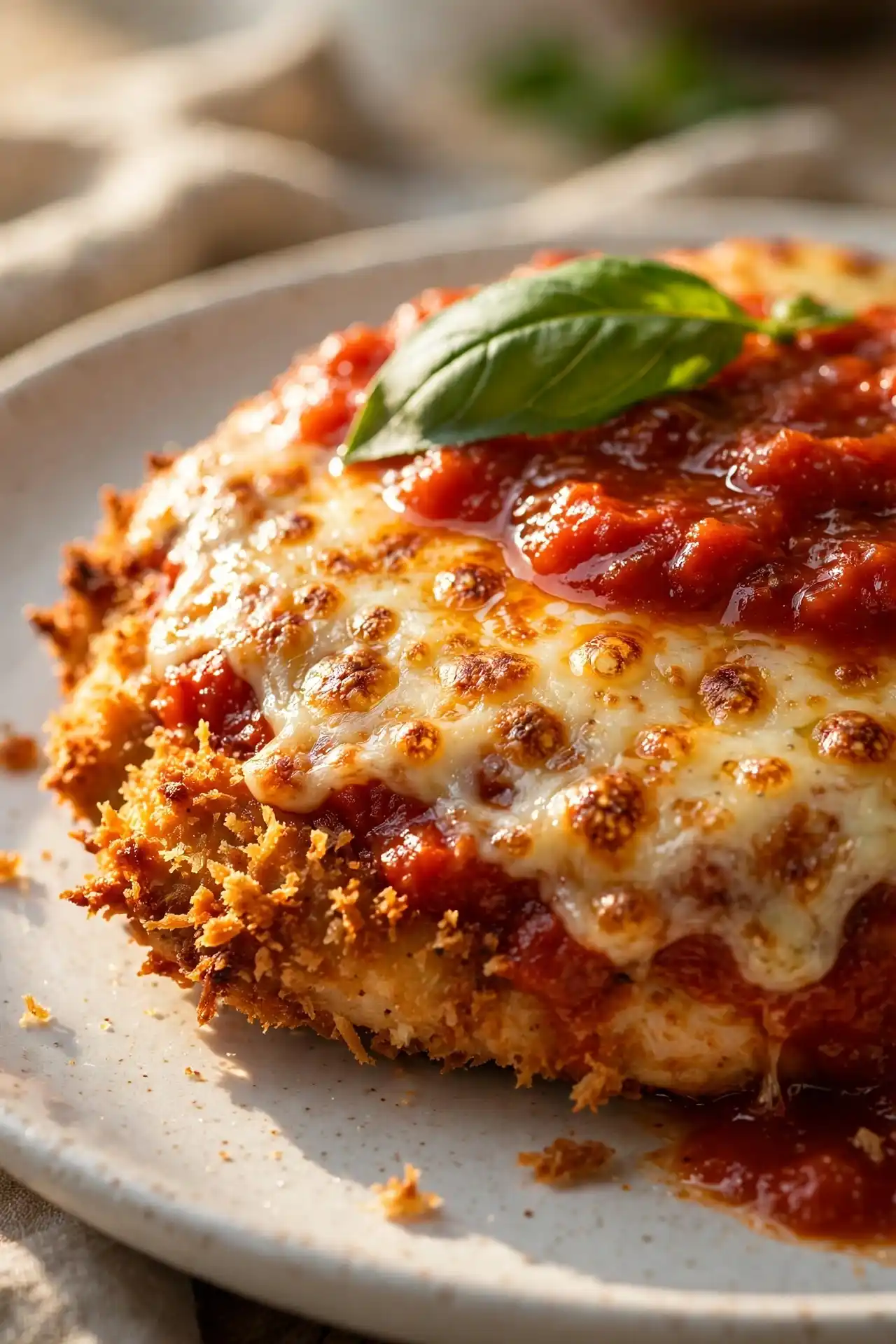
The difference between a chicken parmesan recipe that works and one that turns soggy comes down to one step most home cooks skip: frying the breaded cutlets before the sauce goes on. Once the crust is set in the pan, the oven just melts the cheese and finishes the chicken through without softening what took you ten minutes to build.
This version uses panko for a coarser, crispier crust, low-moisture mozzarella so the cheese melts dry, and a two-step cook that takes 45 minutes from start to table. Two chicken breasts split horizontally into four cutlets gives everyone a thinner piece that cooks evenly and has more surface area for breading.
That last point matters. More crust means more flavor per bite.
Why You’ll Love This Chicken Parmesan Recipe
- The crust stays crispy under the marinara because it fries before the sauce touches it
- Two breasts split into four cutlets cuts cooking time and gives you better crust-to-chicken ratio
- No wine or alcohol in the sauce, making it straightforward for any home kitchen
- Mozzarella and Parmesan together deliver both stretch and sharp, salty flavor
- Leftovers reheat in the oven and taste nearly as good the next day
Ingredients You’ll Need
For the Chicken Cutlets
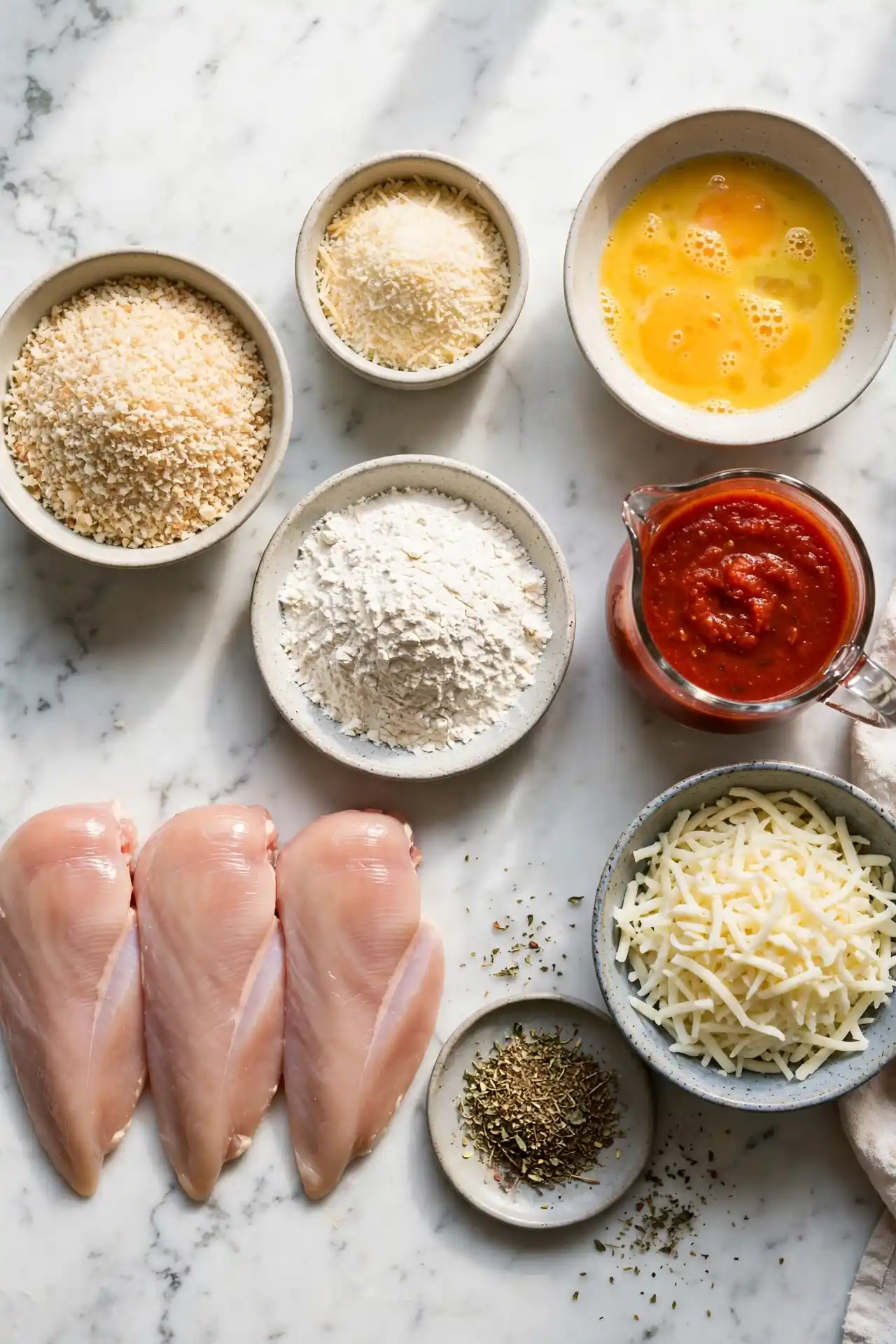
- 2 large chicken breasts (about 700g / 1.5 lbs total), halved horizontally into 4 cutlets Splitting them evenly is the single most important prep step — it means no dry edges or raw center
- 1 cup (100g) panko breadcrumbs Panko gives a coarser, crispier texture than fine breadcrumbs, which tend to go dense under sauce
- 1/2 cup (50g) grated Parmesan cheese, divided — half goes into the breading, half goes on top Parmesan in the coating adds a salty, nutty baseline the crust wouldn’t have with panko alone
- 1 tsp garlic powder
- 1 tsp dried oregano
- 1/2 tsp dried basil
- 1 tsp fine salt, divided
- 1/4 tsp black pepper
- 2 large eggs, beaten The egg layer is what bonds the breadcrumbs to the chicken — there is no reliable substitute for this step
- 1/4 cup (30g) all-purpose flour Flour first gives the egg something to grip; without it, the egg slides and the breading follows
- 3 tbsp olive oil (for shallow frying)
For the Sauce and Cheese Topping
- 1 1/2 cups (360ml) marinara sauce — store-bought or homemade A simple tomato marinara works best here; anything creamy or sweetened competes with the cheese
- 1 1/2 cups (150g) shredded low-moisture mozzarella cheese Low-moisture mozzarella melts without releasing water onto the crust. Fresh mozzarella will make it soggy
- 1/4 cup (25g) grated Parmesan cheese (from the divided amount above)
- Fresh basil leaves, for garnish (optional)
Recipe Timing
| Timing Element | Duration |
|---|---|
| Prep Time | 20 minutes |
| Cook Time | 25 minutes |
| Total Time | 45 minutes |
Servings: 4 | Difficulty: Medium | Cuisine: Italian-American | Course: Main Course
How to Make Chicken Parmesan Recipe — Step by Step
Step 1: Pound the Cutlets to Even Thickness
Place each chicken cutlet between two sheets of plastic wrap. Use a meat mallet or the flat side of a rolling pin to pound to a uniform thickness of about 1.5cm (half an inch). Work from the thickest part outward.
⚠️ Food Safety: Use a dedicated cutting board for raw chicken. Wash hands thoroughly with soap for at least 20 seconds after handling raw poultry, and sanitize any surface the raw chicken has touched.
Why this works: Even thickness means the outside and center finish at the same time. An uneven cutlet gives you a dry edge and a pink center in the same bite.
Step 2: Build the Breading Station
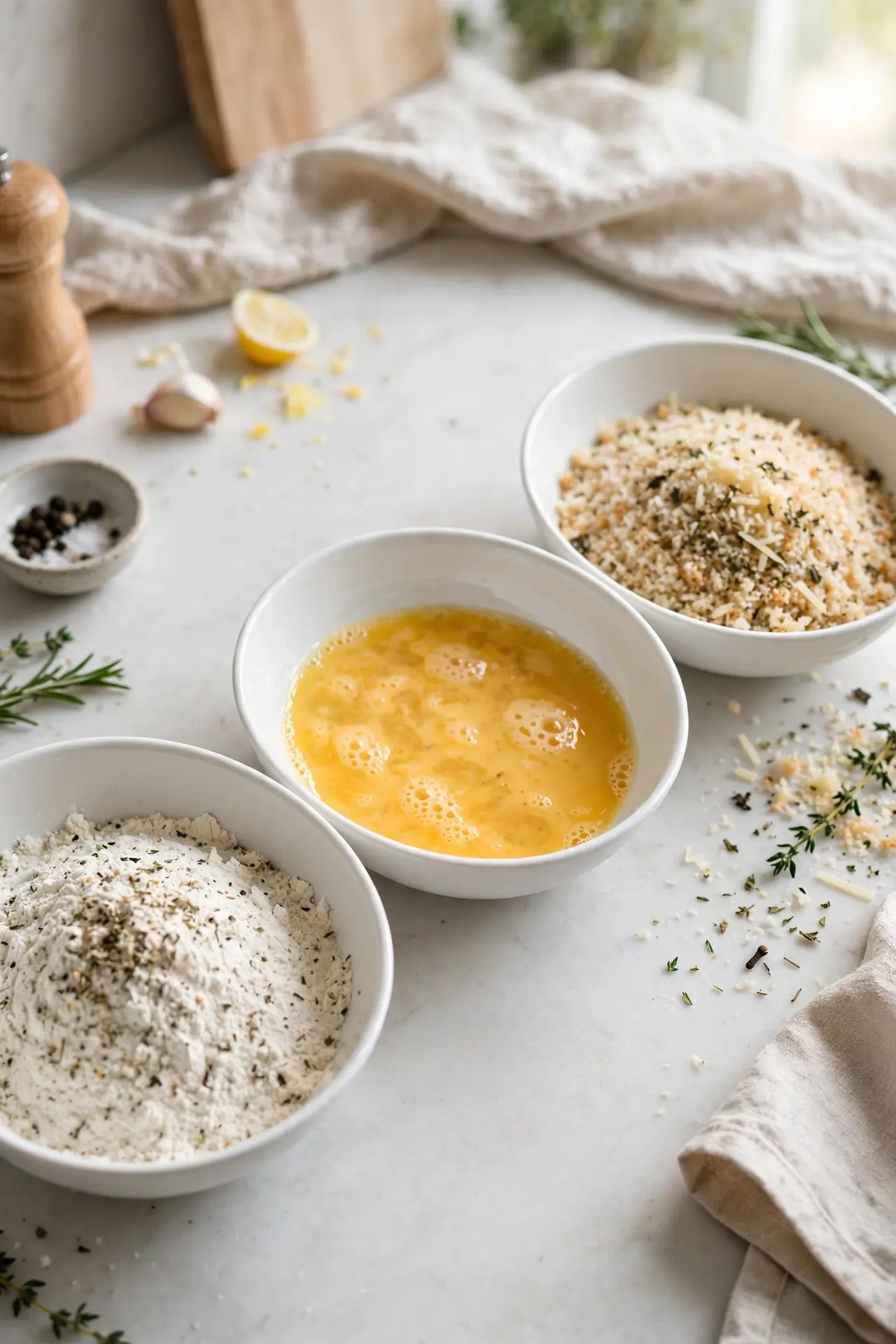
Line up three shallow bowls in this exact order: first, the flour seasoned with half the salt and a pinch of pepper; second, the beaten eggs; third, the panko combined with 1/4 cup of Parmesan, garlic powder, oregano, basil, and the remaining salt and pepper.
The sequence is not optional. Flour, then egg, then panko — each layer depends on the one before it to bond properly.
Step 3: Bread Each Cutlet
Coat one cutlet in flour and shake off the excess — you want a thin, even layer, not a thick coating. Dip it in the beaten egg and let the excess drip back into the bowl. Press it firmly into the panko on both sides, using your palm to push the crumbs in.
Set each breaded cutlet on a clean plate and rest them for 5 minutes before frying. This rest period helps the coating bond and reduces how much falls away in the hot oil.
Why this works: The resting lets the egg set slightly, acting like an adhesive between the flour and the crumbs. Skipping it means you lose a chunk of crust in the first 30 seconds of frying.
Step 4: Fry Until Deep Golden Brown
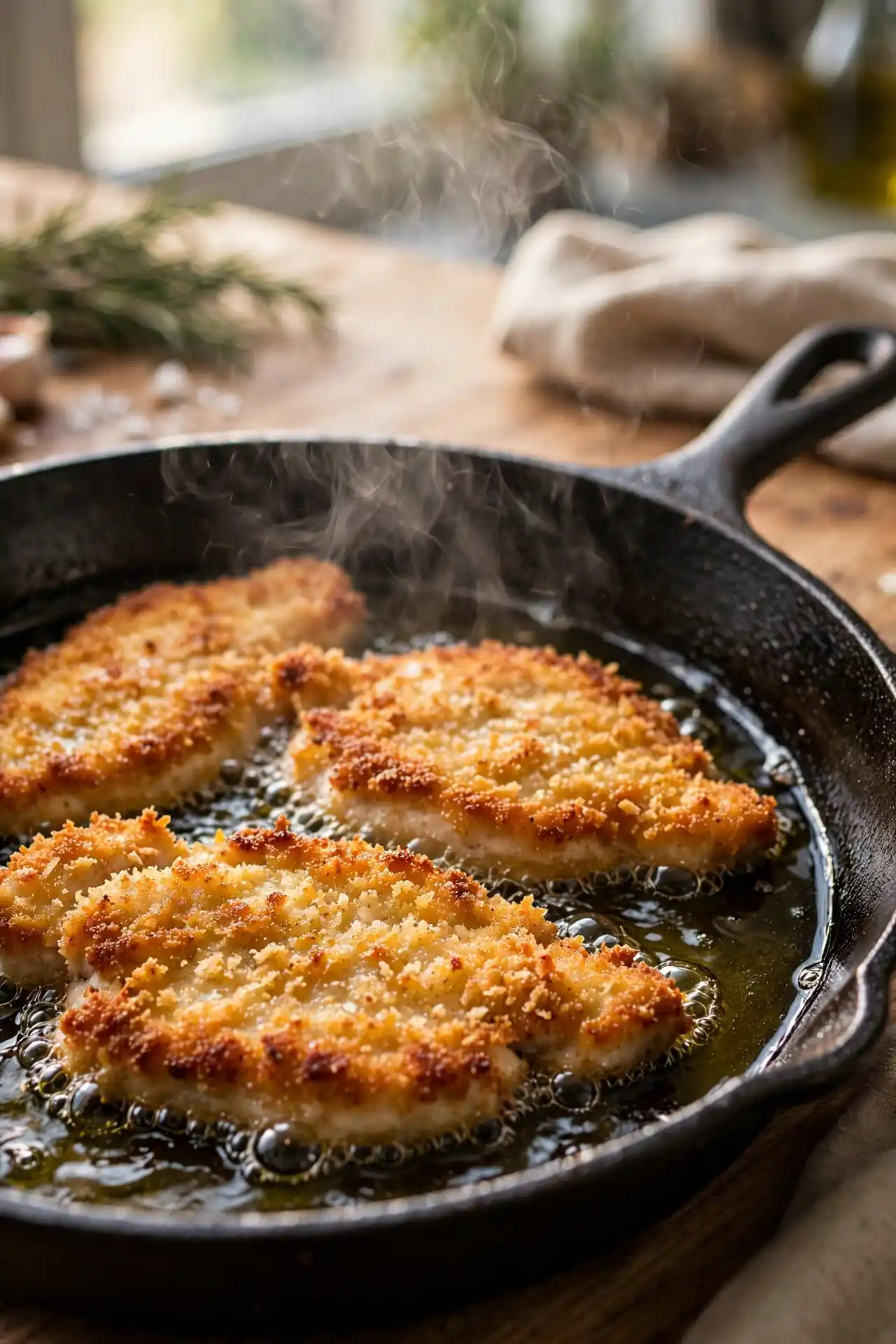
Heat the olive oil in a large oven-safe skillet over medium-high heat. When the oil shimmers and a breadcrumb dropped in sizzles immediately, the temperature is right — about 2 minutes of heating. Add the cutlets without crowding the pan; fry in two batches if needed.
Cook for 3 to 4 minutes per side until the crust is a deep, even golden brown. The chicken does not need to be cooked through at this point; it will finish in the oven. Transfer to a baking dish in a single layer.
⚠️ Food Safety: Do not stack cooked cutlets on top of each other at this stage. Stacking traps steam, which softens the crust and slows carry-over cooking.
Why this works: Setting the crust in hot oil creates a physical barrier between the breadcrumbs and the marinara. Without this step, the sauce soaks straight through.
Step 5: Preheat the Oven
Set the oven to 200°C (400°F) and allow it to fully preheat while you prepare the topping. A fully preheated oven bubbles the cheese quickly without drying out the chicken.
Step 6: Add the Sauce and Cheese
Spoon about 3 tablespoons of marinara over each cutlet — enough to cover the surface without pooling. Distribute the shredded mozzarella evenly over all four cutlets, then finish with the remaining 1/4 cup of Parmesan scattered over the top.
More sauce is not better here. Excess marinara pools around the sides of the crust and works its way underneath during baking.
Step 7: Bake and Rest
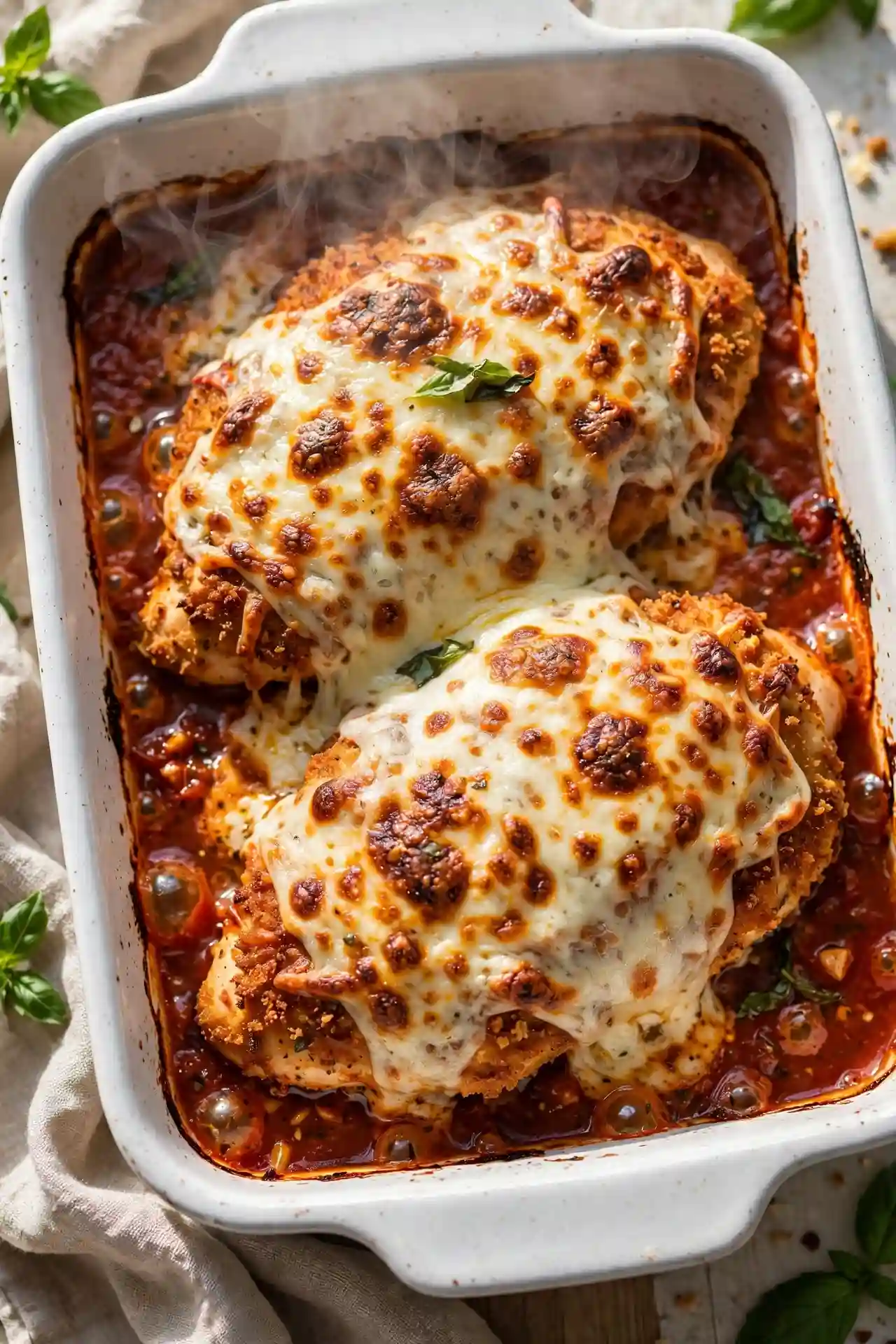
Bake for 13 to 15 minutes until the cheese is fully melted, golden in spots, and the chicken reads 74°C (165°F) on a meat thermometer at the thickest point. Remove from the oven and rest for 3 minutes before serving.
⚠️ Food Safety: Internal temperature is the only reliable indicator for cooked poultry. Clear juices and white color are not sufficient confirmation that chicken is safe to eat.
Why this works: The 3-minute rest lets the juices redistribute within the meat. Cut immediately and those juices run out onto the plate, leaving drier chicken behind.
Key Tips for Best Results
Use low-moisture mozzarella, not fresh. Fresh mozzarella releases water as it melts, which pools on the crust during the bake and undoes the frying step. Low-moisture mozzarella, sold pre-shredded in bags or as a firm block you grate yourself, melts dry and stays where you put it.
Warm the marinara before it goes on. Cold sauce dropped onto hot fried chicken drops the surface temperature right before the dish goes into the oven. Two minutes in a small saucepan over low heat means the whole dish bakes evenly and the cheese melts faster.
Press the breadcrumbs on firmly. After the egg dip, press each side of the cutlet into the panko with the flat of your palm. A gentle dip leaves gaps; firm pressure gives full, even coverage. Gaps in the coating are where the sauce breaks through.
Don’t rush the oil temperature. Cold or warm oil gives you greasy, pale crust. The oil needs to shimmer and respond to a test crumb before any chicken goes in. Two minutes over medium-high heat is usually enough with olive oil.
Common Mistakes to Avoid
Crowding the pan. When cutlets touch each other in the skillet, steam builds between them instead of escaping. The result is pale, soft crust that looks more steamed than fried. If your pan can’t hold all four cutlets with space between them, fry in two batches.
Using too much sauce. Three tablespoons per cutlet is a measured amount for a reason. A thick layer of marinara creates a wet environment in the baking dish. The sauce will find its way under the cutlets, and no amount of oven time will undo that.
Skipping the pounding step. A chicken breast thickest at the center and thin at the edges will overcook on the edges before the center reaches 74°C. Five minutes of pounding is the difference between a properly cooked cutlet and one with dry ends.
Pulling the chicken when the cheese is just melted but still pale. Pale, flat cheese usually means the chicken below it is also borderline. The cheese should be golden in at least a few spots and slightly puffed. Give it the full 13 to 15 minutes and check the temperature with a thermometer.
Variations and Substitutions
Chicken thighs instead of breasts. Boneless, skinless thighs work well in this chicken parmesan recipe. They carry more fat, which makes them stay moist even with a minute or two of extra time in the oven. Pound them to an even thickness and follow every other step identically.
Regular breadcrumbs instead of panko. If panko is unavailable, fine breadcrumbs produce a denser, slightly softer crust. Stir 2 tablespoons of cornmeal into the fine breadcrumbs to add some texture back. It won’t replicate panko exactly, but it does help.
Homemade marinara. A simple sauce works better here than a complex one. Sauté two cloves of minced garlic in olive oil for 1 minute, add one 400g tin of crushed tomatoes, season with salt, dried oregano, and a pinch of sugar, and simmer for 20 minutes.
Halal-certified Parmesan. If you need halal-certified cheese throughout, look for a Parmesan or hard cheese block labeled with halal certification. The flavor is essentially identical and the swap requires no adjustment to quantities.
Gluten-free version. Substitute certified gluten-free panko and a gluten-free all-purpose flour blend in equal quantities. The texture will be slightly more delicate but holds together through frying.
What to Serve With Chicken Parmesan
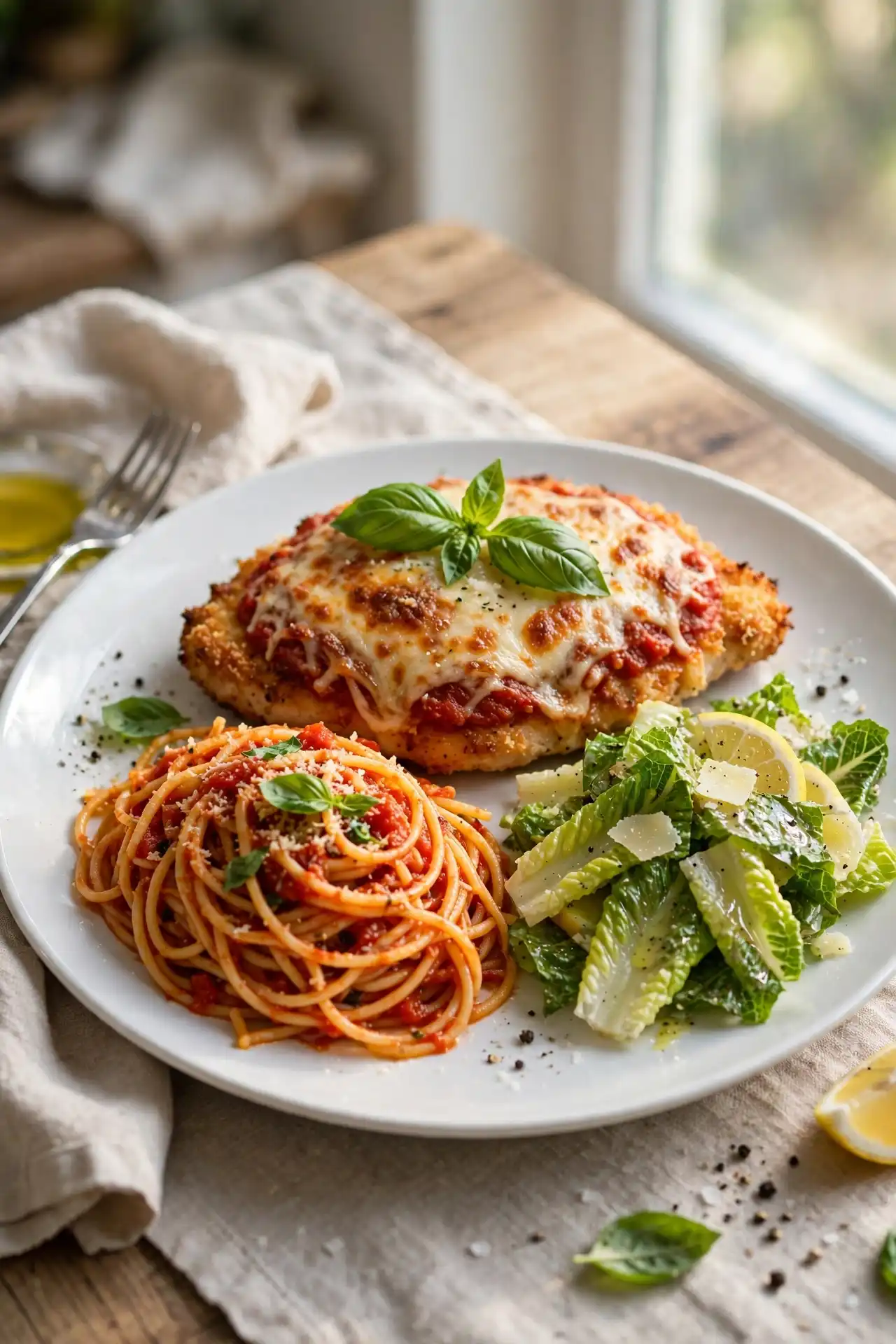
Spaghetti with plain tomato sauce. The classic pairing. Keep the pasta sauce simple since the chicken already carries significant seasoning from the breading and marinara.
Garlic bread. Good for collecting any marinara that pools in the baking dish. A half loaf sliced and toasted in the oven during the last 5 minutes of the chicken’s bake works well.
Romaine salad with lemon vinaigrette. Something crisp and acidic cuts through the richness of the cheese without competing with the tomato flavor in the dish.
Steamed or roasted broccoli. Broccoli holds up against the strong flavors in this meal without getting lost. Roasted at 220°C (425°F) with olive oil and salt for 15 minutes works while the chicken rests.
Crusty bread. If pasta feels like too much, a thick slice of good bread on the side handles the same job in a lighter meal.
Storage, Reheating and Make-Ahead
Fridge: Store leftover cutlets in an airtight container for up to 3 days. Keep any extra marinara in a separate container — storing them together accelerates softening of the crust.
Freezer: Cool the cooked and sauced cutlets completely. Freeze them in a single layer on a baking sheet for 1 hour first, then transfer to a sealed freezer bag. They keep well for up to 2 months. Thaw overnight in the refrigerator before reheating.
Reheating: The oven is the right tool for this. Place cutlets on a wire rack set over a baking sheet and reheat at 180°C (350°F) for 12 to 15 minutes until the cheese melts and the internal temperature returns to 74°C (165°F). The microwave produces rubbery crust — avoid it.
Make-ahead: Bread the cutlets up to 24 hours in advance and refrigerate them uncovered on a plate. Air-drying in the fridge slightly dehydrates the coating, which makes it fry crispier. Fry and bake just before serving. The full cooked and sauced dish does not make-ahead well for same-day eating.
Allergen and Dietary Information
Contains gluten (panko breadcrumbs, all-purpose flour). To make this gluten-free, try substituting certified gluten-free panko and a gluten-free flour blend in equal quantities.
Contains dairy (Parmesan cheese, mozzarella cheese). For a dairy-free version, try substituting plant-based shredded mozzarella and nutritional yeast in place of Parmesan. The melt behavior and flavor will differ, but the structure of the dish remains the same.
Contains eggs (the egg wash). For an egg-free adaptation, try using a thin spread of plain Dijon mustard on each floured cutlet before the panko dip. It provides adhesion, though it adds a mild flavor the original does not have.
These substitution suggestions address adaptation only, not allergen elimination. Cross-contamination is possible with shared equipment and workspace. Anyone with a diagnosed allergy should assess their own kitchen conditions carefully.
Nutrition Information
Per serving (1 cutlet with sauce and cheese, based on the exact ingredient quantities above)
| Nutrient | Per Serving |
|---|---|
| Calories | 485 kcal |
| Protein | 46 g |
| Total Carbohydrates | 22 g |
| Dietary Fiber | 2 g |
| Total Sugars | 5 g |
| Total Fat | 21 g |
| Saturated Fat | 8 g |
| Sodium | 790 mg |
| Cholesterol | 178 mg |
| Potassium | 640 mg |
| Calcium | 380 mg |
| Iron | 2 mg |
Nutritional values are estimates only and may vary based on specific ingredients, brands, and portion sizes used. For precise dietary needs, consult a registered dietitian.
Frequently Asked Questions
How do I stop the breading from falling off during frying? Three things cause breading loss: skipping the flour step, insufficient pressing during the panko coat, and adding chicken to oil that isn’t hot enough. Make sure the oil shimmers before anything goes in, press each side of the cutlet firmly with your palm, and don’t move the cutlet for the first 2 minutes of frying. It needs time to develop a crust before you flip it.
Can I bake the chicken without frying it first? You can, though the crust texture is noticeably different. To bake only, preheat to 220°C (425°F), place breaded cutlets on a lightly oiled wire rack over a baking sheet, and bake for 20 to 22 minutes before adding the sauce and cheese. The crust dries rather than crisps, and it will soften faster under the marinara than a fried crust does.
Can I use chicken thighs instead of chicken breasts? Yes, and in some ways thighs are more forgiving. Boneless, skinless thighs stay moist even with a minute or two of extra bake time. Pound them to an even thickness and follow every other step the same way.
Can I make this chicken parmesan recipe ahead of time? The breading can be prepared up to 24 hours ahead and refrigerated uncovered. The cooked and sauced dish does not hold well for advance preparation — the crust softens during storage. For leftovers, the oven reheating method described in the storage section restores most of the texture.
What is the best cheese for this recipe? Low-moisture mozzarella is the correct choice. It melts cleanly without releasing water onto the crust. Fresh mozzarella is too wet for this application. Adding Parmesan on top gives you a sharp, salty note that balances the sweetness of the marinara.
How do I know when the chicken is fully cooked? Use a meat thermometer. The internal temperature at the thickest part of the cutlet should reach 74°C (165°F). According to USDA poultry food safety guidelines, visual indicators like color and juice clarity are not reliable alone for confirming safe poultry temperatures.
Can I freeze chicken parmesan after cooking? Yes, for up to 2 months. Freeze completely cooled cutlets in a single layer first, then transfer to a sealed freezer bag. Thaw overnight in the refrigerator and reheat in the oven at 180°C (350°F) until the cheese melts and the center reaches 74°C (165°F) again.
Conclusion
This chicken parmesan recipe works because the crust is set before the sauce ever touches it. That is the one step that separates a cutlet that holds together from one that turns into a wet pile on the plate. Spend the time on the breading station, get the oil temperature right, and use low-moisture mozzarella. Get those three things right and the rest of the recipe takes care of itself. The next time you make it, you won’t need to look at the recipe.
Chicken Parmesan Recipe — Recipe Card
Chicken Parmesan Recipe
Ingredients
Method
- Pound chicken cutlets between plastic wrap to an even 1.5cm (1/2 inch) thickness using a meat mallet.
- Set up three bowls in sequence: seasoned flour, beaten eggs, and panko combined with 1/4 cup Parmesan and all dried spices.
- Coat each cutlet in flour (shake off excess), dip in egg (let excess drip), then press firmly into panko on both sides. Rest on a plate for 5 minutes.
- Heat olive oil in an oven-safe skillet over medium-high heat until shimmering. Fry cutlets 3 to 4 minutes per side until deep golden brown. Do not crowd the pan. Transfer to a baking dish in a single layer.
- Preheat oven to 200°C (400°F).
- Spoon 3 tablespoons of marinara over each cutlet. Divide shredded mozzarella evenly on top, then scatter remaining Parmesan over all four.
- Bake 13 to 15 minutes until cheese is golden in spots and chicken registers 74°C (165°F) on a meat thermometer at the thickest point. Rest 3 minutes before serving.