Hashbrown Casserole (Cheesy, Creamy and Crowd-Pleasing)
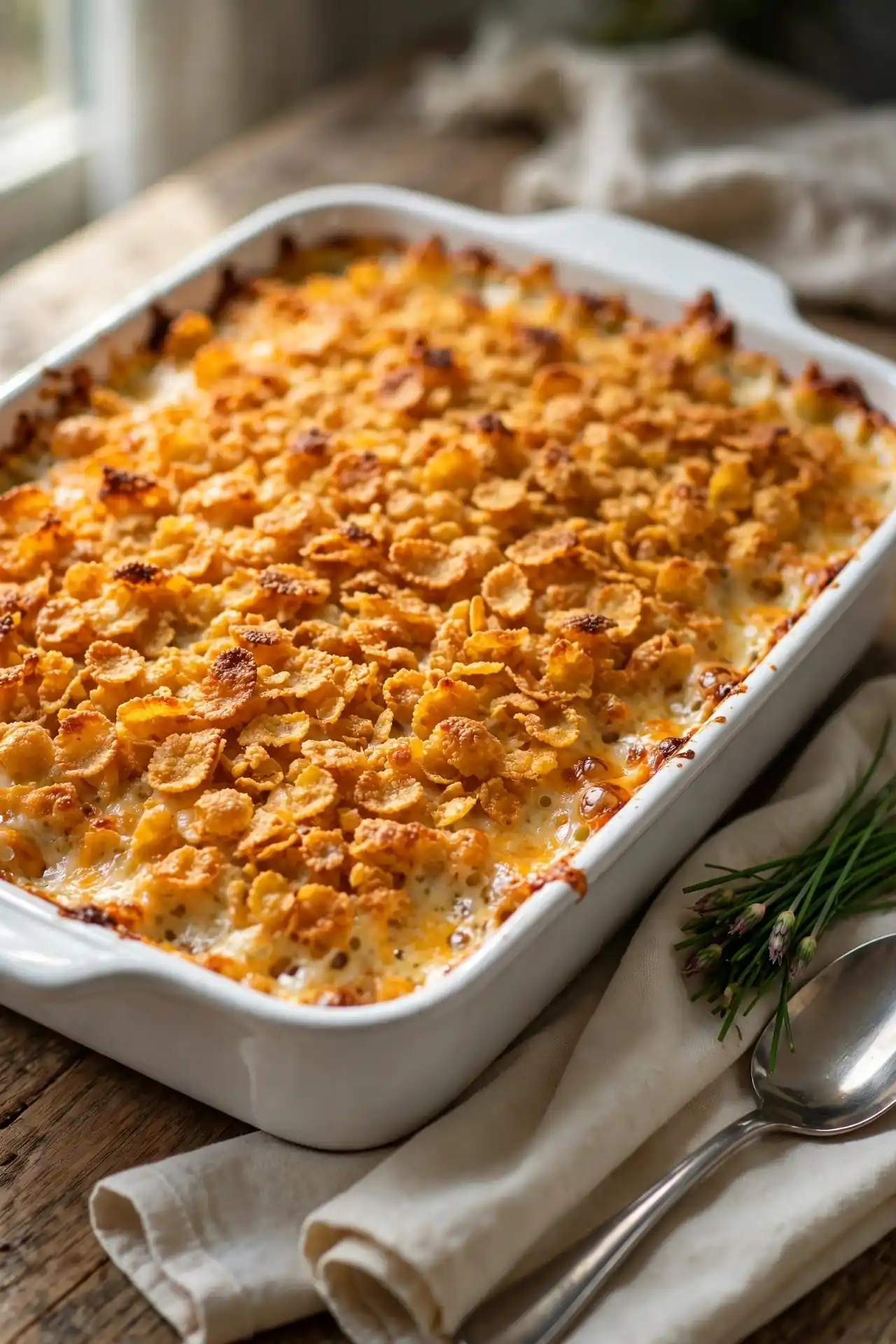
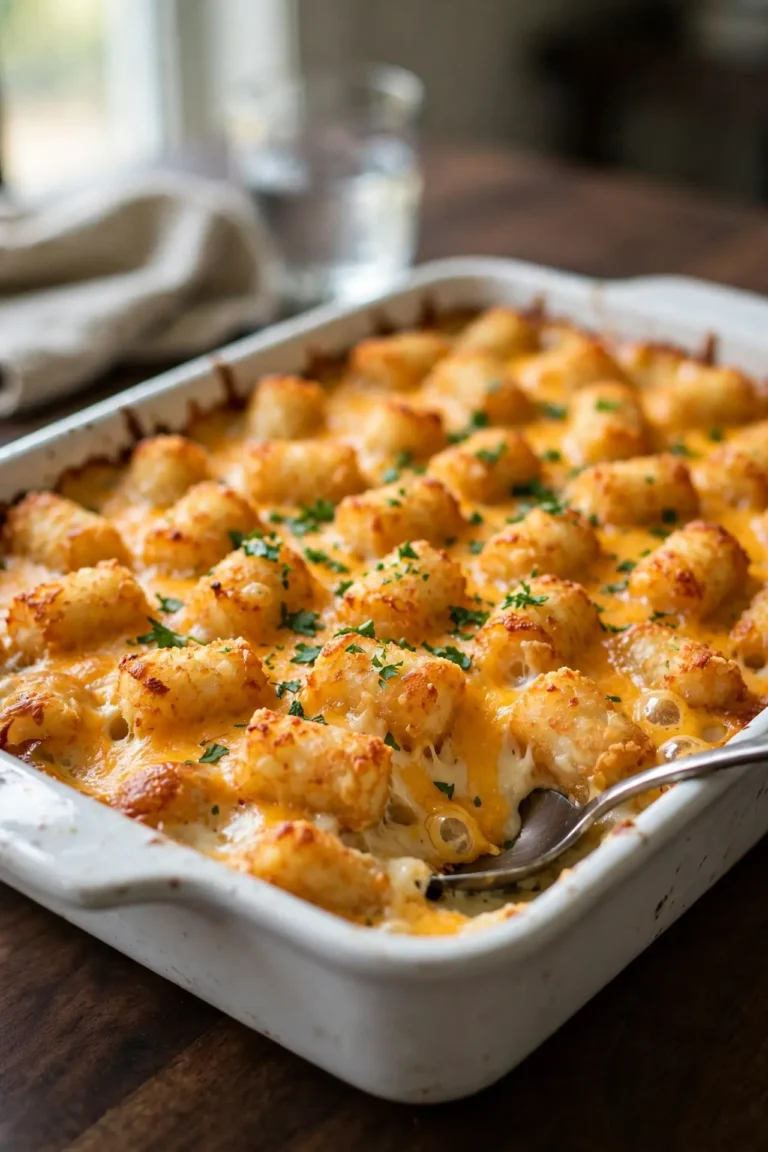
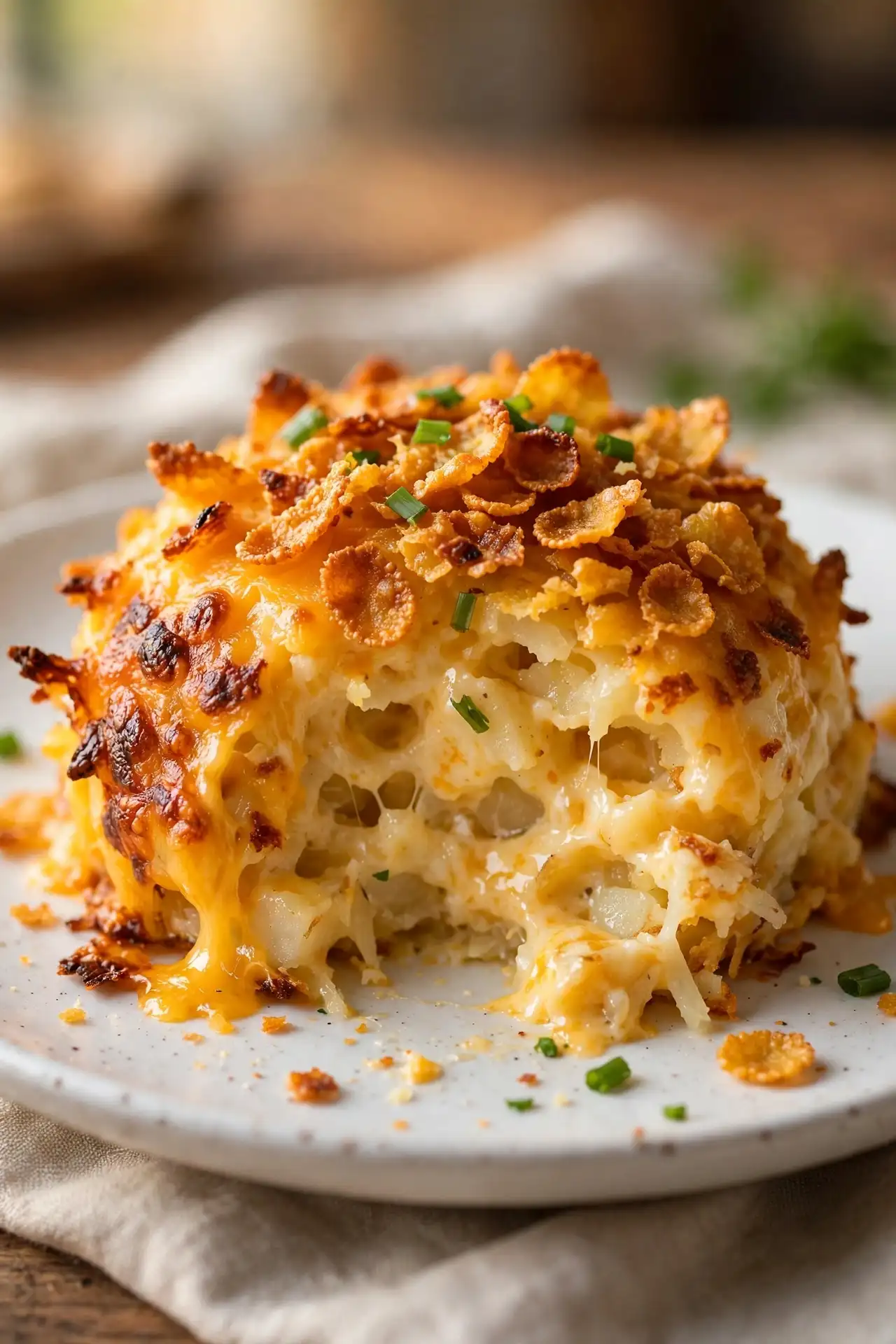
Hashbrown casserole is the dish people ask for by name. Not “that potato thing” or “the cheesy bake.” Hashbrown casserole, specifically. This version gets the ratio right: two pounds of frozen shredded potatoes, a full stick of butter, tangy sour cream, sharp cheddar that melts into every layer, and a cornflake topping that stays genuinely crunchy even as the dish sits on the table.
Most versions skip the crust. That is a mistake. The contrast between the crispy buttered cornflakes on top and the creamy potato interior underneath is what makes people come back for seconds.
This hashbrown casserole takes 15 minutes to put together and bakes completely hands-off. You can assemble it the night before, refrigerate it, and have it in the oven before your guests arrive.
Why You’ll Love This Hashbrown Casserole
- The cornflake topping adds real textural contrast: you can actually hear the crunch
- Frozen hashbrowns mean zero peeling, grating, or dealing with raw potatoes
- One 9×13 pan feeds 8 to 10 people comfortably with no fussy plating
- You can assemble it fully 12 hours ahead and bake it straight from the fridge
- The cheddar goes into the potato mixture and on top, so every single bite is equally cheesy
Ingredients You’ll Need
For the Casserole Base
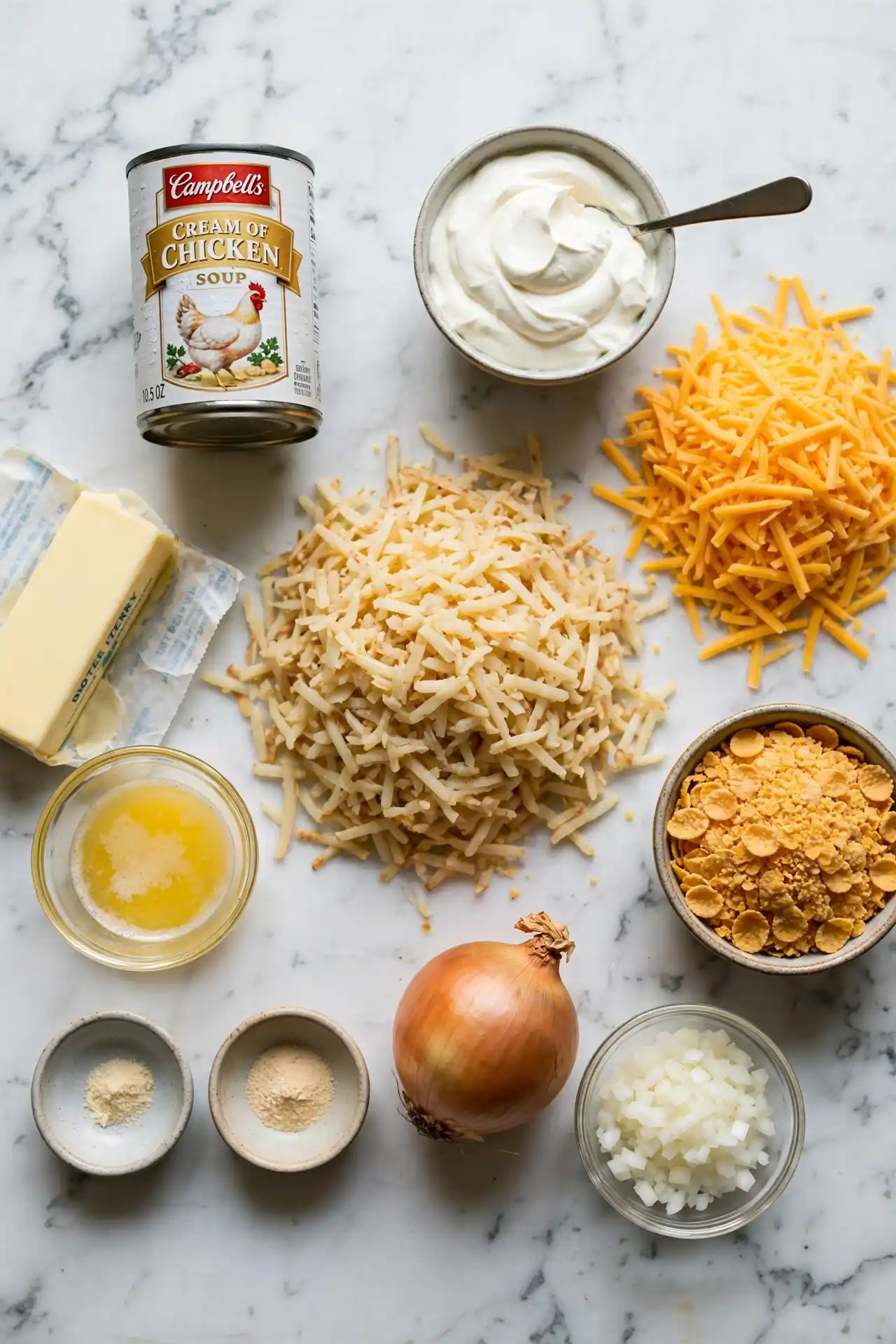
- 900g (2 lb) frozen shredded hashbrowns, thawed — the base of the dish; thawing is not optional, baking from frozen traps water and makes the interior soggy
- 1 can (284ml / 10.5 oz) halal-certified cream of chicken soup — acts as both binder and seasoning; use a halal brand or the homemade substitute in the Variations section
- 240g (1 cup) full-fat sour cream — adds tang and richness; low-fat versions have more water content and produce a looser filling
- 170g (1½ cups) sharp cheddar cheese, freshly shredded — sharp cheddar gives the deepest flavor; freshly shredded from a block melts more smoothly than pre-shredded
- 115g (½ cup / 1 stick) unsalted butter, melted — coats every shred of potato and is central to the flavor; do not reduce the quantity
- 1 medium yellow onion (about 150g), finely diced — raw onion softens fully during baking; dice it small so it blends into the filling without noticeable chunks
- 1 tsp garlic powder
- 1 tsp onion powder — doubles the savory base alongside the fresh onion
- 1 tsp fine salt
- ½ tsp black pepper
For the Cornflake Topping
- 120g (2 cups) cornflakes, lightly crushed to roughly 1cm pieces — do not crush to a powder; you want texture, not a dense breadcrumb layer
- 60g (4 tbsp) unsalted butter, melted — fully coats the cornflakes so they brown and crisp rather than burn
- 55g (½ cup) sharp cheddar cheese, shredded — the final cheese layer melts over the crust for color and flavor
Recipe Timing
| Timing Element | Duration |
|---|---|
| Prep Time | 15 minutes |
| Cook Time | 45 minutes |
| Rest Time | 5 minutes |
| Total Time | 65 minutes |
Servings: 10 | Difficulty: Easy | Cuisine: American | Course: Side Dish
How to Make Hashbrown Casserole, Step by Step
Step 1: Preheat the oven and prepare your baking dish
Set your oven to 175°C (350°F). Grease a 9×13 inch (23x33cm) baking dish with butter or non-stick spray, making sure to coat the corners and sides thoroughly.
Step 2: Press the thawed hashbrowns completely dry
Spread the thawed hashbrowns across a clean kitchen towel. Fold the towel around the potatoes and press firmly, wringing out as much moisture as you can. Repeat with a second dry towel if needed — you should see visible water being squeezed out.
Why this works: frozen hashbrowns retain a large amount of water after thawing. Skipping this step is the single most common reason a hashbrown casserole turns out watery and undercooked in the center, regardless of bake time.
Step 3: Mix the casserole base
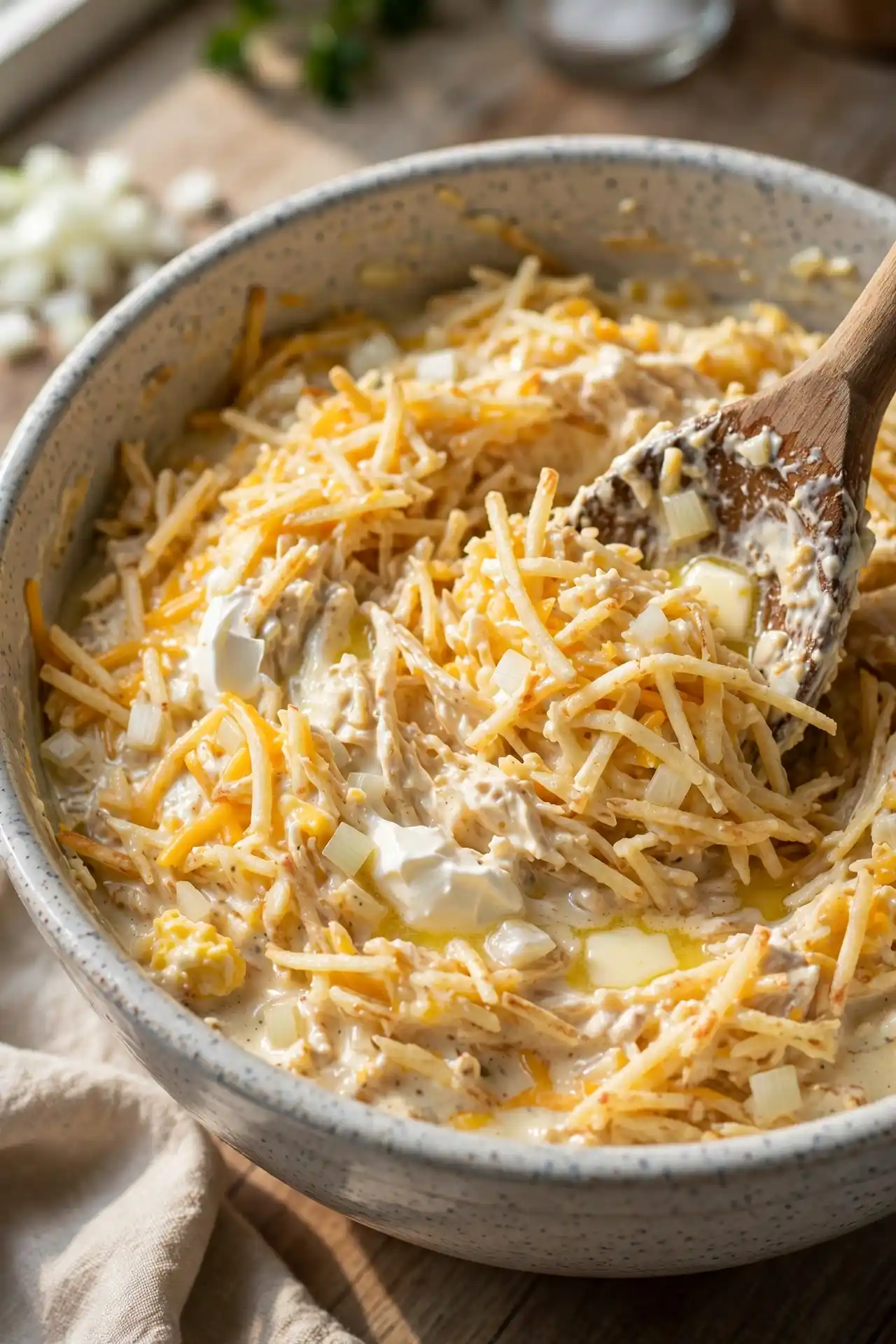
In a large mixing bowl, combine the dried hashbrowns, cream of chicken soup, sour cream, 170g (1½ cups) of the shredded cheddar, melted butter, diced onion, garlic powder, onion powder, salt, and pepper. Stir until every piece of potato is evenly coated.
Why this works: combining everything together rather than layering ensures the butter and soup are distributed through each bite, not concentrated in one section.
Step 4: Transfer the mixture to the baking dish
Pour the potato mixture into the prepared dish. Use the back of a spatula to spread it into a flat, even layer, pressing it gently into the corners.
Step 5: Make the cornflake topping
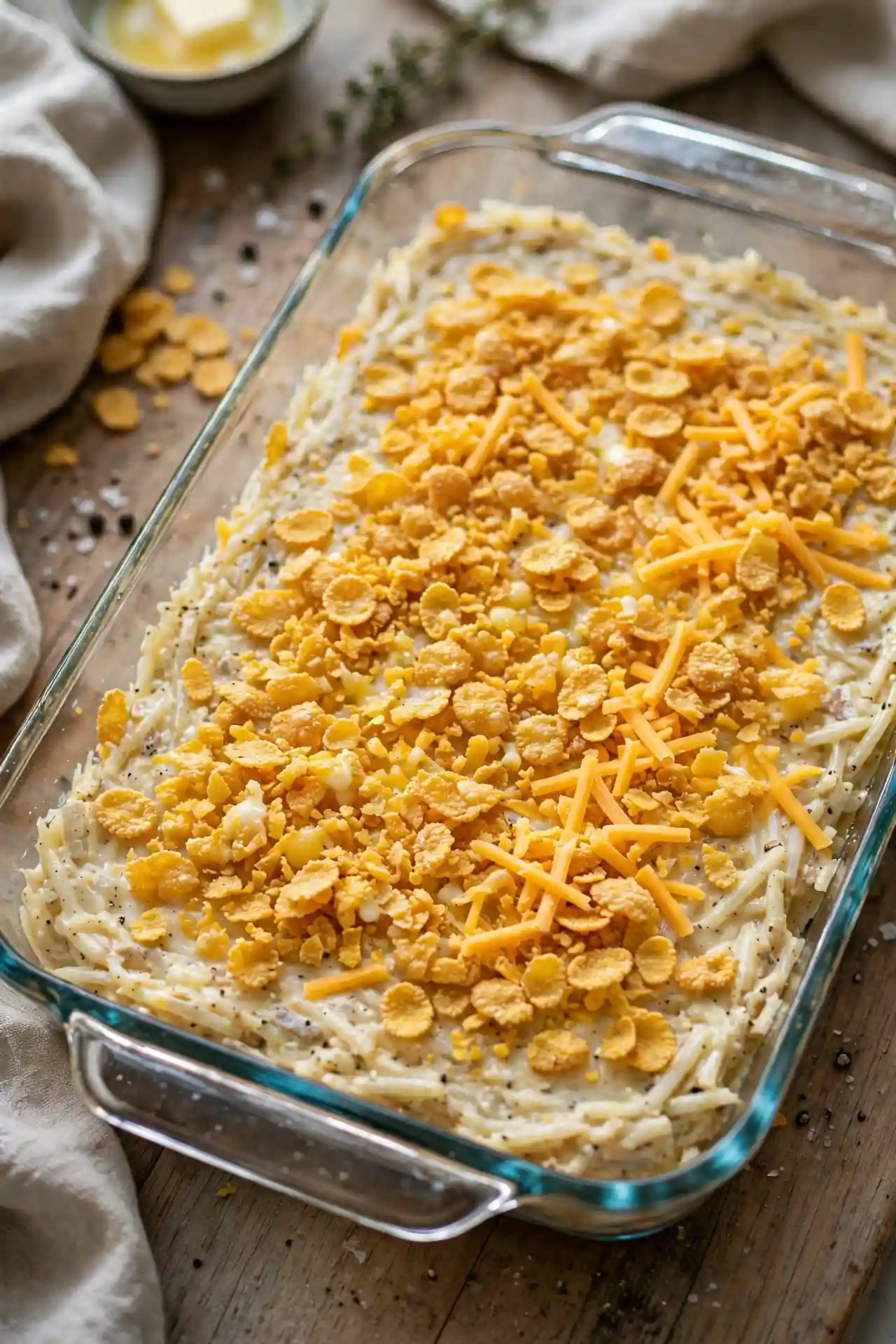
In a small bowl, combine the crushed cornflakes and 60g of melted butter. Toss until every flake is fully and evenly coated.
Step 6: Layer the topping
Spread the buttered cornflakes evenly over the potato layer. Scatter the remaining 55g (½ cup) of shredded cheddar directly over the cornflakes.
Step 7: Bake until golden and set
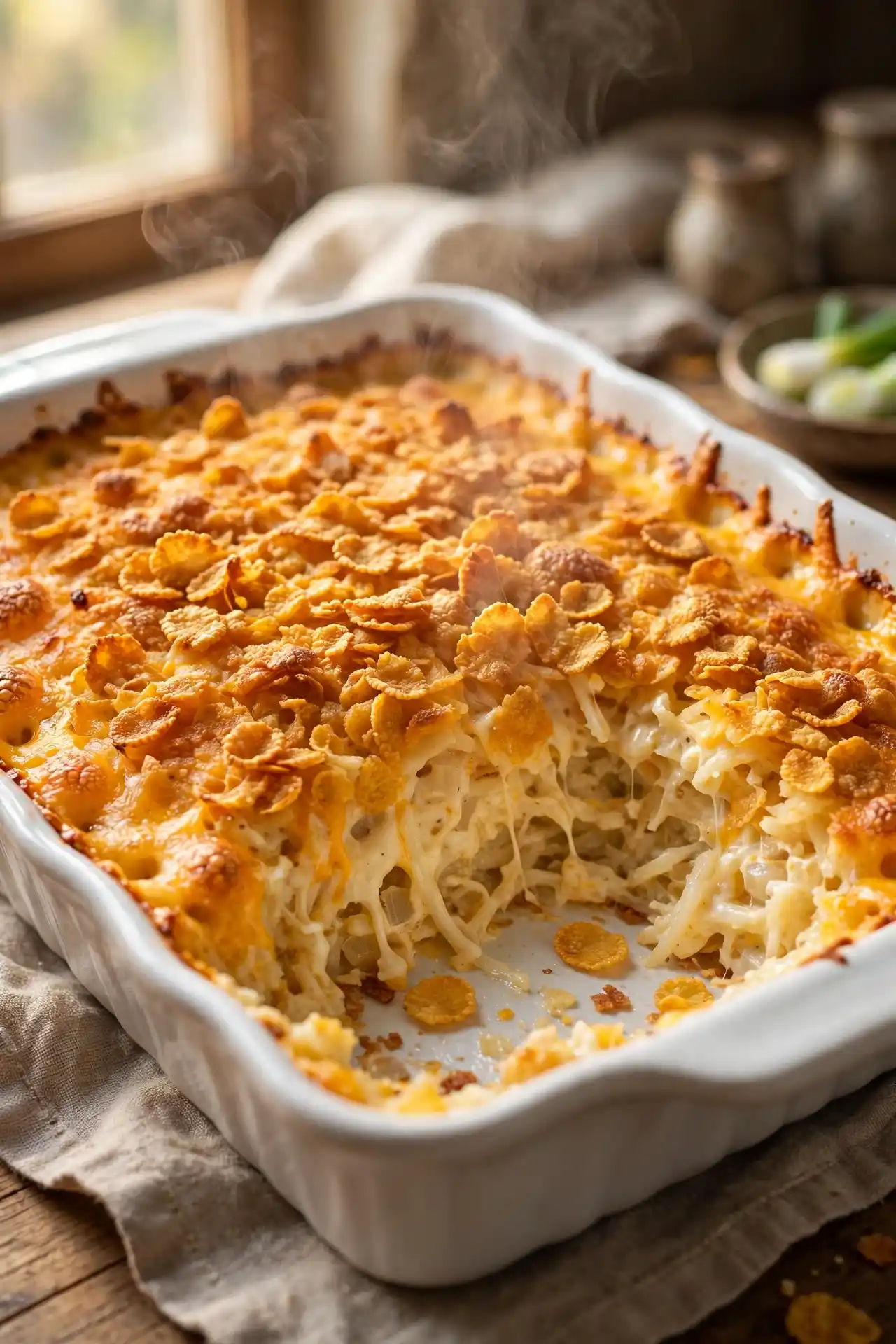
Place the dish on the center rack. Bake uncovered for 40 to 45 minutes, until the cornflake topping is deep golden brown, the cheese is melted and caramelized at the edges, and the casserole is actively bubbling around the sides. An instant-read thermometer inserted into the center should read at least 74°C (165°F). For reference, USDA safe internal temperature guidelines confirm this as the safe serving temperature for hot casseroles made with poultry-based ingredients.
Why this works: baking uncovered allows the cornflake crust to dry out and crisp from dry oven heat. Covering the dish traps steam and produces a soft, dense topping instead.
Step 8: Rest before serving
Remove the casserole from the oven. Let it rest on the counter for 5 minutes before scooping. This allows the interior to firm up slightly so each portion holds its shape on the plate.
Key Tips for Best Results
Thaw the hashbrowns in the fridge overnight, not on the counter. Counter-thawing tends to make the outer shreds mushy while the center stays partially frozen. Refrigerator thawing keeps the texture consistent and makes them easier to press dry.
Shred the cheese for the interior mixture yourself. Pre-shredded cheddar is coated with anti-caking agents, which can make the filling slightly grainy once baked. The cheese going inside the casserole base benefits from being grated fresh; the topping layer is less critical since it is exposed to direct heat.
If the topping starts browning too fast, tent it loosely with foil. If the cornflake crust looks deep brown after only 30 minutes but the edges are not bubbling yet, lay a sheet of aluminum foil loosely over the top without sealing the sides. This slows the browning without trapping steam.
Common Mistakes to Avoid
Skipping the drying step
Most recipes mention draining the hashbrowns but do not emphasize how much water frozen potatoes actually hold after thawing. One quick press with a towel is not enough. Press firmly, wring the towel, and repeat until the potatoes feel noticeably drier to the touch.
Using low-fat sour cream
Low-fat sour cream contains a higher proportion of water than full-fat, which works against the thick, set interior this dish is known for. The filling can turn loose and saucy rather than creamy and cohesive. Full-fat is the right call here.
Pulling the casserole out before the edges bubble
The cornflake topping browns faster than the interior heats through, so the top can look done 10 minutes before the filling is fully cooked. Wait until you see active bubbling around all four sides, not just the corners.
Covering the dish while it bakes
Some cooks cover casseroles out of habit to keep them from drying out. For this dish, covering traps steam and softens the crust. Leave it uncovered the entire bake. If the topping is coloring too quickly, tent it loosely as described in the tips above — but never seal the foil down tight.
Variations and Substitutions
Homemade cream of chicken soup substitute: Melt 2 tbsp of butter in a small saucepan over medium heat, whisk in 3 tbsp of plain flour, and cook for 1 minute. Gradually add 240ml (1 cup) of halal chicken broth and 120ml (½ cup) of full-fat milk, stirring constantly until the mixture thickens to a creamy, soup-like consistency, about 5 minutes. Use this as a 1:1 replacement for the canned version.
Cream of mushroom version: Swap the cream of chicken soup for a halal-certified cream of mushroom soup. The result is a vegetarian-friendly version with a deeper, earthier flavor. The texture and consistency of the finished casserole are nearly identical.
Sour cream substitute: Replace the sour cream with an equal amount of full-fat plain Greek yogurt. The flavor is slightly tangier and the texture holds up well once baked. Avoid fat-free or light versions of Greek yogurt for the same reasons as low-fat sour cream.
What to Serve With Hashbrown Casserole
Scrambled eggs: A simple, lightly seasoned egg dish balances the richness of the casserole without competing with it.
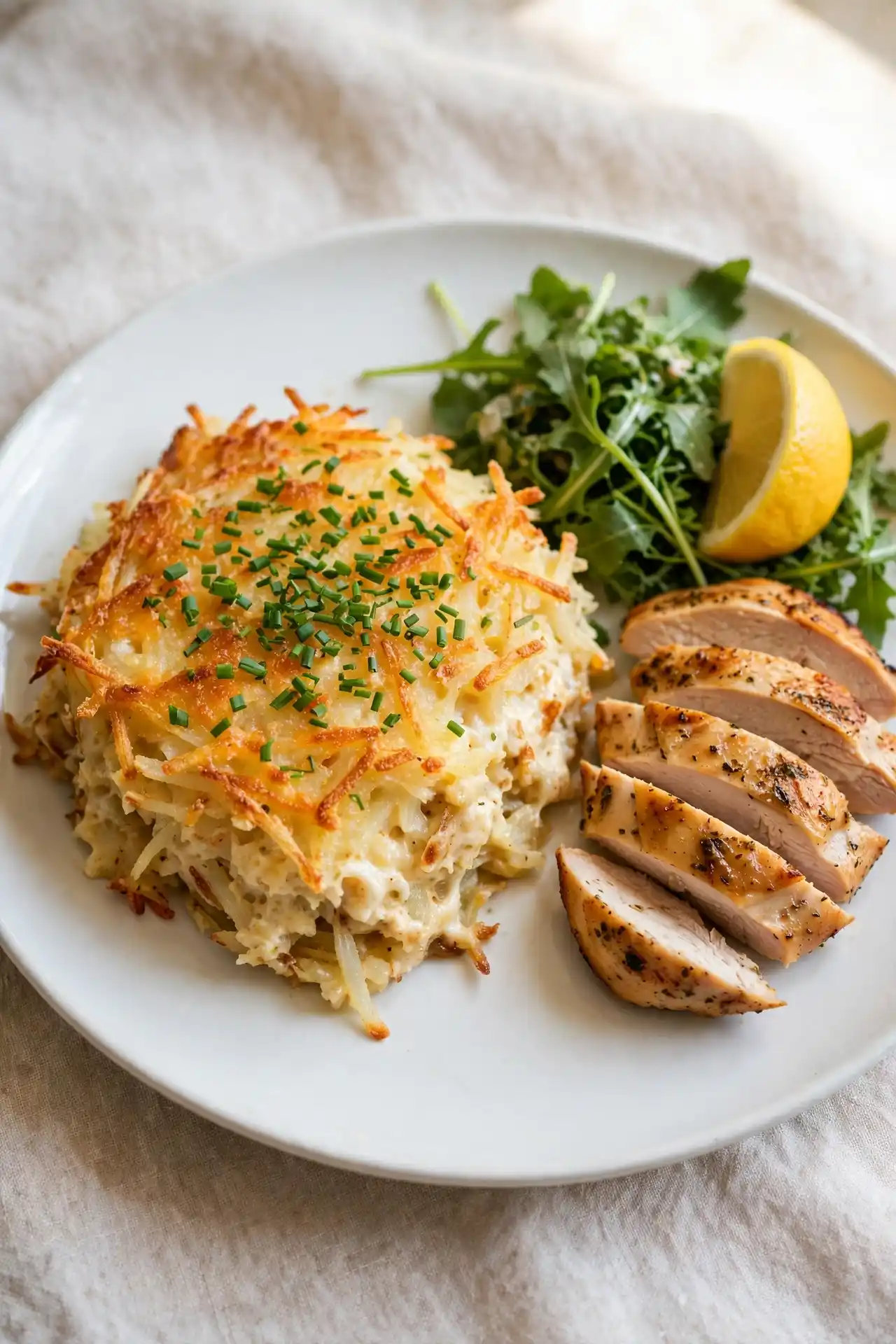
Roasted or grilled chicken: At dinner, a simply seasoned piece of chicken lets the casserole take the lead as the main event on the plate.
Fresh fruit: At a brunch spread, sliced melon, strawberries, or grapes provide color and a clean, sweet counterpoint to the heavy, savory bake.
A lightly dressed green salad: Even just arugula with lemon juice and olive oil gives the meal brightness and cuts through the fat in the casserole.
A broth-based soup: A light chicken or vegetable soup alongside a scoop of hashbrown casserole makes a complete and satisfying cold-weather meal.
Storage, Reheating and Make-Ahead
Fridge: Store leftovers in an airtight container or cover the baking dish tightly with plastic wrap. Leftover hashbrown casserole keeps well for up to 4 days in the refrigerator.
Freezer: Cool the casserole fully before freezing. Portion it into individual servings, wrap each tightly in plastic wrap, and place in a freezer-safe container or zip-lock bag. It freezes well for up to 2 months. Thaw overnight in the refrigerator before reheating.
Reheat: Place refrigerated portions in an oven-safe dish and bake at 175°C (350°F) for 15 to 20 minutes until heated through. If the cornflake topping has softened during storage, scatter a thin layer of fresh buttered crushed cornflakes over the top before it goes in the oven. Microwaving works if you are short on time, but it softens the crust completely.
Make-ahead: Assemble the full casserole, topping included, cover tightly with plastic wrap, and refrigerate for up to 12 hours. When ready to bake, let it sit on the counter for 20 minutes to take some of the chill off, then bake at 175°C (350°F) for 45 to 50 minutes rather than the standard 40 to 45 (since it is starting from a colder point).
Allergen Information
Contains dairy. The recipe includes sour cream, cheddar cheese, and butter. To make this dairy-free, try substituting full-fat coconut cream for the sour cream, a melting-style plant-based cheddar alternative for the cheese, and a plant-based butter for the butter. Note that the flavor and texture will differ from the original version.
Contains gluten. Cornflakes and most brands of cream of chicken soup contain gluten. To make this gluten-free, try substituting certified gluten-free cornflakes and a homemade cream of chicken soup thickened with cornstarch rather than wheat flour (use 2 tbsp cornstarch in place of the 3 tbsp flour in the homemade substitute recipe above).
Check your specific brand labels for any additional allergens, as formulations vary by manufacturer and region.
Nutrition Information
Per serving (based on 10 equal servings):
| Nutrient | Per Serving |
|---|---|
| Calories | 410 kcal |
| Protein | 10 g |
| Total Carbohydrates | 33 g |
| Dietary Fiber | 2 g |
| Total Sugars | 3 g |
| Total Fat | 28 g |
| Saturated Fat | 17 g |
| Sodium | 450 mg |
| Cholesterol | 75 mg |
| Potassium | 280 mg |
Values estimated using ingredient data from the USDA FoodData Central database.
“Nutritional values are estimates only and may vary based on specific ingredients, brands, and portion sizes used. For precise dietary needs, consult a registered dietitian.”
Frequently Asked Questions
Do I need to thaw frozen hashbrowns before making hashbrown casserole?
Yes, and it is not optional. Baking frozen hashbrowns directly means they release water as they heat up, which keeps the interior wet and prevents the filling from setting properly. Thaw them in the fridge overnight and press them dry in a kitchen towel before adding them to the mixing bowl.
Why did my hashbrown casserole turn out watery?
The most common reason is skipping or rushing the step of pressing excess moisture out of the thawed potatoes. A second cause is using low-fat sour cream, which contains more water than full-fat. Check both before your next bake, and make sure the casserole has reached an active bubble at the edges before pulling it from the oven.
Can I make hashbrown casserole the night before?
Yes. Assemble the full casserole, including the cornflake topping, cover tightly with plastic wrap, and refrigerate for up to 12 hours. Let it sit on the counter for 20 minutes before baking, and add 5 to 10 minutes to the total bake time to account for the colder starting temperature.
What can I use instead of cream of chicken soup?
The homemade substitute in the Variations section (butter, flour, chicken broth, and milk cooked into a thick sauce) works as a direct replacement and takes about 5 minutes. If you prefer a vegetarian option, halal-certified cream of mushroom soup gives a similar result with a slightly earthier flavor.
Can I freeze hashbrown casserole after baking?
Yes. Cool it completely, wrap individual portions in plastic wrap, and freeze for up to 2 months. Thaw each portion overnight in the fridge and reheat at 175°C (350°F) for 15 to 20 minutes. If the crust needs reviving, add a fresh layer of buttered cornflakes before it goes in the oven.
How do I know when hashbrown casserole is done baking?
Look for three things happening at once: the cornflake crust is deep golden brown across the surface, the cheese on top is melted and lightly caramelized at the edges, and the casserole is actively bubbling around all four sides. An instant-read thermometer at the center should read at least 74°C (165°F).
Can I make hashbrown casserole without sour cream?
Full-fat plain Greek yogurt is the closest substitute and behaves nearly identically once baked. The flavor is slightly tangier, which most people find works well in this dish. Avoid fat-free or light Greek yogurt — the higher water content affects the texture of the finished filling the same way low-fat sour cream does.
Conclusion
Hashbrown casserole earns its spot on the table because it delivers the same result every time, provided you do one thing right: press those hashbrowns completely dry before they go into the bowl. That single step separates a creamy, cohesive filling from a watery disappointment. Everything else in this recipe is forgiving. The cornflake crust is what most versions skip, and it is the detail worth keeping. Make it once for a gathering and you will be asked for it by name at the next one.
Hashbrown Casserole (Recipe Card)
Hashbrown Casserole (Cheesy, Creamy and Crowd-Pleasing)
Ingredients
Method
- Preheat oven to 175°C (350°F). Grease a 9×13 inch baking dish with butter or non-stick spray.
- Spread thawed hashbrowns on a clean kitchen towel and press firmly to wring out as much moisture as possible.
- In a large bowl, combine the dried hashbrowns, cream of chicken soup, sour cream, 170g cheddar, melted butter, diced onion, garlic powder, onion powder, salt, and pepper. Mix until evenly combined.
- Transfer the mixture to the prepared baking dish and spread into a flat, even layer.
- In a small bowl, toss crushed cornflakes with 60g of melted butter until fully coated.
- Spread buttered cornflakes evenly over the potato layer. Scatter the remaining 55g of shredded cheddar on top.
- Bake uncovered at 175°C (350°F) for 40 to 45 minutes, until the crust is deep golden brown and the edges are actively bubbling. Center should reach 74°C (165°F) on an instant-read thermometer.
- Let the casserole rest for 5 minutes before scooping and serving.